Portuguese
  Spanish


Manufactured by Pix Moving, founded in 2017 in Guiyang, the electric minibus operates in level 4 autonomous mode and, according to the company, has already reached about 30 countries, but encounters an obstacle in Brazil, where the law still does not authorize driverless vehicles to circulate on public roads.
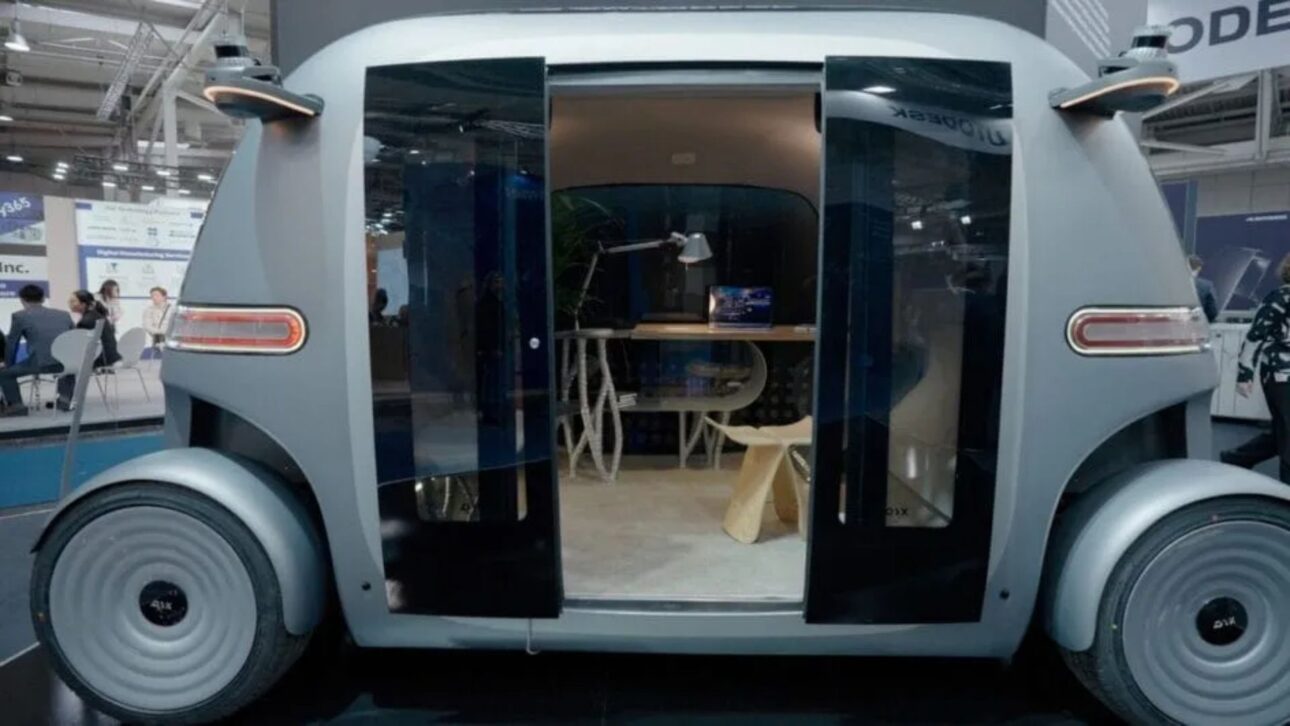
Without a steering wheel, pedals, or driver’s cabin, an autonomous electric minibus developed in China already transports passengers on real routes. Manufactured by Pix Moving, an urban robotics company based in Guiyang, the capital of Guizhou province, the Robobus model carries up to six passengers and reaches a maximum of 30 km/h. The vehicle operates in level 4 autonomous mode, where the system drives itself within designated areas, and is already running in Chinese cities like Guiyang, Yiwu, and Shenzhen, in addition to tests abroad. In May 2025, the model passed China’s main vehicle safety standard.
The manufacturer, founded in 2017, claims its vehicles have already reached about 30 countries and keeps South America among the observed markets. In October 2025, the company partnered with sensor supplier RoboSense to accelerate mass production. In Brazil, however, its arrival encounters a concrete obstacle, as traffic legislation still does not recognize the driverless vehicle and does not allow it to circulate on public roads.
How the electric minibus works
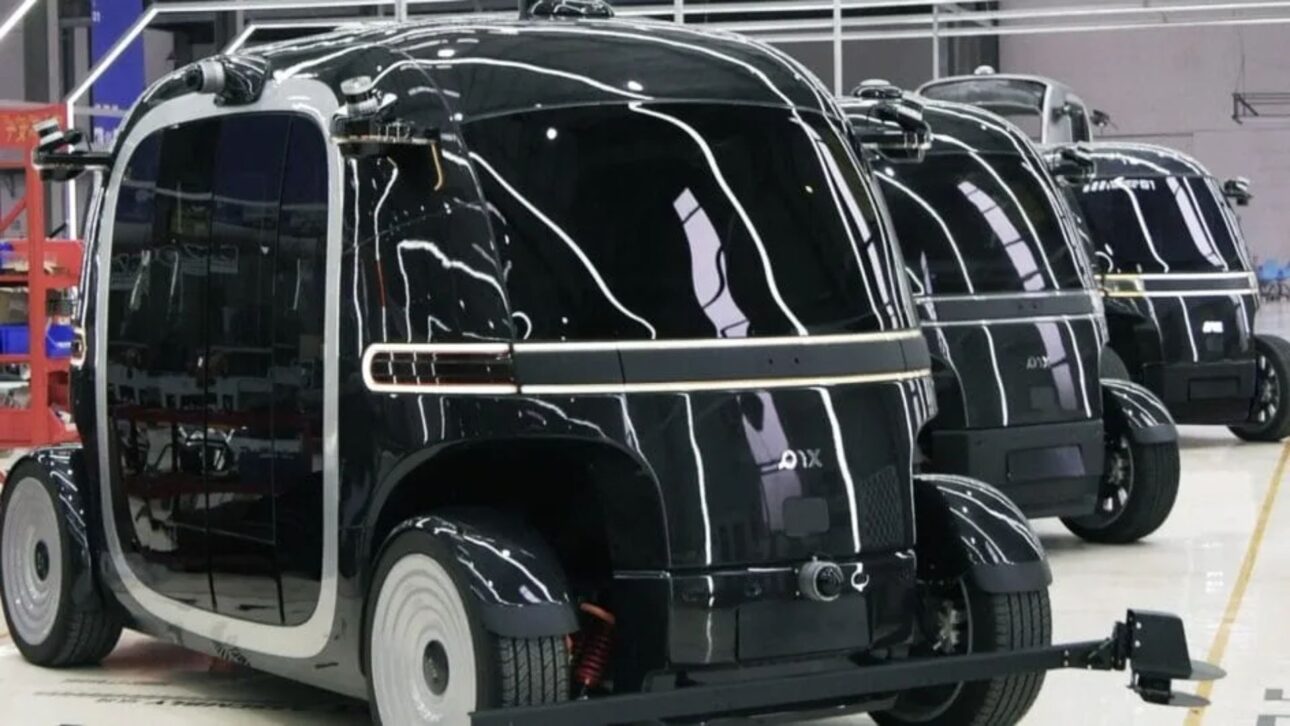
According to information from the NSC portal, the electric minibus was designed for short and repetitive trips, not to replace traditional buses on large avenues. Therefore, the speed is limited and varies between 15 km/h and 30 km/h, aimed at predictable routes and environments with less traffic complexity. To navigate, the Robobus combines cameras, LiDAR-type sensors, and artificial intelligence algorithms, a set that allows it to identify pedestrians, obstacles, and the flow around without a driver at the wheel.
-
Sixth-grader in Miami wins Lemelson Young Inventor Prize for creating water-absorbing concrete using discarded oyster shells and charcoal.

-
Brazilian Researchers Develop Portable, Painless, Radiation-Free Breast Cancer Tracker Using Microwaves, Costing Around $200 and Potentially Replacing $240,000 Mammograms
-
Beer as a Vaccine? Scientist Develops Experimental Method with Live Yeasts, Tests Own Brew, and Publishes Results on Zenodo

-
Brazilian Researchers Develop ‘Rapha’ Device Using Natural Latex and LED Light to Heal Diabetic Foot Ulcers and Prevent 50,000 Annual Amputations


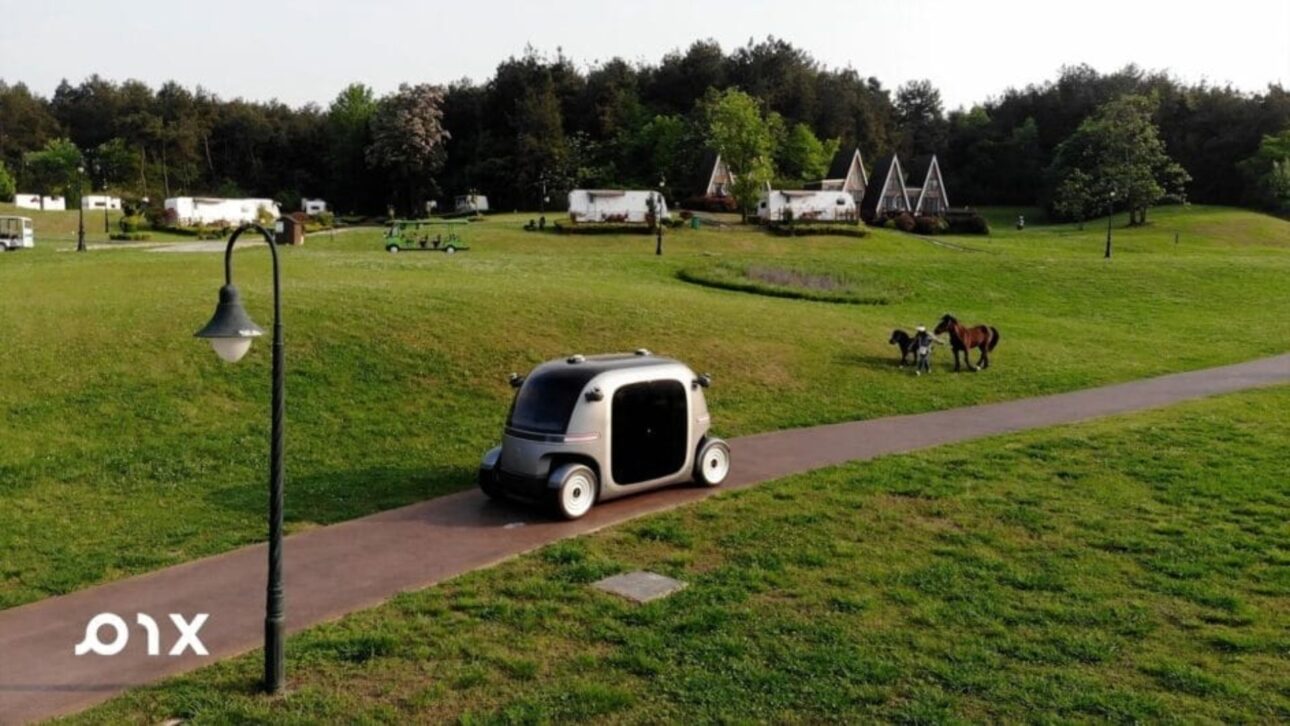
According to the manufacturer, the vehicle has an estimated range between 70 km and 100 km, a 21.5 kWh battery, and capacity for six people. Also according to the company, recharging takes about 1.5 hours in fast mode, and up to five hours in slow charging. The design is symmetrical, with no defined front and rear, and it dispenses with steering wheel, pedals, and mirrors, which completely changes the construction logic compared to a common bus. In Guiyang, units circulate on tourist routes of about eight kilometers, completed in around 20 minutes, still with human supervision on board during test phases.
From Guiyang to the world
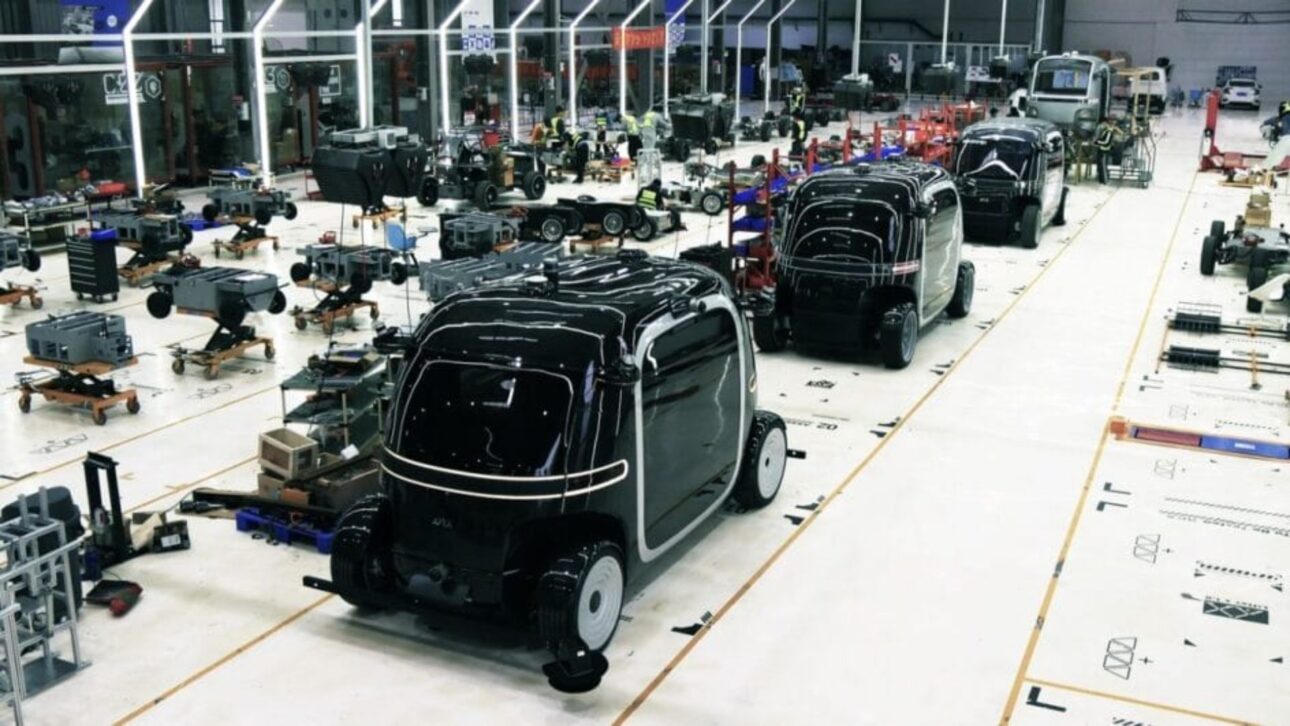
The journey of the electric minibus began in 2017, when Pix Moving was created in a high-tech zone of Guiyang. In May 2025, the Robobus became, according to the local government of Guiyang, the first fully autonomous minibus developed in China, in hardware and software, to meet the national vehicle safety standard GB 7258-2017. This certification is required for autonomous vehicles to operate on the country’s roads.
Mass production started in a digital factory in Huzhou, in Zhejiang province, after an agreement with sensor supplier RoboSense announced on October 30, 2025. Abroad, the company claims that its models have already been delivered or tested in countries such as Italy, Spain, Japan, the United States, India, and South Korea. In Turin, Italy, a unit was shipped by sea for field testing, and in Japan, the vehicle underwent a test event in February 2026, in the city of Kagoshima.
More than transportation, a modular platform
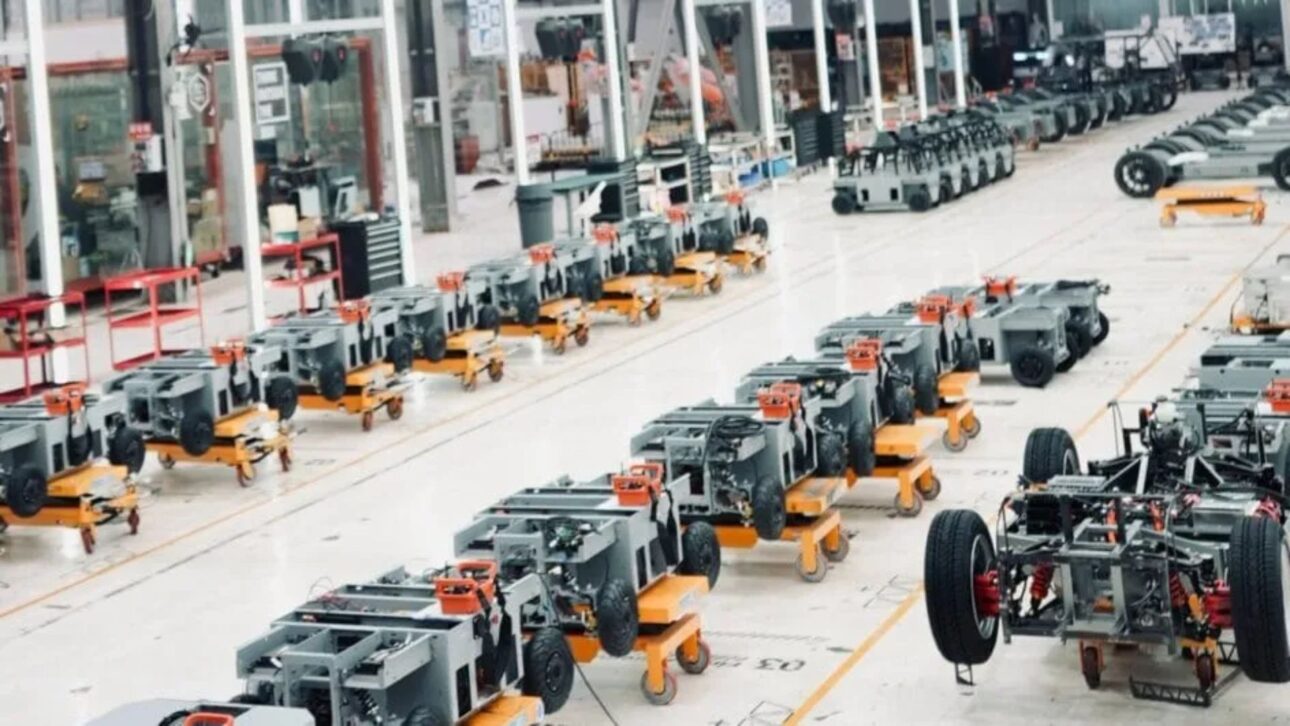
Pix Moving’s proposal goes beyond creating a small autonomous bus, and relies on modular platforms. The idea is to use the same electric and intelligent base to accommodate different bodies, transforming the vehicle into passenger transport, delivery, mobile store, café, office on wheels, or service point. The company calls this concept a mobile space, capable of changing function as needed.
In practice, a good part of these applications is still in the pilot and demonstration phase, and not in wide operation. The use tends to make more sense in places of constant circulation and repeated routes, such as airports, business condominiums, event centers, technology parks, factories, and universities. In these closed or semi-open environments, autonomous operation is more viable than in the open and unpredictable traffic of large cities.
The regulatory barrier in Brazil and South America
International expansion is already part of Pix Moving’s plans, and South America appears among the markets under observation. However, the arrival of this type of technology in the region depends on regulation, recharging infrastructure, passenger safety, definition of responsibility in case of an accident, and adaptation to local traffic. Therefore, the most likely initial use should not be in open public transport lines, but in private or semi-open operations, with closed routes.
In Brazil, the Brazilian Traffic Code still does not recognize the category of autonomous vehicle, which prevents the circulation of driverless cars on public roads. Under consideration in Congress, Bill 1317/2023, by Deputy Alberto Fraga (PL-DF), aims to create a framework for testing and circulation of these vehicles, with prior authorization from Contran and mandatory insurance. The text was approved by the Chamber’s Transport and Traffic Commission on July 8, 2025, but still needs to pass through other commissions and the plenaries of the Chamber and the Senate to become law.
What is still missing to trust the driverless vehicle
Even with advances, the technology still needs to prove it is safe in different situations and gain the trust of passengers. The speed limitation, closed routes, and human supervision during tests exist precisely because the system is not yet ready for open and unpredictable traffic.
Worldwide, autonomous driving remains under scrutiny by regulators and is the subject of investigations into accidents, according to international press reports, which reinforces the need for caution.
On the positive side, the electric minibus can reduce emissions, decrease noise, and operate on programmed routes at a lower cost, in addition to helping with first and last mile mobility.
The bet is that the bus will cease to be just a large vehicle on a fixed route and will start functioning as an electric and autonomous platform. For many people, however, boarding a driverless vehicle is still a difficult change to accept, and this trust will have to be built gradually.
The Robobus shows that urban transport can take on a smaller, electric, connected form designed for specific routes. What still separates this promise from reality on Brazilian streets is less about technology and more about regulation, charging infrastructure, and public trust.
While these points do not advance, the autonomous electric minibus tends to appear first in controlled environments, away from the chaotic traffic of large cities.
And you, would you board an electric driverless minibus to travel around your city?
Tell us in the comments what you think about autonomous vehicles, with respect for different opinions on the subject.