






 Portuguese
  Spanish
  5 min of reading
  0 comments


The discovery at the Scottish lighthouse revealed a hidden message from 132 years ago, recorded names of workers linked to maritime navigation, and showed how a simple maintenance can open a window to ancient engineering, to the routine of lighthouse keepers, and to the history of equipment used to guide ships along the coast of Scotland
Workers removed old wooden panels at the Corsewall Lighthouse in Scotland and found a hidden bottle with a message from September 4, 1892. The object was inside a cabinet, out of reach, in an area that only appeared during the technical service.
The information was released by the Northern Lighthouse Board, the body responsible for lighthouses in Scotland and the Isle of Man. The discovery was published on November 18, 2024 and involved professionals performing maintenance on the lighthouse.
The find attracted attention because the letter did not just hold an old memory. It recorded names of engineers, lighthouse keepers, and workers, as well as details about a lens and a machine used in the operation of the light that guided vessels.
-
Your child may be gifted and you don’t even suspect it: experts warn that even low grades and disinterest in school may hide high abilities behind boredom.

-
An old telephone booth was removed during construction at an English station and ended up revealing tunnels under platform 4, with hidden rooms connected to the railway logistics of another era.

-
The SP government considers demolishing a 40-meter bridge after a 21-year-old was launched without a rope in a radical jump; the federal structure has been abandoned for 30 years and had already been the subject of warnings.
-
Found after demolition, a 1916 capsule contained steel, cast iron, ore, an old newspaper, and clues about how factories avoided industrial measurement errors.




Hidden bottle appeared behind old panels during maintenance at the Scottish lighthouse
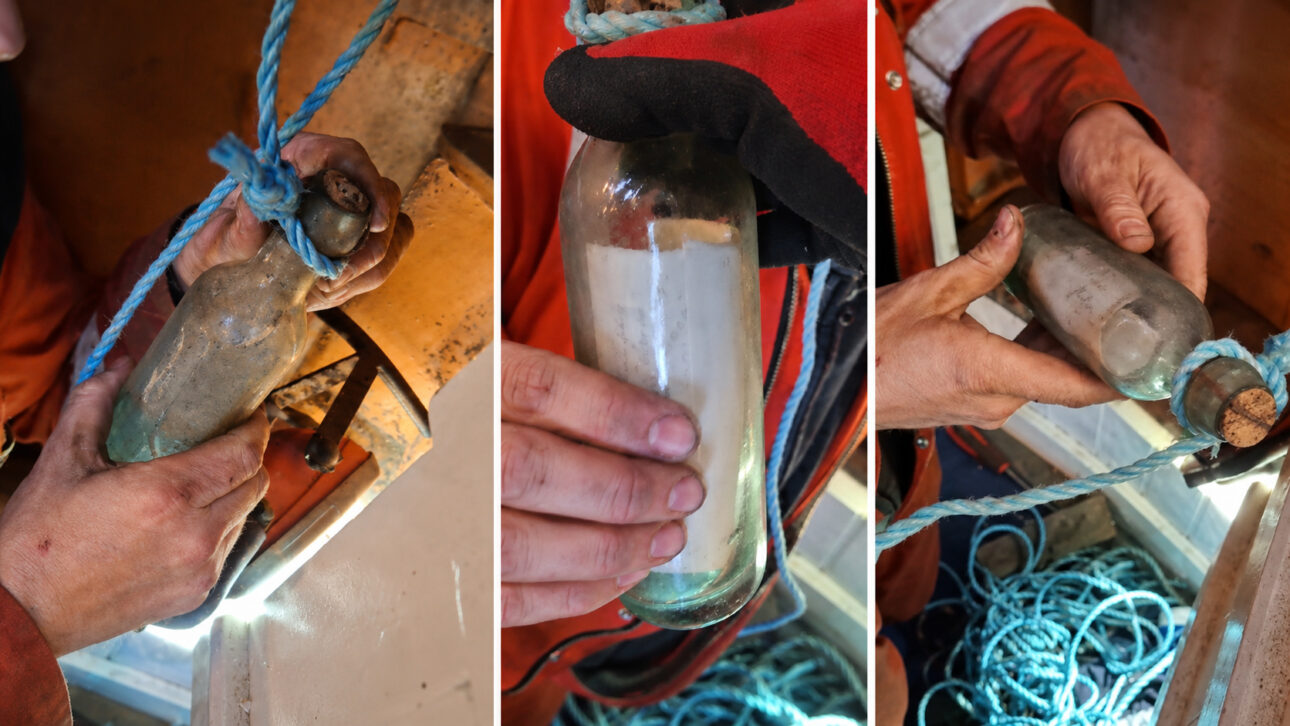
The bottle was seen after Ross Russell removed old wooden panels inside a cabinet. The object was distant, in a hard-to-reach position.
To retrieve the bottle, the team assembled a simple tool with rope and broom handle. The scene shows how a common maintenance task can reveal forgotten parts of an old construction.
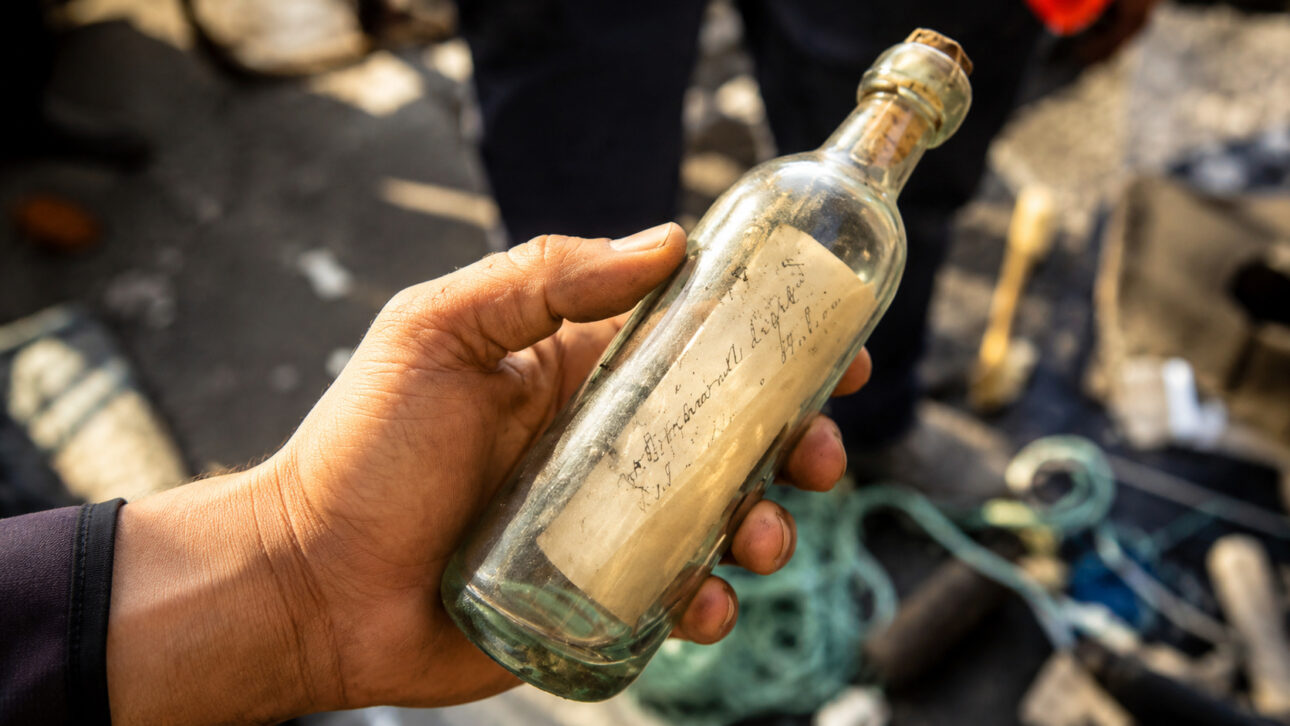
The work was carried out by Neil Armstrong, Ross Russell, and Morgan Dennison. They were working at the Corsewall Lighthouse, a structure linked to maritime navigation safety on the coast of Scotland.
Message from 1892 listed names of engineers, lighthouse keepers, and installation workers
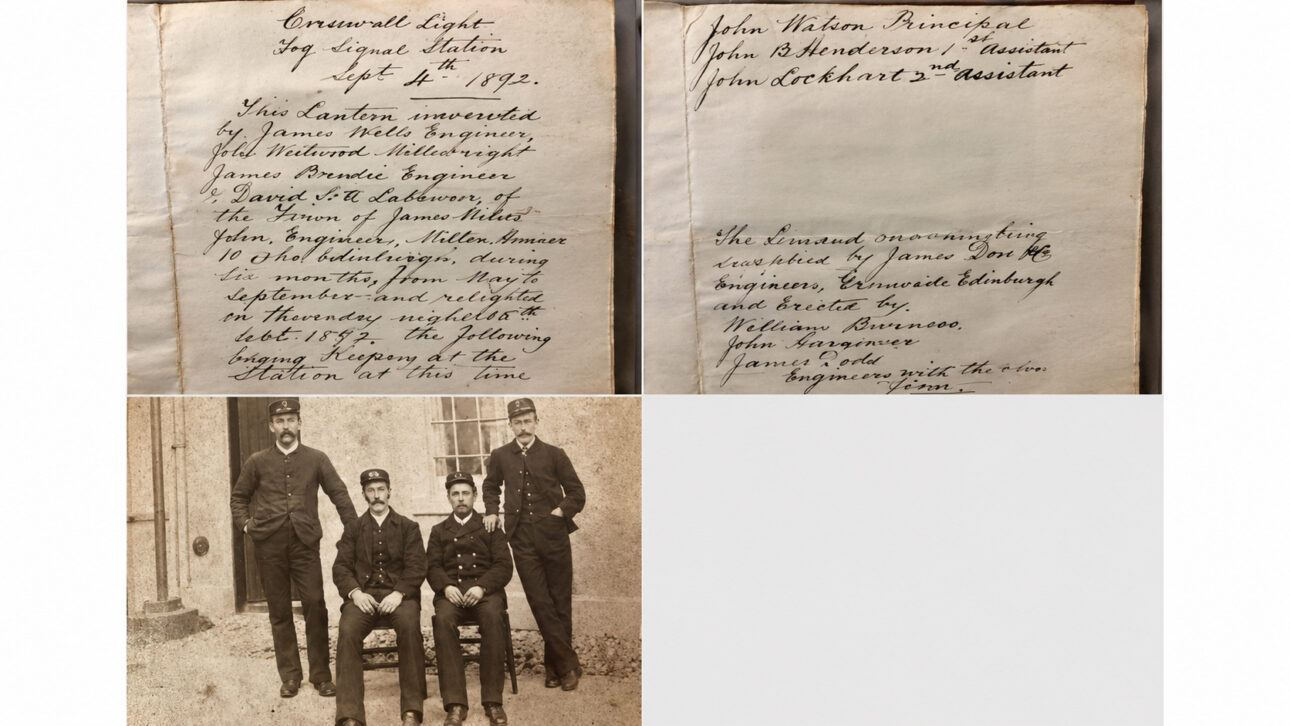
The letter was written with a pen and ink, a common writing method during the period when the message was left. The document was dated September 4, 1892.
The paper mentioned James Wells, engineer, John Westwood, machinery professional, James Brodie, engineer, and David Scott, worker. They were associated with the firm James Milne and Son Engineers, from Edinburgh.
The message also recorded the lighthouse keepers John Wilson, identified as principal, John B Henderson, as first assistant, and John Lockhart, as second assistant. These names show that the lighthouse operation depended both on those who installed the equipment and those who kept the light functioning.
The lens mentioned in the letter helped guide ships on the coast of Scotland
The letter stated that the lantern was erected between May and September 1892. The document also recorded that it was relit on the night of September 15, 1892.
To understand the importance of this, it is necessary to remember that a lighthouse is not just a beautiful construction near the sea. It functions as a point of orientation for vessels, especially in areas with difficult coasts, strong winds, fog, and low visibility.
The lens mentioned in the message was part of this system. In simple terms, the lens helped organize and project the light so sailors could recognize the direction and navigate more safely.
The letter also revealed who supplied the lens and the lighthouse machinery
Northern Lighthouse Board, the body responsible for lighthouses in Scotland and the Isle of Man, recorded that the lens and machinery were supplied by James Dove and Co Engineers, from Edinburgh.
The assembly was attributed to William Burness, John Harrower, and James Dods, associated with the same firm. These names help show that the construction and installation of the equipment involved different specialized workers.
The detail is important because it takes ancient engineering out of the abstract field. Behind the light that guided ships, there were people, workshops, tools, transportation of parts, and accumulated practical knowledge.
The discovery connected 19th-century workers to a modern maintenance team
Barry Miller, lighthouse keeper, managed to remove the letter from inside the bottle. Upon seeing the date September 4, 1892, the team realized they had a record 132 years old in their hands.
Ross Russell described the experience as something impressive and stated that touching the bottle after so long was a once-in-a-lifetime discovery. The statement helps to show the human side of the find, without turning the case into an exaggeration.
Mike Bullock, chief executive of the Northern Lighthouse Board, also related the current team to the 19th-century engineers who left the message. The observation reinforces a simple idea: the same lighthouse continues to require care, technique, and dedication from workers of different eras.
Lighthouses hold stories of engineering, navigation, and human labor
The case of the Scottish lighthouse shows that ancient structures can hold much more than stones, wood, and glass. They also preserve traces of those who built, installed, operated, and maintained important navigation systems.
In Brazil, historical coastal lighthouses, such as the Barra Lighthouse in Salvador and the Santa Marta Lighthouse in Santa Catarina, help remind us that these constructions are also part of maritime memory. The comparison serves only as context, with no direct relation to the bottle found in Scotland.
The hidden message in the Corsewall Lighthouse draws attention because it combines maintenance, heritage, engineering, and real life. It was not a museum object separated from the world, but a paper kept inside a structure that remained in use.
Maintenance in ancient constructions can reveal forgotten documents
Maintenance is usually seen as a technical service, done to preserve a structure and prevent problems. However, in ancient constructions, this type of work can also expose hidden parts of the past.
In the case of the Corsewall Lighthouse, the removal of old panels revealed a document that had been out of sight for more than a century. The discovery showed details of the lantern installation, names of workers, and records of a lens linked to ship guidance.
This type of find is valuable because it helps tell history through ordinary people. Engineers, workers, and lighthouse keepers appear as an essential part of maritime navigation, and not just as names lost on an old paper.
The bottle found at the Scottish lighthouse turned a maintenance service into a historical discovery. The message from 1892 linked the work of a modern team to the efforts of professionals who installed equipment used to guide ships.
More than a curiosity, the find shows that old works can still hold human marks within walls, cabinets, and machines. If a lighthouse revealed a message after 132 years, what other secrets might be hidden in historical constructions that remain in use?





Be the first to react!