





 Portuguese
  English
  Spanish
  4 min of reading
  0 comments


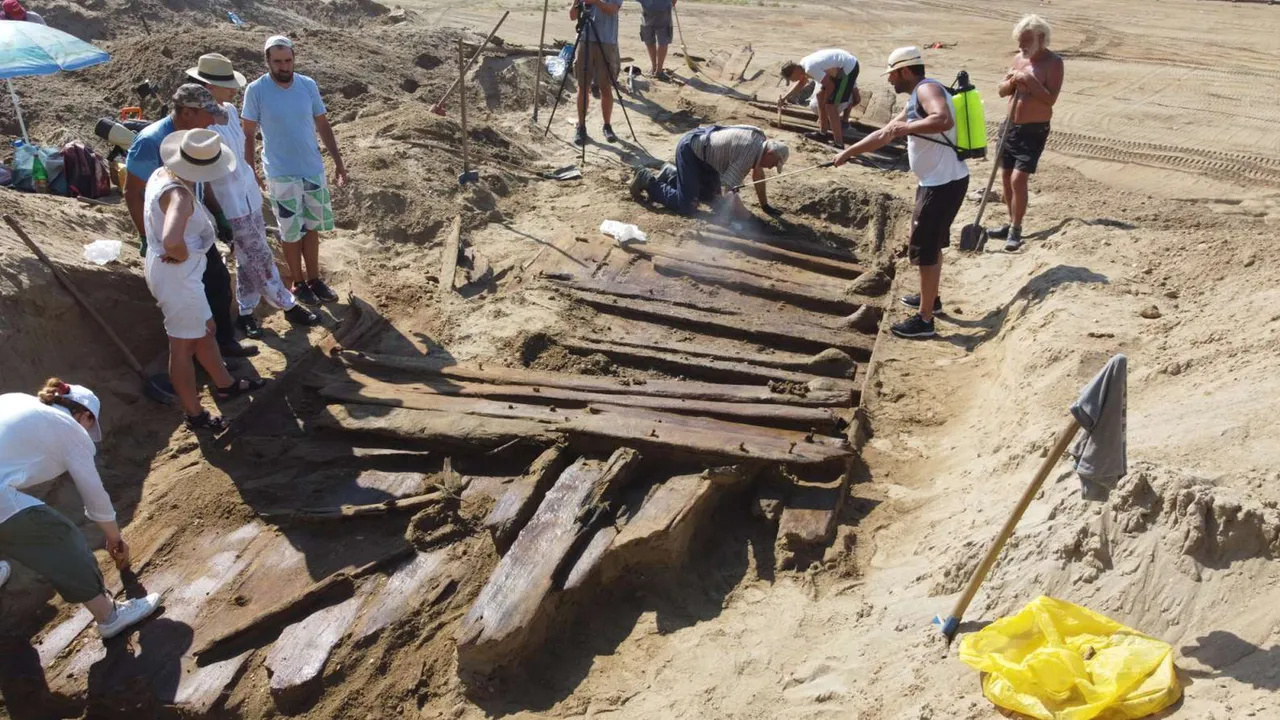
Roman ship found in coal mine in Serbia, 8 meters deep, may have served the ancient city of Viminacium, on the border of the Roman Empire.
According to Live Science, the ancient shipwreck was found at the end of July 2023 in the open-pit coal mine of Drmno, near Kostolac, about 50 kilometers east of Belgrade, Serbia. The wooden remains were buried in a layer of sediment about 8 meters below the surface, and emerged when the excavator cut through the earth wall to reach the coal layer. The exposed hull measured about 13 meters in length and was interpreted as part of a flat-bottomed vessel, probably used in transporting cargo and supplies between the Danube and the ancient city of Viminacium.
According to Reuters, the miners called the archaeologists from the Viminacium site shortly after the discovery. The wood survived because it remained sealed in moist sediment for centuries, protected from the air. On site, archaeologist Miomir Korac stated that previous findings suggest the ship could date from the 3rd or 4th centuries AD, when Viminacium was the capital of the Roman province of Upper Moesia and maintained a port near a tributary of the Danube.
Roman ship found in Serbia helps explain the logistics of Viminacium
According to Live Science, the discovery only makes complete sense when understanding the significance of Viminacium on the map of the Roman Empire.
-
Residents of Puerto Rico were left without water, carried buckets up stairs every day, spent money at laundromats, and saw the National Guard step into the crisis to distribute supply trucks.

-
Almost 40% of treated water in Brazil disappears before reaching the taps, and the volume lost in leaks could supply 77 million people for a year, while 33 million still live without regular access to the distribution network.

-
A historic bridge damaged by the force of water has reconnected two cities in Rio Grande do Sul after an emergency reconstruction carried out at an unusual pace in Brazil.
-
Why only Brazil embraced the ABNT2 keyboard: a standard with Ç that the world ignored, became the rule on computers in the country, and still confuses those who buy imported laptops.


The city was an important Roman settlement and a military base near the imperial border, located very close to where the mine operates today. At its peak, it would have housed about 45,000 inhabitants, a high number for the period, as well as structures like a palace, forum, amphitheater, temples, baths, and aqueducts.
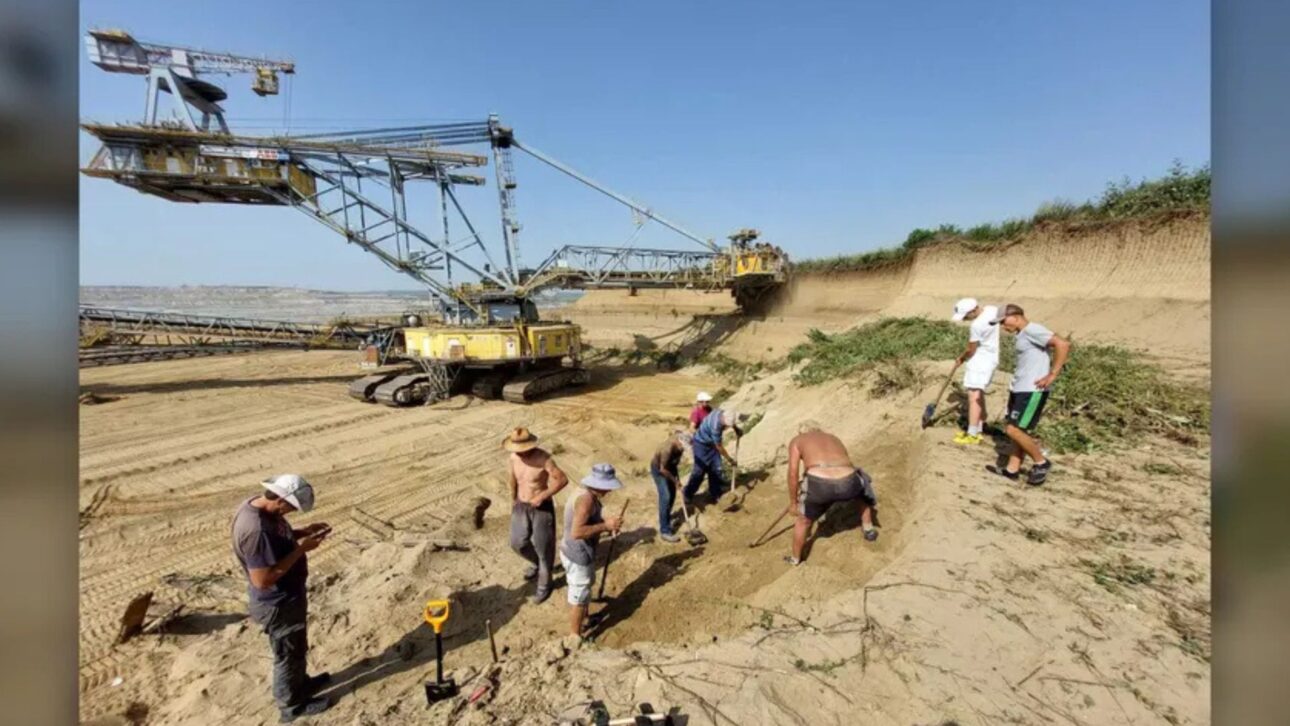
According to Reuters, this urban size helps explain why vessels like the one found in Drmno were vital. A city of this scale, located in a border region and connected to the Danube system, heavily depended on river transport to move goods, materials, and supplies.
The unearthed ship was likely part of this logistical network that connected Viminacium to the rest of the Roman world.
Why the ship appeared 8 meters deep inside a coal mine
According to Live Science, the fact that the ship was found so deep underground does not mean it was far from water when it sank.
Archaeologists believe that the vessel sailed through waterways between the Danube and Viminacium, and that the location where it was found corresponds to an ancient sediment deposition area, exactly the type of environment left by waterways that change course over many centuries.


Over time, the bed where the ship sank or was abandoned was covered by successive layers of silt and mud.
The river receded, the landscape changed, and what was once the bottom of a river artery became solid ground. The modern mine ended up cutting through this ancient buried channel and exposed the preserved hull.
1,500-year-old wood required immediate operation to avoid rotting in the sun
According to Reuters, the preservation of the vessel became a race against time the moment the wood was exposed to the open air. Miomir Korac explained that the team needed to spray water over the hull and keep it covered with a tarp to prevent rapid deterioration under the summer heat. Ancient wood saturated with moisture can crack, shrink, and disintegrate when it dries too quickly.
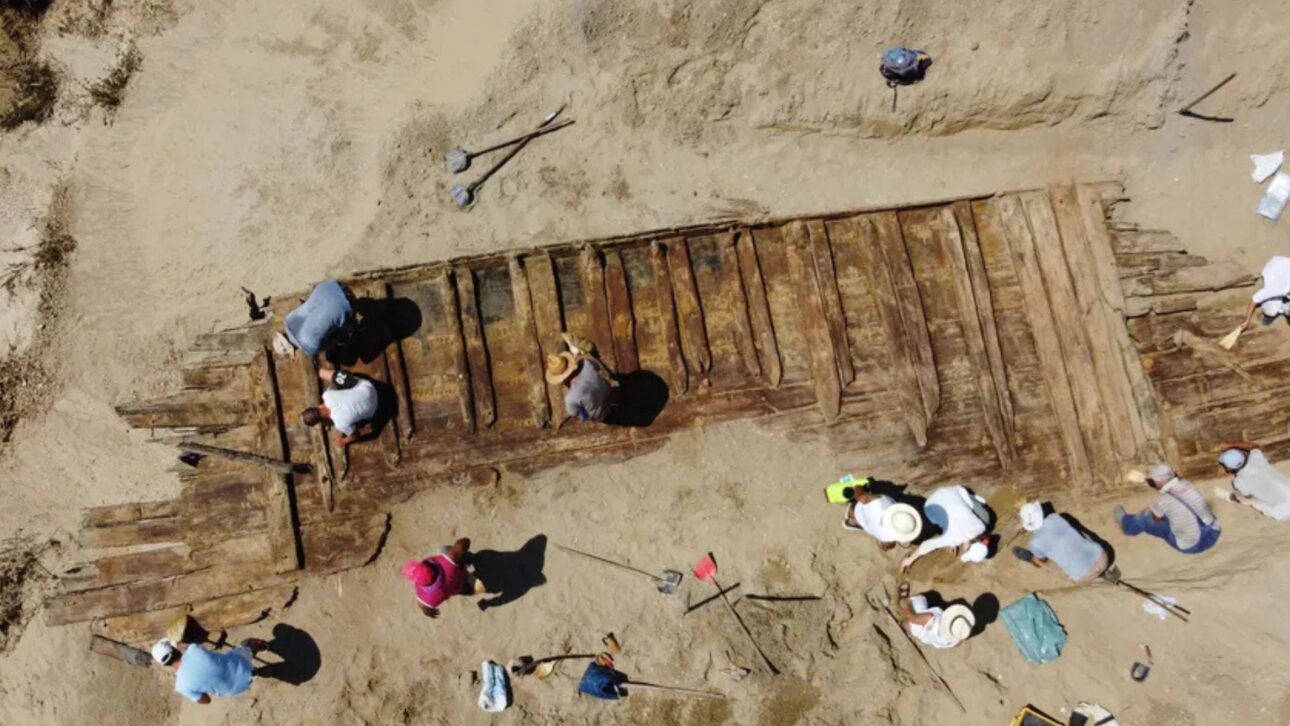
According to Live Science, this moisture was precisely the factor that allowed the vessel to survive for over a millennium and a half.
The next step involves slow, controlled, and careful preservation, because moving the hull without breaking it requires special structure, engineering support, and crane transport.
2023 Discovery Was Not Isolated and Suggests More Roman Ships Are Buried There
According to Live Science, the ship discovered in 2023 was not the first found in the area. In 2020, archaeologists had already identified other ancient vessels in the same region, including smaller boats carved from single logs and a larger vessel nearly 15 meters long, also flat-bottomed and with an appearance consistent with Roman techniques.
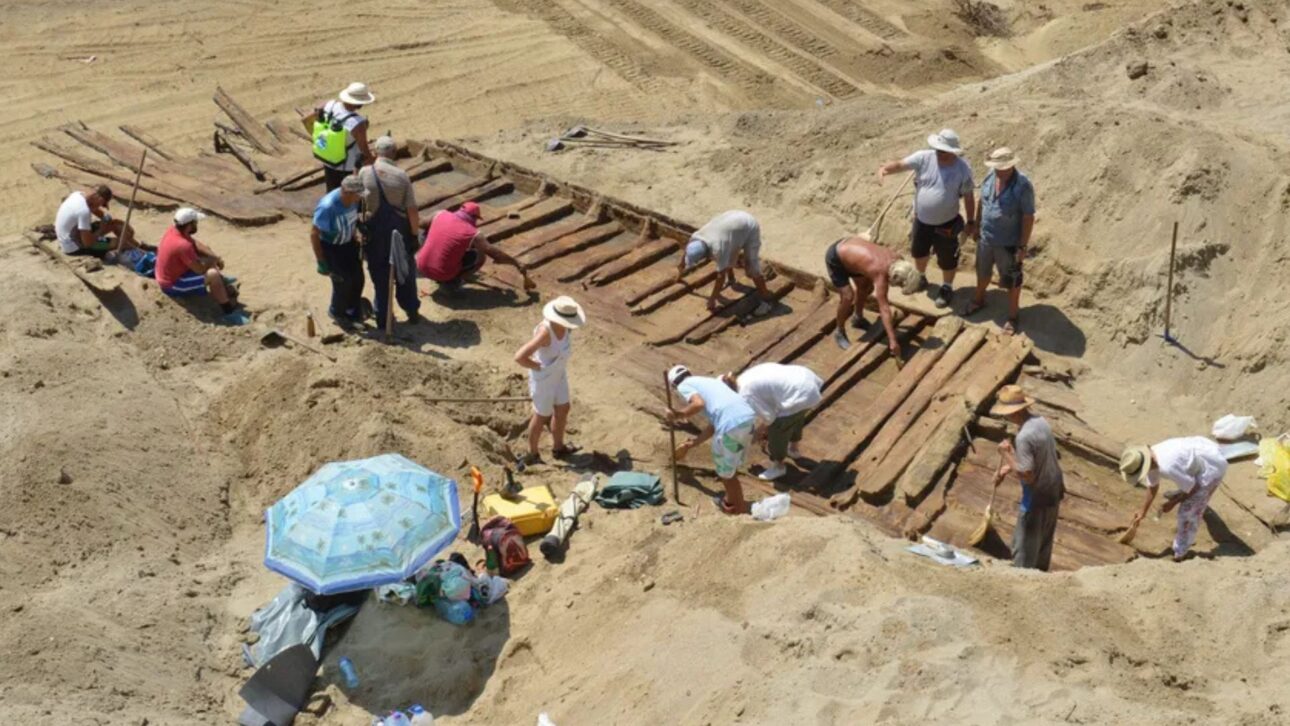
According to Reuters, the repetition of these findings reinforces the idea that the site holds remnants of an ancient navigable route linked to Viminacium.
If the area functioned for centuries as an active river branch near a large and strategically military Roman city, it is plausible that more vessels sank, were abandoned, or became buried there.
Flat-Bottomed Barge Reveals How the Roman Empire Operated on Its Danube Frontier
According to Live Science, the flat-bottomed shape of the vessel is compatible with navigation in shallow waters and cargo transport in rivers and canals. Archaeologists indicated that the ship was likely towed from the shore or rowed, and could also use an auxiliary sail in suitable conditions.
This detail transforms the find into something more than an archaeological curiosity. The ship from Kostolac offers physical evidence of how the logistics of the northern frontier of the Roman Empire functioned. Instead of just showing an ancient buried city, it shows the circulation system that kept this city alive, supplied, and connected to the rest of the empire through the Danube and its tributaries.


Be the first to react!