Portuguese
  Spanish


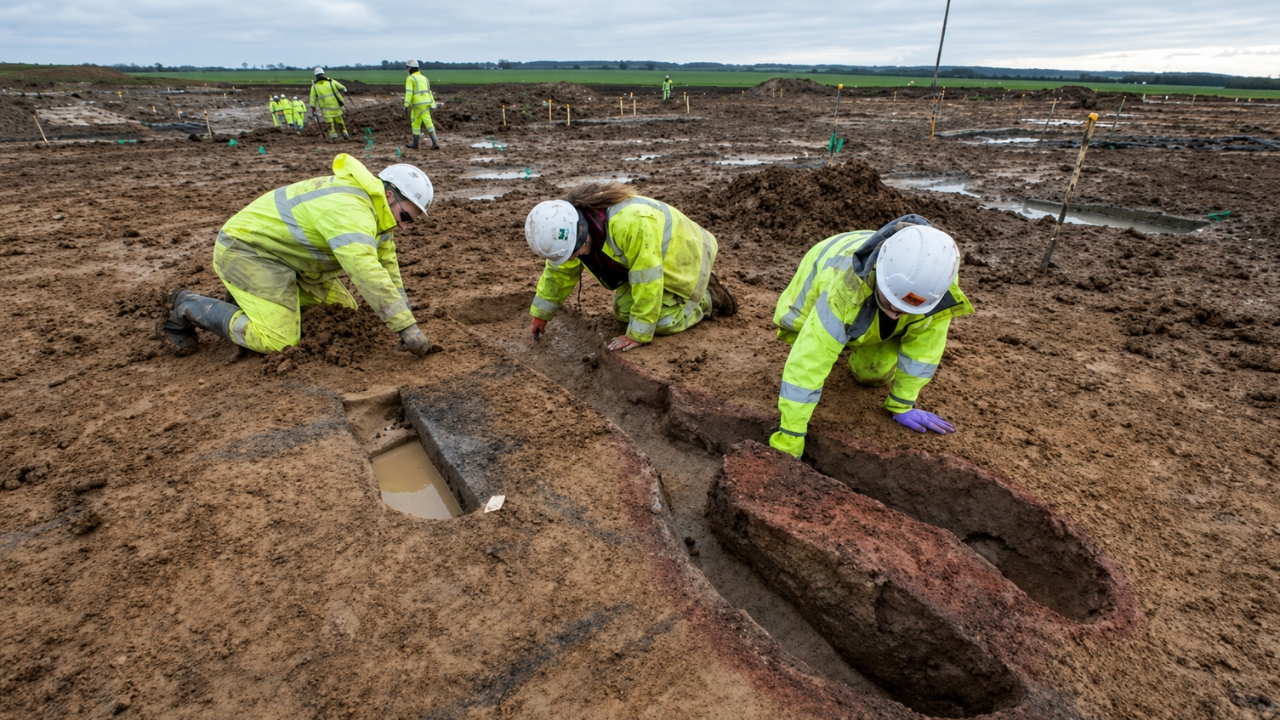

A preventive excavation linked to a roadwork in England revealed surprising layers of human occupation, with ancient burials, Roman structures, possible Anglo-Saxon houses, and objects that help reconstruct thousands of years of history beneath the soil.
A modern project to improve one of England’s busiest routes ended up opening an unexpected window into thousands of years of buried history.
During the archaeological investigations prior to the A46 Newark Bypass project in Nottinghamshire, archaeologists found remains of seven people, a Roman well, an ancient enclosure, and structures that may be Anglo-Saxon houses hidden beneath the area planned for the new highway.
What seemed like just another infrastructure intervention turned into a true dive into the past: before the arrival of heavy machinery, the soil revealed signs of human occupation that may date back to around 6000 BC.
-
What is the dark substance found in the sand of Ipanema Beach? Civil Police conduct an examination, collect samples of the material, and initiate an investigation to identify the composition, clarify the origin, and verify if there was an environmental crime.

-
The beer that was hidden for 3,000 years has returned to the world: scientists find yeast preserved in Ancient Egyptian vessels and recreate a pharaoh’s drink to discover the lost taste of an ancient civilization.
-
NASA spotted a giant “surfboard” crossing the Moon’s orbit at 11,500 km/h, and the truth behind the mysterious object required a 0.338 millisecond photo to be revealed.

-
Brazilian project based on nanotechnology transforms the recovery of degraded areas in the Amazon, receives international recognition, and uses research in 9 states to accelerate the growth of native species and increase carbon capture.




Before the highway, archaeologists found a buried timeline
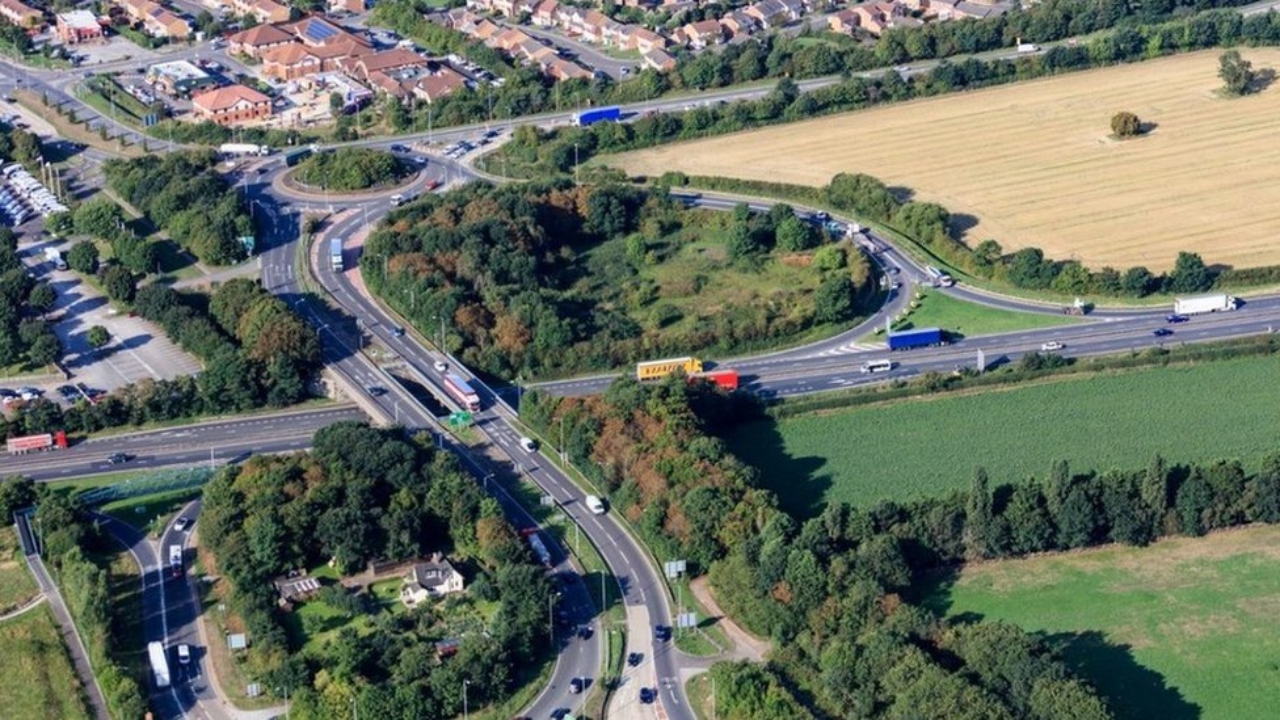
The A46 Newark Bypass project aims to improve traffic between Farndon and Winthorpe, in a strategic region near Newark-on-Trent. The proposal includes the expansion of road sections, creation of new road structures, and improvements in important regional connections.
But before the work progressed, a team of archaeologists entered the field to investigate the terrain. And the result surprised even those who already expected to find ancient traces.
According to the information released about the excavation, 30 archaeologists worked for 22 weeks in five fields near the highway’s route. In total, the analyzed area exceeded 23 acres, equivalent to approximately 9.63 hectares.
There, under layers of earth that seemed ordinary at first glance, signs of different historical periods appeared: from prehistoric pieces to marks left by Romans, Anglo-Saxons, and later occupations.
Seven skeletons were found near the A46 route
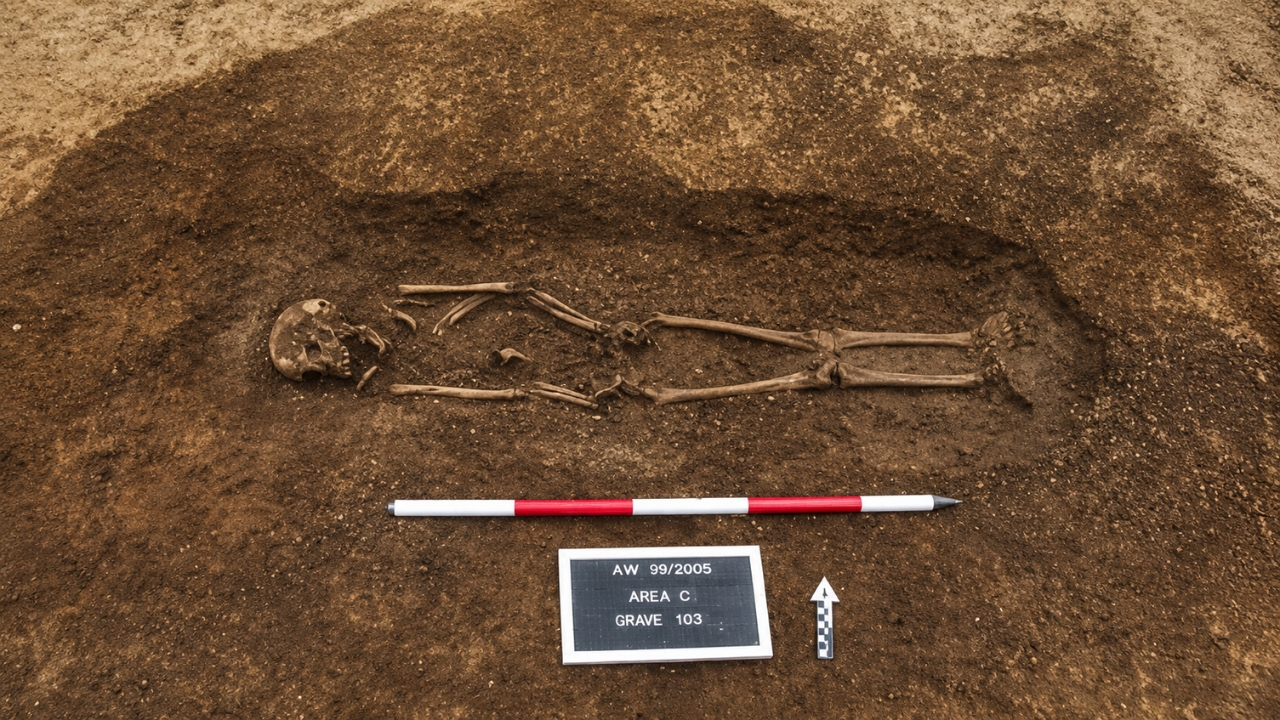
The most striking find is a burial site with remains of seven individuals. The skeletons were found in a field near the A46 route and are still undergoing scientific analysis.
The definitive dating has not yet been confirmed, but specialists are considering the possibility that the burials belong to the Iron Age, the Roman period, or the Anglo-Saxon phase.
This detail makes the case even more intriguing. It is not just about ancient bones, but a possible record of communities that lived, died, and were buried in a landscape now associated with roads, traffic, and modern works.
The post-excavation analysis should help answer essential questions: who were these people, when did they live, how were they buried, and what was their relationship with the settlements found in the region.
Roman well and ancient enclosure show structured occupation
In addition to the skeletons, archaeologists found a Roman well and a Roman rectangular enclosure in an area southwest of the village of Kelham.
These elements indicate that the region was not just a passing point. On the contrary: there were signs of organized occupation, with structures associated with daily life, land use, and possibly agricultural production.
A Roman well, in particular, is an important find because it can reveal much more than its original function. Materials preserved inside or around this type of structure often help archaeologists understand habits, diet, object disposal, and even environmental changes of the time.
In the same set of discoveries, foundations of an ancient farmhouse were also identified, reinforcing the idea that this part of England was used by different communities over centuries.
Rare Anglo-Saxon houses increase the value of the discovery
Another highlight of the excavation was the identification of two probable Anglo-Saxon houses, known as grubenhaus.
This type of construction had a floor lowered in relation to ground level and is associated with early medieval settlements. Although it is a known model in Anglo-Saxon contexts, experts point out that structures of this type are less common in Nottinghamshire.
Therefore, the find can help fill gaps about how Anglo-Saxon communities lived in this part of England. These houses could have been used as residences, workshops, or work areas, depending on the context and objects found on-site.
The discovery reinforces a powerful idea: beneath a highway planned for the 21st century, there were signs of families, domestic activities, and communities that inhabited the region many centuries before.
Ceramics, arrowheads, and a stone for grinding grains complete the scene
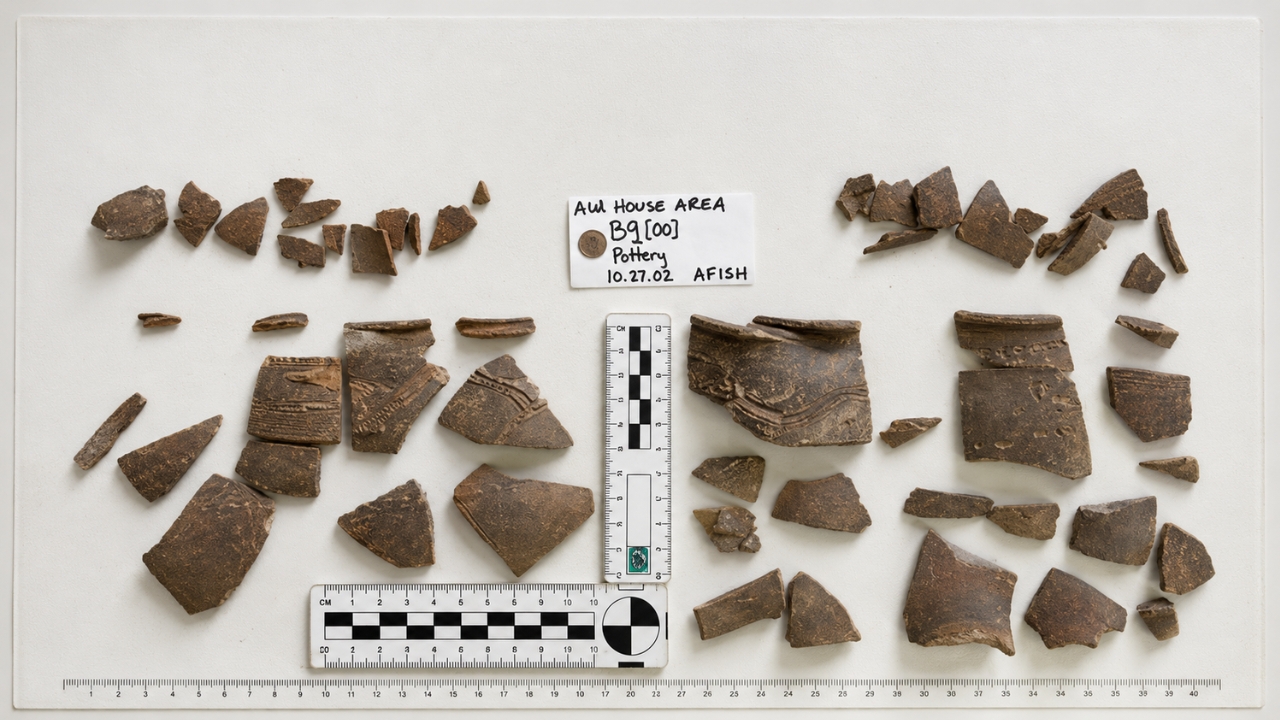
The smaller objects found also help tell this story. Among the recovered materials are 163 ceramic fragments, many of them linked to the Iron Age and the Roman period.
Flint arrowheads, a Neolithic stone used for grinding grains, and artifacts associated with the English Civil War of 1642 were also found.
These items expand the scope of the discovery. They show that the site does not only hold a specific period but several layers of human occupation.
In other words, the land investigated for the A46 construction functioned as a kind of underground archive: each object, each structure, and each burial points to a different chapter of local history.
A modern construction that found the past before the asphalt
The case of the A46 Newark Bypass shows how major infrastructure projects can reveal forgotten stories even before they actually begin.
The highway was planned to improve travel, reduce congestion, and modernize an important route in England. But along the way, it ended up revealing something much older than any engineering project: traces of people who lived there for thousands of years.
The image is striking: where today a dual carriageway is projected, with bridges, accesses, and heavy vehicle flow, there once existed prehistoric communities, Roman settlements, Anglo-Saxon houses, and marks of historical conflicts.
Now, the materials are undergoing more detailed studies. Only after the analyses will it be possible to confirm dates, interpret the burials, and better understand the role of this territory in the ancient occupation of Nottinghamshire.
Until then, the discovery already leaves one certainty: before receiving asphalt, machines, and modern traffic, the soil of the A46 Newark Bypass held a much older—and much more impressive—history than was imagined.