Portuguese
  Spanish


Built by Greenhill Forge, the heater uses magnetic rotors, a coiled copper tube, and mechanical input to heat water directly, without relying on the electrical grid, fuel, or traditional resistors, achieving 575 thermal watts in a drill test.
A magnetic heater built in a small workshop managed to produce hot water without relying on grid electricity, fuel, or traditional resistors. Developed by Greenhill Forge, the system uses mechanical movement, magnetic fields, and copper tubes to directly transform rotation into heat.
The proposal arose from a common problem: heating water without resorting to traditional means. Instead of first generating electricity and then producing heat, the builder leveraged previous experiences with generators and changed the project’s objective. The idea became to capture the heat produced by the movement of the magnets around the copper itself.
The result is a compact, mechanically driven water heater that uses rotating magnetic rotors positioned around a copper coil. Water passes through this tube while the system is in operation. Heat is generated in the metal walls and absorbed directly by the water flow.
-
World Cup Ball Chip Uses Technology to Detect Invisible Touches, Confirms Offside, Secures Portugal’s Victory Over Croatia

-
36-Meter Hydrogen-Powered Superyacht Arrives in Brazil to Debut German Engines and Showcase Future of Clean Navigation

-
Indian Students from Jaipur Win Top Prize at World’s Largest Science Fair with EcoFog, an Affordable Mesh to Harvest Fog Water Without Energy

-
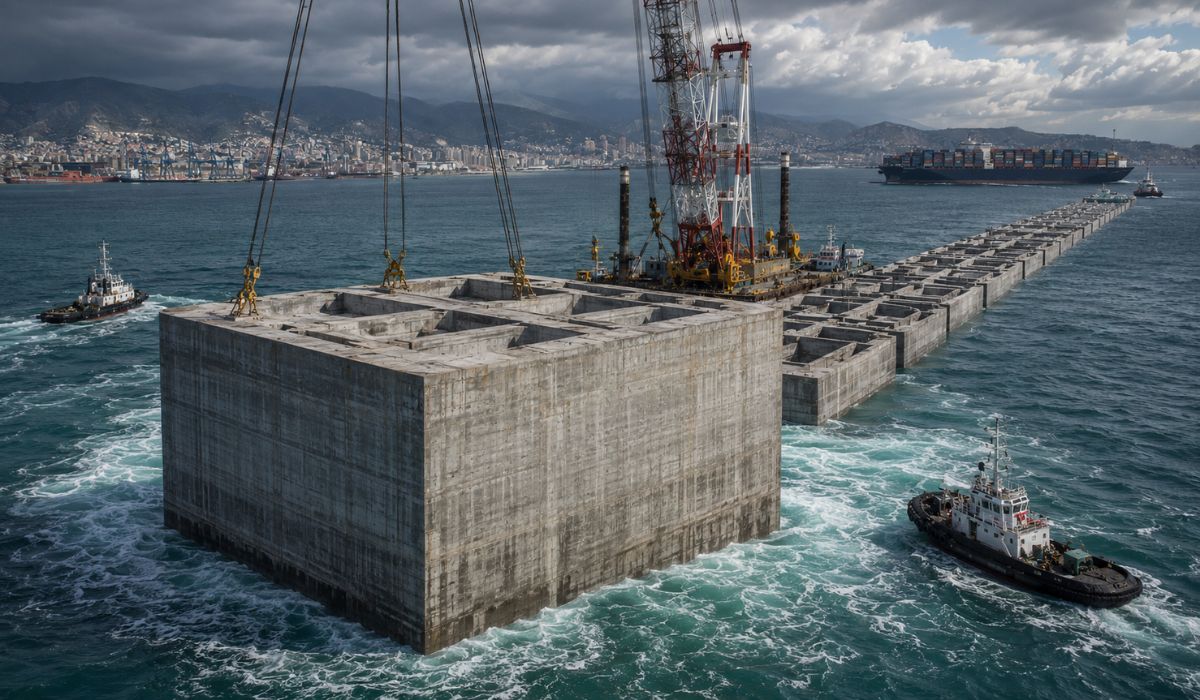
Italy Sinks Massive 11-Story Concrete Structures in the Ligurian Sea to Create a 6.2 km Barrier, Clearing the Way for 400-Meter Ships in Genoa



Heater uses copper and magnetic fields to generate heat
The core of the equipment is located between two magnetic rotors. In the center, there is a flat disk formed entirely by copper tubing, coiled in a tight spiral and soldered to create a continuous conductor. Water circulates through this structure during the process.
When the magnets rotate around the copper, they create eddy currents in the metal. These currents heat the walls of the tube. Instead of losing this heat to the environment, the system quickly transfers it to the water moving through the coil.
The main difference of the project lies in the absence of an intermediate step. There is no conversion to electricity nor the use of a secondary heating element. The heat originates in the copper itself and is utilized by the water passing through the inside of the tube.
Construction depends on precision and rotor alignment
The fabrication of the heater begins with a steel jig made to hold the parts in place. This support ensures that the copper coil is formed uniformly, with consistent spacing along the spiral. The regularity of the piece is important for the stable operation of the assembly.
The tube used is about 8 mm thick and is carefully coiled to form a compact spiral. Clamps hold the structure firm during assembly. Then, soldering joins the entire spiral, transforming the tube into a continuous piece.
After cleaning, the stator is installed in a square frame. The magnetic rotors are positioned on both sides of the coil, aligned by bearings and locking nuts. The rotation must be smooth, as small deviations can compromise performance or cause instability.
Water circulation is handled by a compact submersible pump. It moves about 600 liters per hour and consumes only 10 watts. This component maintains the flow through the coil while the mechanical system generates heat.
Tests show temperature increase in a few minutes
In tests, the system was driven by a corded drill. At about 400 RPM, the heater processed 1.5 liters of water. In three minutes, the temperature rose from 46.2°F to 75.9°F, while the outlet water reached 83.1°F.
This performance corresponds to approximately 575 watts of thermal power. The power, however, depends directly on the rotation speed. The relationship is not linear, as heat increases with the square of the revolutions per minute.
In practice, doubling the speed generates four times more heat. Under ideal conditions, at 2,000 RPM, the system could reach about 14.5 kW. During the test, the copper temperature remained close to the water temperature, indicating good thermal transfer.
The drill motor overheated before the heater itself showed signs of wear. This reinforced the importance of an adequate mechanical power source to drive the system. The equipment tends to work better when connected directly to a wind turbine or a small hydroelectric power plant.
Under these conditions, the rotors can be moved without conversion losses. Heating begins when the system rotates and stops when the rotation ceases. Therefore, the heater fits well with variable energy sources.
In addition to dispensing with fuel, the project does not generate exhaust gases and avoids traditional resistors, which can fail. For off-grid users, the proposal offers a mechanical alternative to transform available movement into usable heat, with less complexity and fewer points of failure.