Portuguese
  Spanish


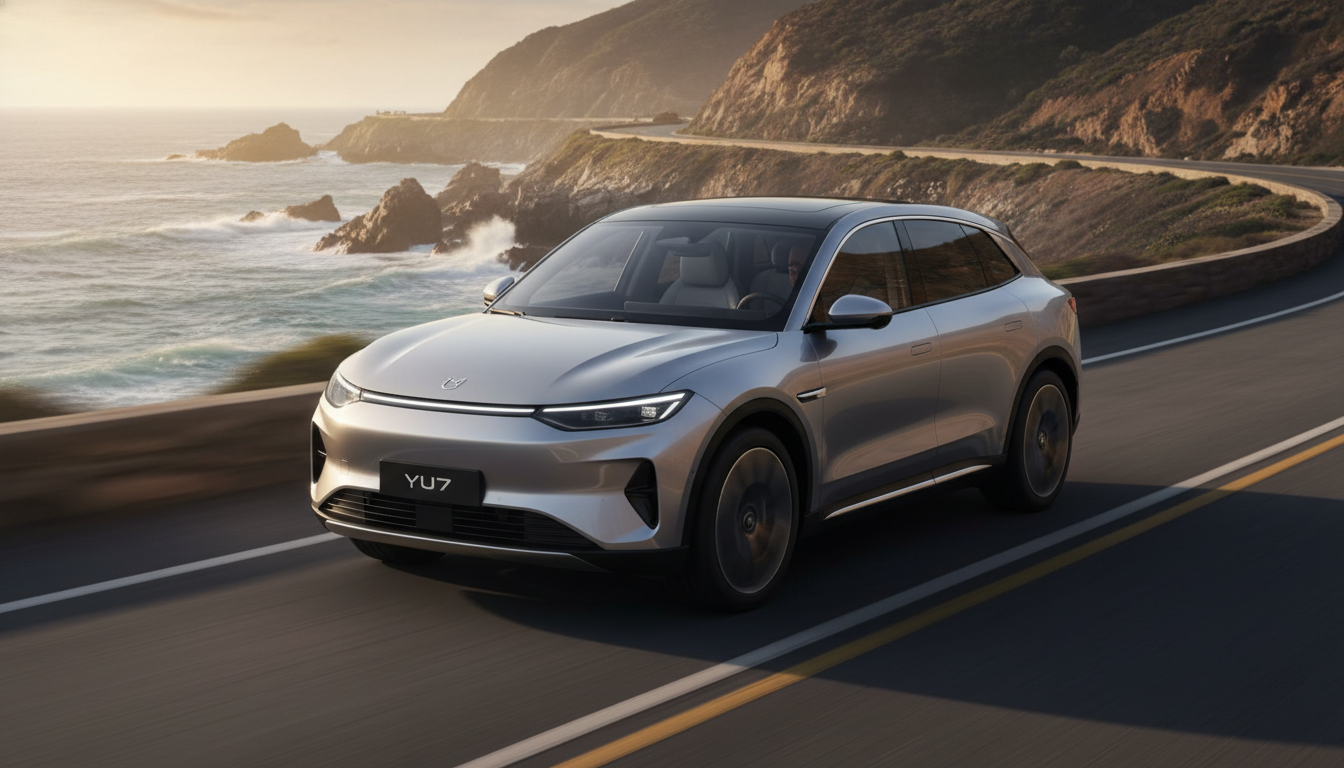


With 835 km of range, charging from 10% to 80% in 12 minutes and a price of R$ 192,000, the Xiaomi YU7 SUV received 200,000 orders in 3 minutes in China and now targets Europe and Latin America to compete with the Tesla Model Y and BYD in the most competitive segment in the world
The Xiaomi — yes, the same one that makes smartphones — received 200,000 orders in just 3 minutes for its new electric SUV. The Xiaomi YU7 can go up to 835 km on a single charge, charges from 10% to 80% in 12 minutes, and costs the equivalent of R$ 192,000 in China. It is cheaper and has a greater range than a Tesla Model Y.
The SUV was officially announced on June 26, 2025, with sales in China starting in July. Expansion to Europe and Latin America is expected in the second half of the year, according to G1.
The model comes in three versions: Standard (835 km, rear-wheel drive), Pro (760 km, all-wheel drive) and Max (760 km, 690 hp, 0-100 km/h in 3.2 seconds). The 800V silicon carbide platform is the secret to ultra-fast charging.
-
2027 Toyota Corolla Cross Unveiled: New Design, Enhanced Fuel Efficiency, Reduced Maintenance Costs, Advanced Technology, Connected Services, and Up to 10-Year Warranty

-
Fiat Cronos Precision 2018: Affordable Sedan with Spacious Trunk and Reliable Maintenance
-
Volkswagen to Cut Production by 1 Million Cars by 2030, Reducing Jobs and Platforms, Focusing on More Profitable Models

-
Toyota Launches First 100% Electric Car in Brazil: bZ4X with 343 HP, All-Wheel Drive, 361 km Range, Priced at $419,990 BRL, Limited to 99 Units



Xiaomi YU7: specifications that challenge the competition
- Range (Standard): 835 km (CLTC cycle)
- Battery: 96.3 kWh LFP (Standard/Pro) | 101.7 kWh NCM (Max)
- Power: 320 hp (Standard) | 690 hp (Max)
- 0-100 km/h: 5.9s (Standard) | 3.2s (Max)
- Charging 10-80%: 12 minutes (800V)
- Dimensions: 4.99m × 1.99m × 1.60m | wheelbase 3m
- Base price: 253,500 yuan (~R$ 192,000 / ~US$ 35,000)
- Sensors: 1 LiDAR + 3 4D radars + 11 cameras + 12 sensors
- Chip: Snapdragon 8 Gen 3 (boot in 1.35s)

Xiaomi YU7 vs Tesla Model Y vs BYD
The Xiaomi YU7 enters the most competitive segment of the global electric market with advantages in range, charging, and price. The Standard version achieves 835 km with a 96.3 kWh battery, while the base Tesla Model Y reaches 719 km. The difference is 116 km more for the Chinese model.
In acceleration, the Max version with 690 hp goes from 0-100 km/h in 3.2 seconds — a time that rivals a Porsche 911 GT3. The base price of R$ 192,000 (in China) is significantly lower than the Model Y in Brazil (~R$ 250,000-300,000).
The BYD, which dominates the Brazilian market with models like the Song Plus (~R$ 180-250 thousand), offers a typical range of 500 to 600 km — well below the Xiaomi YU7‘s 835 km. However, BYD already has a network of dealerships and after-sales service in Brazil, an advantage that Xiaomi does not yet have.

From smartphone manufacturer to car manufacturer
Xiaomi entered the automotive sector with the sedan SU7 in March 2024, which sold over 100 thousand units in just a few months. The success paved the way for the YU7. The strategy leverages the company’s technology ecosystem (smartphones, AI, IoT) as a competitive differentiator.
The HyperVision panel of 1.10 meters with three Mini LED screens, OTA updates in 15 minutes, and the automotive chip Snapdragon 8 Gen 3 reflect this approach. The car functions as an extension of Xiaomi’s digital universe.
China produced 9.5 million electric vehicles in 2024, accounting for 60% of global production. Brands like Xiaomi, BYD, and NIO are reshaping the automotive industry with technology, speed, and pricing that traditional European and American manufacturers cannot keep up with.

Important caveats
The range of 835 km uses the optimistic Chinese CLTC cycle. In practice (WLTP/EPA cycle), the real range is expected to be between 500 and 600 km. Still, it surpasses most competitors.
The price of R$ 192 thousand is a direct conversion of the Chinese price. In Brazil, import taxes could raise the value to over R$ 400 thousand. Availability in the country depends on approval by Inmetro and after-sales infrastructure. For complete data, consult the official Xiaomi website and the coverage by Canal VE.