






 Portuguese
  Spanish
  3 min of reading
  1 comment



Members of the Brazilian Army Complete Training to Operate the Nauru 1000C Drone, a Breakthrough in National Security and Monitoring, Highlighting 100% Brazilian Technology Developed by XMobots.
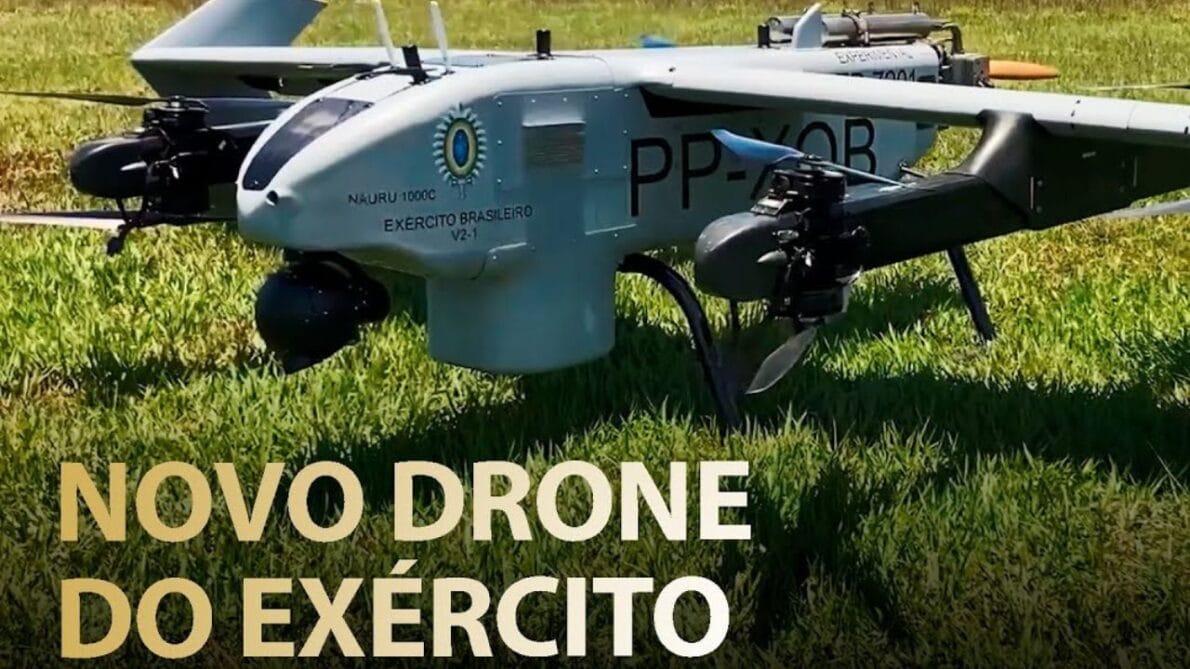
In a historic milestone for Brazilian aviation, members of the Brazilian Army completed an intensive nine-month training program to operate the Nauru 1000C military version BR drone, developed by XMobots. This remotely piloted aircraft system (RPAS), featuring completely national technology, is the first of its kind to be integrated into the Army’s fleet, designed for surveillance, security, and border monitoring missions.
A total of 21 military personnel were trained to operate the Nauru 1000C, which consists of three aircraft, a mobile base with control stations, high-precision radars, 3D scanners, and long-range data transmission systems. This technology, unprecedented in Latin America, represents a significant advancement in the country’s defense and security.
XMobots, a Brazilian Technology Company, Recently Completed Training for 21 Military Personnel from the Brazilian Army to Operate the Nauru 1000C Military Version BR Drone
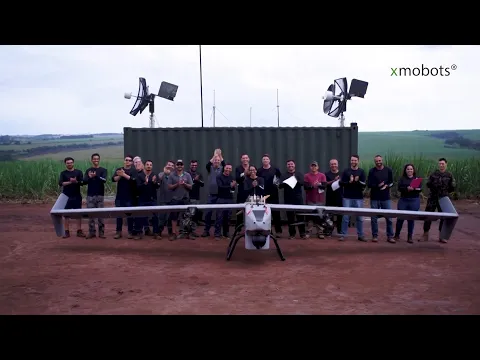

This training, which lasted nine months, marks a turning point in the history of Brazilian aviation, as it is the first time the Brazilian Army has integrated a RPAS (Remotely Piloted Aircraft System) of national manufacture into its fleet.
-
Leaving the charger plugged in without a phone consumes energy or is it a myth? Experts call the phenomenon “phantom consumption” and warn that dozens of devices on standby can add up on the bill over the year.

-
It accompanies Earth, but it is not a moon: Chinese probe reaches Kamo’oalewa and begins an unprecedented mission to investigate where the strange asteroid came from, what its internal structure is like, and whether its origin is linked to an ancient collision that launched fragments of the lunar surface into space.
-
Space technology used to search for water on Mars is now hunting for invisible leaks under the streets of São Paulo, using satellites, AI, and chlorine signals to help Sabesp recover up to 6.7 billion liters of water.

-
Japan sends ship to extract mud rich in rare earths at nearly 6,000 meters deep in the Pacific, attempts to lift 350 tons per day from the seabed, and transforms sediments near Minamitori Island into a strategic weapon to reduce dependence on China.



The Nauru 1000C, developed by XMobots, is one of the most advanced drone systems in the world for security and defense missions. It consists of three category 2 remotely piloted aircraft, a mobile base with three ground control stations, two stabilized optronic gimbals, GMTI and SAR radars, 3D scanners, two data transmission terminals with a range of 60 km, and a 100 km data link terminal. All this technology is made in Brazil, reinforcing the national capacity for technological development, especially for the Brazilian Army.
More than a Simple Drone, the Nauru 1000C is Equipped with Cutting-Edge Technology, Such as Electric VTOL (Vertical Take-Off and Landing) That Utilizes Eight Motors with Independent Batteries
This allows for automatic takeoffs and landings in critical and confined environments. The drone has a 50-liter fuel tank, ensuring long flight autonomy, and a communication range of 60 km, with a payload capacity of 18 kg.
Giovani Amianti, CEO of XMobots, highlighted the importance of the Nauru 1000C for the aerial robotics industry in Brazil and Latin America. “The technology embedded in the Nauru 1000C represents an unprecedented advancement. It took years of development to reach this stage of technological maturity, paving the way for applications in Intelligence, Surveillance, Reconnaissance, and Attack,” said Amianti.
The technical specifications of the Nauru 1000C include a wingspan of 7.7 meters, a length of 2.9 meters, a height of 0.98 meters, a maximum takeoff weight of 150 kg, and a flight autonomy of 10 hours. With these characteristics, the Nauru 1000C drone positions itself as an essential tool for the tactical operations of the Brazilian Army, offering a national and efficient solution for the country’s defense and security needs.








Parabéns exército brasileiro