






 Portuguese
  Spanish
  5 min of reading
  0 comments


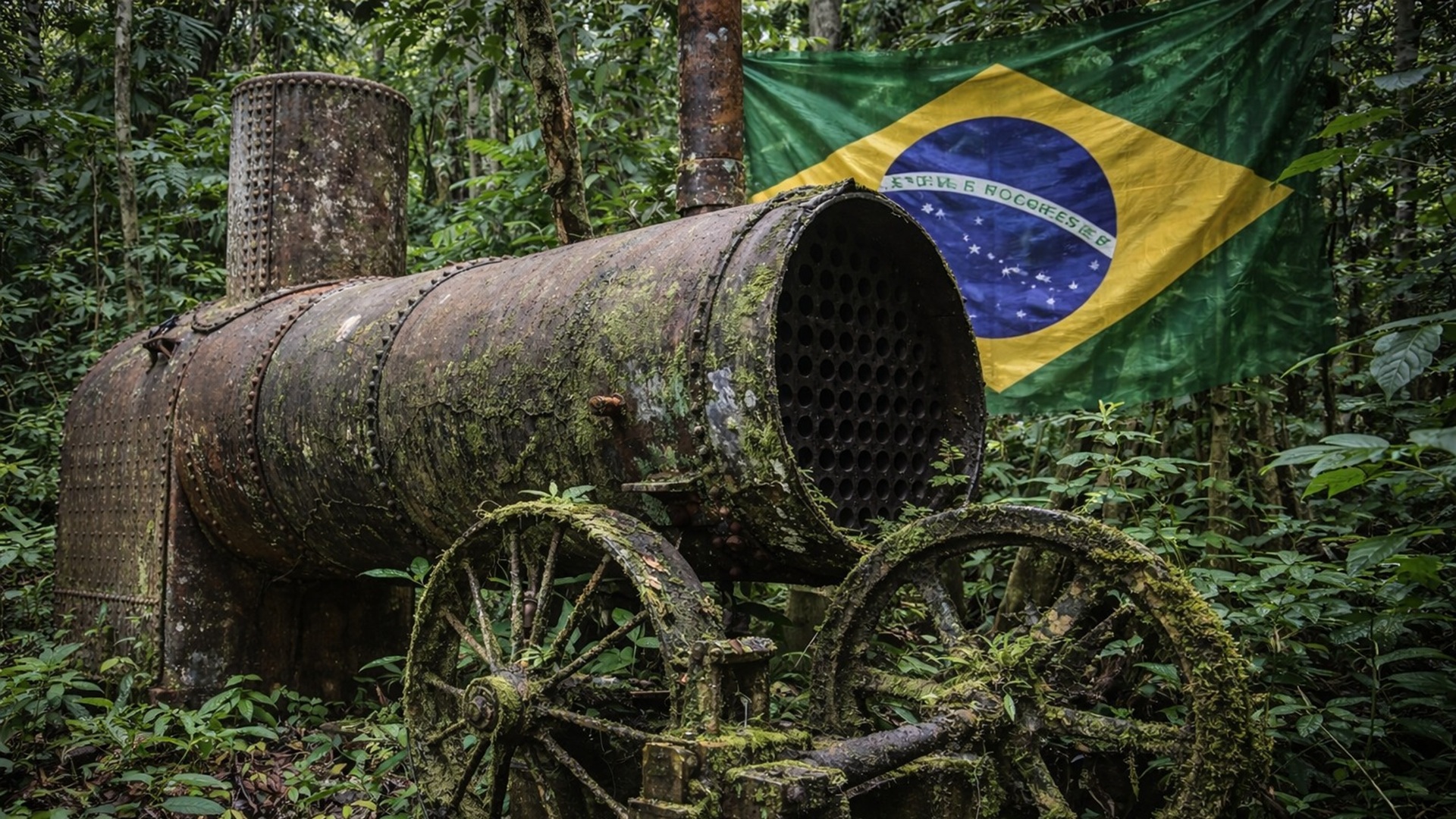
Registered Expedition By An Independent YouTube Channel Reveals Abandoned Machines, Historical Trails, And Unique Reports Of The National Petroleum Council’s Attempt In 1938 To Explore Oil In The Serra Do Divisor, An Area Now Protected In The Far West Of Brazil, Exposing Logistical Challenges, The Political Context Of The Novo State, And The Rapid Regeneration Of The Amazon Forest After Human Removal
An expedition recorded by the Canal Lá do B revealed rare images and historical accounts about the Brazilian state’s foray into the Amazon in 1938, when machines and structures were abandoned after a failed search for oil in the now-protected region.
The journey traversed rivers, closed trails, and areas of dense forest in the Serra do Divisor, in the municipality of Mâncio Lima, Acre, on the border with Peru.
Considered the far-western point of Brazil, the territory is part of one of the areas with the highest biodiversity on the planet and holds little-known marks of the industrial presence of the 20th century.
-
Immigrant women arrive in New York in search of work, learn professional baking, and find in the kitchen a gateway to wages in the food industry.

-
Reservoir drops in Thailand and reveals a “Death Railway” station that was hidden underwater for over 40 years, connected to the route built during World War II by Allied prisoners and Asian workers.

-
The rule of silence after 10 PM may lose strength in Brazilian cities, but noise will not be allowed, and new proposals divide residents and business owners.

-
Measuring 13m in wingspan, the F-15 Eagle is a tactical fighter that combines power, advanced electronic systems, large weapon capacity, and high maneuverability to dominate the skies in any condition.




The audiovisual narrative documents the reopening of historical paths, visits to metal structures corroded by time, and encounters with characters who preserve local memory, connecting geopolitics, environmental history, and forgotten heritage.
A Journey To The Geographic Limits Of The Country
The expedition began from local bases in the Serra do Divisor, with river travel along the Moa River and its tributaries.
Access to the park’s interior requires careful navigation and long walks through areas without established trails, a scenario that has changed little since the first half of the last century.
Even with contemporary technology, logistics remain complex. In 1938, transporting boilers, metal towers, and steel pipes to that environment represented an extreme challenge. The record shows that the current difficulty helps to gauge the magnitude of the historical operation.
The atypical cold for Amazon standards, the fog over the ridge, and the lack of signal reinforce the geographical isolation that shapes the experience of those traversing the region.
The Novo State Project In The Deep Amazon
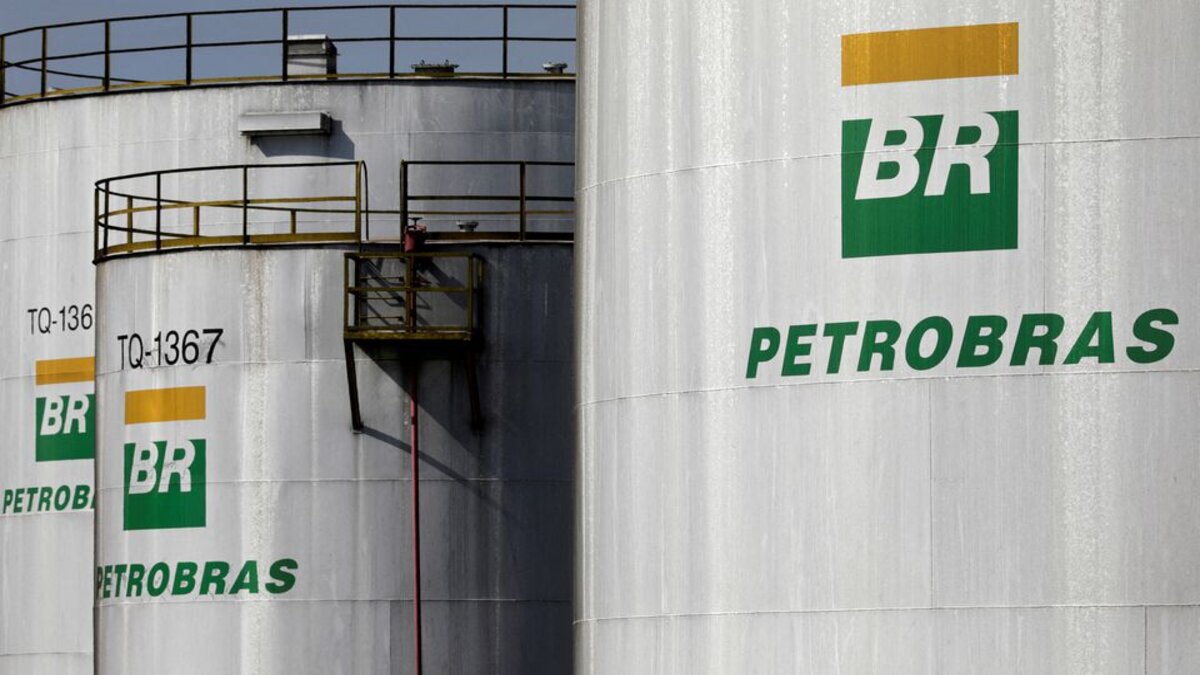
The 1938 incursion was led by the National Petroleum Council, created during the government of Getúlio Vargas. The agency preceded Petrobras and symbolized the quest for energy self-sufficiency in an international context marked by nationalism and pre-World War II tensions.
The Amazon, already economically integrated by the rubber cycle decades earlier, was once again seen as a strategic frontier. Serra do Divisor, although remote, was chosen for exploratory drilling in search of oil, considered promising at the time.
The attempt, however, found no economically viable reserves. Without technical returns and facing logistical obstacles, the operation was terminated, leaving behind a significant amount of heavy machinery.
The Central Hole And The Persistent Hydrological Phenomenon
One of the most well-known points of the historical expedition is the so-called Central Hole, an artificial well about 700 meters deep, drilled in the 1930s. The structure began to gush warm, mineral-rich water, creating a natural phenomenon that persists to this day.
The audiovisual record shows steam forming on the river’s surface, as well as still-visible metal pieces, such as steam boilers used to power the drilling equipment. Local accounts indicate frustrated attempts to contain the water pressure over the decades.
The area has become a point of regional visitation, associated with popular beliefs about the therapeutic properties of the water, possibly linked to the presence of sulfur.
The Reencounter With The Forgotten Drilling Hole
Unlike the Central Hole, the Drilling Hole remained practically hidden by the forest for decades. The trail to the site was closed, requiring manual clearing of the path and total reliance on the knowledge of old residents.
Guided by Edmilson Cavalcante, one of the most experienced inhabitants of the region, the explorers located the old road built for the oil operation. Even today, tire marks from tractors, manually placed stones, and remnants of bridges reveal the intense human activity of the past.
At the journey’s end, a true industrial graveyard appears: pipes, boilers, metal bases, and the drilling tower, consumed by rust and partially engulfed by vegetation.
Abandoned Machines And The Recovery Of The Forest
The contrast between corroded steel and closed forest is one of the central axes of the record. Less than a century after the deforestation necessary for road construction and equipment installation, the vegetation has reclaimed almost the entire space.
Trees grow over old roadbeds, and roots intertwine with metal structures. The scenario highlights the Amazon forest’s capacity for regeneration when human pressure is interrupted.
The expedition highlights that the road, once wide enough for tractors and transporting boilers, is now identifiable only by subtle details in the terrain.
Oral Memory And Stories From The Drilling Era
The content of Canal Lá do B incorporates accounts passed down through generations. Edmilson Cavalcante recounts that his father worked on the operation in 1938, transferred to the region as part of the territorial guard.
Stories about ferries laden with iron descending the river, nicknamed “black mule,” reveal the logistics’ impact on riverside communities. According to reports, the passage of these vessels was announced by radio, and residents avoided the river due to the strength of the waves.
Censored letters during the Novo State and the dependence on river levels for supplies show how politics, communication, and nature intertwined in the everyday life of the oil camp.
Rare Documents And Medical Reports Of The Expedition
The video also recovers testimonies from Antônio Carlos Boava, a sociologist and son of a doctor who worked on the CNP operation in Serra do Divisor. According to him, the mission faced severe sanitary challenges, such as malaria and extreme isolation.
Supply relied entirely on river navigation, and letters took weeks to arrive. State censorship controlled correspondence, reflecting the authoritarian context of the time.
These records are considered some of the few known documents about the exploration attempt, increasing the historical value of the rediscovery.
The Edson Cave And The End Of The Journey
On the return, the team visited Edson Cave, one of the first caves cataloged in Acre. The formation, of sandy origin with an internal watercourse, is considered fragile and not very safe for frequent visitation.
The potential presence of wild animals, such as large felines, reinforces the need for caution. Still, the site represents another point of geological interest in a region where caves are uncommon.
Passing through the cave symbolically concludes the expedition, connecting industrial history, biodiversity, and geology in a single journey.
Historical Heritage Under Discussion
In the end, the record raises the discussion about the future of the Drilling Hole. Transforming the site into a tourist spot would require planning, conservation, and debate about the limits between public access and environmental preservation.
The expedition not only documents a little-known episode of Brazilian history but also questions how the country deals with industrial remnants in the Amazon and the memory of projects that shaped, even if temporarily, the territory.





-

-

-

-

-

16 people reacted to this.