






 Portuguese
  Spanish





Italian-Brazilian aircraft combines speed, range, engineering, and modernization in a trajectory marked by international cooperation, military use, and Embraer’s participation in a highly complex defense program.
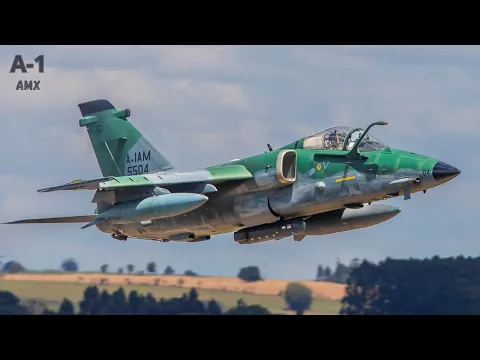
The A-1 AMX, designated by the Brazilian Air Force as A-1, entered the history of the country’s military aviation as a light attack aircraft developed in cooperation with Italy and incorporated into the FAB for air-to-surface missions, reconnaissance, and close air support.
According to data released by the Brazilian Air Force itself and technical records of the AMX program, the aircraft reaches a maximum speed in the range of 1,050 km/h and has a ferry range of approximately 3,300 km with external tanks. The subsonic fighter-bomber became one of the most relevant programs for Brazilian participation in international defense projects.
The aircraft was not designed to fulfill the same role as interception fighters, such as the F-5.
-
After three years living in a van, a couple bought an abandoned historic house and had to deal with mold, damaged plumbing, raccoons, and heavy cleaning before moving in.

-
In the city that the market called “road cockroach,” between Balneário Camboriú and Florianópolis, he launched a planned neighborhood worth R$ 1 billion with a marina for 90 boats and sold 80% of the lots in the first phase in 1 week.

-
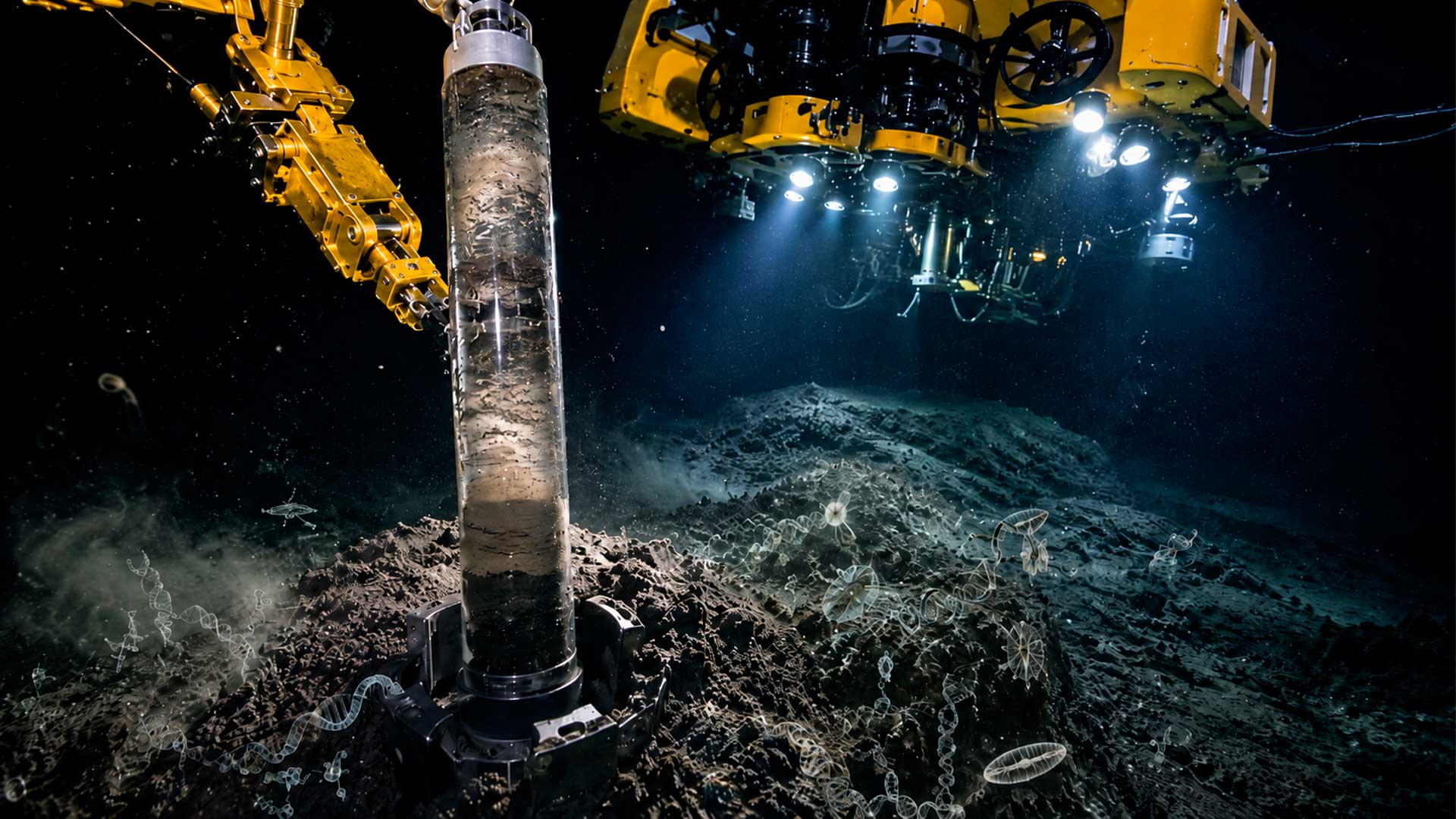
At a depth of 5,000 meters, where there is no sunlight, researchers found ancient DNA preserved in the mud of the South Atlantic and discovered signs of organisms that did not match known records.

-
At 77 years old, a retired woman who never tires of learning completes her second degree in design in Ceará and moves people by revealing the help of her 98-year-old mother in the final project.



Its primary use was linked to tactical attack, focusing on ground targets, low-altitude flight, and the ability to operate in scenarios where autonomy, stability, and weapon load had operational weight.
In the FAB, the modernized version received the designation A-1M.
The AMX also marked an industrial stage for Embraer.
By participating in the consortium with Italian companies, the Brazilian manufacturer began to operate in areas of greater technological complexity, such as systems integration, avionics, structure, testing, and weapon compatibility.
The program is cited in defense records as an important learning phase for engineers and technical teams involved in the national aeronautical industry.
A-1 AMX program brought Brazil and Italy closer in military aviation
The origin of the AMX is linked to the military needs of Brazil and Italy in the late 1970s and early 1980s.
The air forces of both countries sought a light attack aircraft capable of operating in interdiction, close air support, and reconnaissance missions.
The solution came through a joint program that brought together Aeritalia, Aermacchi, and Embraer.
For the Brazilian industry, participation in the project meant access to development stages that went beyond component manufacturing.
The work involved electronic systems integration, equipment adaptation, flight tests, and military certification processes.

In combat aircraft, these elements often require a high level of coordination between engineering, production, maintenance, and operational doctrine.
The experience gained should not be treated as the direct origin of all subsequent Embraer projects, but it is part of the company’s technical maturation process.
Programs of this magnitude expand the knowledge base of engineers, test pilots, and support teams, especially in areas where system reliability is crucial for operational safety.
Tactical attack fighter had a different role in the FAB
The A-1 was designed to attack ground targets and operate at low-altitude profiles.
This type of mission imposes specific demands on the aircraft, because flight close to the terrain increases exposure to turbulence, birds, obstacles, and short-range anti-aircraft defense.
For this reason, the structure and onboard systems must meet resistance and redundancy requirements.
In practice, the aircraft combined characteristics aimed at mission endurance, flight stability, and weapon transport.
The external load capacity was up to 3,800 kg, distributed at points under the wings and fuselage.
In the Brazilian configuration, the A-1 received two 30 mm cannons, while the Italian version adopted different internal armament, with a 20 mm cannon.
The comparison with the F-5 helps differentiate the roles.
The F-5 was primarily employed by the FAB as an air defense and interception fighter, with supersonic performance and a focus on air-to-air combat.
The AMX, on the other hand, was oriented towards air-to-surface missions, where maximum speed was not the only performance factor.
Range, precision, weapon load, and navigation capability also influenced the operational outcome.

A-1M modernization updated avionics and onboard systems
With the evolution of electronic systems, the FAB began modernizing the AMX to keep part of the fleet in operation.
The A-1M program replaced analog equipment with a digital cockpit, incorporated new navigation and communication features, integrated self-protection systems, and updated the aircraft’s avionics.
The first modernized unit was delivered in 2013, in Gavião Peixoto, in the interior of São Paulo.
At the time, the initial forecast was to update 43 aircraft, but the program was not completed to that volume.
Even so, the modernized units gained features compatible with more recent operational standards, such as multifunctional displays and pilot situational awareness support systems.
Among the equipment associated with the modernization package was the SCP-01 radar, developed to enhance target detection and tracking capabilities.
The system was designed to operate in air-to-ground and air-to-sea modes, which increased the aircraft’s flexibility in attack and reconnaissance missions.
The update also included electronic warfare measures, an essential area for aircraft that may operate in a threat environment.
A-1 AMX operated in Santa Maria and in military exercises
During its trajectory in the FAB, the A-1 became associated with the Santa Maria Air Base, in Rio Grande do Sul.
The unit housed squadrons that employed the aircraft in training, exercises, and defense missions.
Its location in the South of the country contributed to operations in training areas and to military presence in a strategic region of Brazilian territory.
The AMX’s autonomy allowed for long-distance deployments, a relevant factor for a country with continental dimensions.
In training missions and joint exercises, the aircraft could be employed in different regions, including scenarios that required broader logistical planning.
This type of deployment depended on ground support, refueling, maintenance, and coordination with other FAB units.
The A-1M also participated in recent training operations in the Amazonian environment.
In 2025, aircraft of the model were deployed to Boa Vista, in Roraima, during Operation Atlas, an Armed Forces exercise aimed at integrating military assets in a scenario of vast territorial extension.
The presence of the AMX in this type of activity demonstrated the aircraft’s use in training actions even in an advanced stage of its operational life.
Transition to the F-39 Gripen changes Brazilian combat aviation
The gradual replacement of the AMX occurs in the context of the renewal of Brazilian combat aviation, with the arrival of the F-39 Gripen.
The change involves not only the introduction of a new aircraft but also the adaptation of doctrine, training, maintenance, logistics, armaments, and support systems.
In air forces, this process usually occurs progressively, to preserve operational capability during the transition.
The A-1 ceased to be merely an attack platform throughout its trajectory.
For the FAB, it served as a means of training, reconnaissance, and tactical employment.
For the industry, it integrated an international program that required knowledge transfer and direct participation of Brazilian teams in sensitive areas of aeronautical engineering.
The assessment of its place in the history of Brazilian defense must consider this set of factors.
The AMX was not the fastest aircraft in the FAB, nor did it have the function of an air superiority fighter.
Its role was related to tactical attack, reconnaissance, and the consolidation of industrial competencies in a sector where few countries participate in the development of military aircraft.
Even with the arrival of more recent platforms, the A-1 AMX remains a reference in debates about engineering, defense, and international cooperation.


