Portuguese
  Spanish


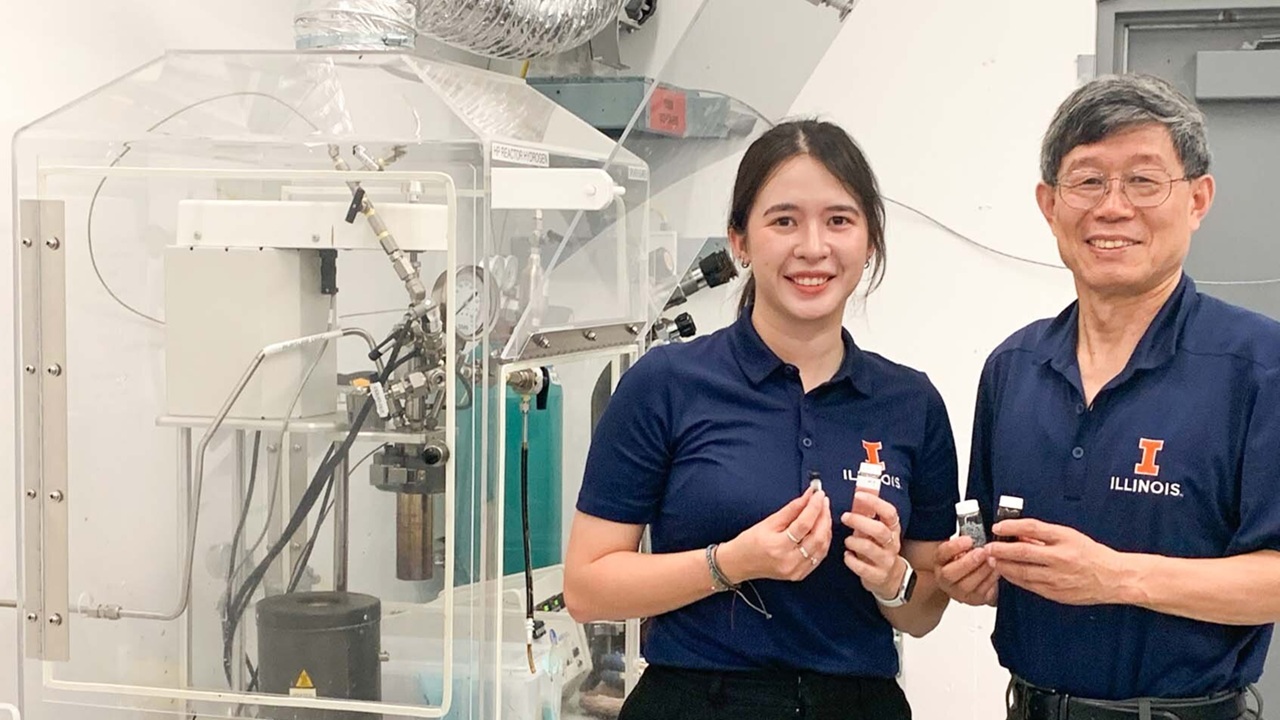

Researchers at the University of Illinois Urbana-Champaign used hydrothermal liquefaction to convert food waste and treated effluents into sustainable aviation fuel, evaluated a 50% blend with regular kerosene, and identified climate benefits, although the logistics of collection and the treatment of a toxic byproduct remain significant challenges.
Aviation fuel produced from food waste has found a new path with a method developed by researchers at the University of Illinois Urbana-Champaign. The proposal transforms food scraps into sustainable fuel for aircraft.
Published in 2026, the study, published in the journal Nature Sustainability, analyzes technical, economic, and environmental factors. The team works with sustainable aviation fuel as a partial and renewable alternative to conventional kerosene used by the airline industry.
Aviation fuel is born from wet waste
The method uses hydrothermal liquefaction, or HTL, to convert food waste into biocrude. The process mimics the natural formation of petroleum and allows working even with treated effluents.
-
OnePlus N6 Smartphone to Launch in India with 8,000mAh Battery and 45W SuperVOOC Charging, Lasting Up to Three Days

-
Scientists Plan to Release Air Bubbles Underwater to Protect Antarctica’s “Doomsday Glacier” from Melting

-
Chinese R6000 Drone Combines Airplane and Helicopter Features, Carries Up to 12 People for Multiple Missions
-
In the World’s Most Densely Populated Desert, Families Dig Funnel-Shaped Underground Cisterns to Capture Rare Rainfall and Store Drinking Water for Up to Eight Months



After this conversion, the biocrude undergoes refining with a catalyst and distillation. In this research, the scientists adopted a simpler approach, with lower catalytic intensity and greater use of distillation.
Yuanhui Zhang, corresponding author, explained that the method is more economical and environmentally favorable. However, the fuel obtained still presents lower quality than the version previously developed.
Therefore, the product needs to be mixed with conventional aviation fuel. Zhang compared the strategy to the use of ethanol in automobiles, combined with fossil fuel to function adequately in engines.
50% blend underwent evaluations
The tests were conducted with a 50% blend of SAF and 50% regular fuel. The team evaluated technical parameters to verify compatibility with ASTM and Federal Aviation Administration standards.
According to Zhang, the available production would hardly meet the entire demand of the aviation sector. In this scenario, blends with 10% or 20% sustainable fuel could be viable, following a logic similar to that adopted with biodiesel.
The research is still currently occurring on a small scale. The laboratory can produce several liters of enhanced fuel, a sufficient quantity for tests in diesel engines. The next stage involves evaluations in aircraft engines.
Logistics and byproduct elevate the challenges
The main bottleneck is in collection. Currently, a large portion of food waste ends up in landfills or sewage treatment plants, where the material is separated and turned into sludge.
Recovering this content requires logistics capable of directing the waste for reuse. The advantage of hydrothermal liquefaction is allowing the use of wet raw materials, reducing some limitations of industrial processing.
The procedure, however, generates a toxic and nutrient-rich aqueous phase, called HTL-AP. Scientists tested an electrochemical treatment to recover acids and nutrients from this byproduct.
Costs may decrease with technological advances
The analysis gathered fuel production, byproduct treatment, operational costs, and possible climate impacts.
The team compared three economic and environmental scenarios. In the first, HTL-AP would be sent to a centralized treatment station. In the second, it would receive electrochemical treatment. The third considered a future version of this technology.
In the current scenario, electrochemical treatment almost tripled the cost per gallon. Researchers estimate that technological advances could reduce this value to reach a level equivalent to the basic scenario.
The analyses indicated that both the basic scenario and the improved electrochemical treatment could achieve negative net carbon emissions. The result indicates potential to reduce climate impact.
The work describes a viable route to transform urban organic waste into sustainable aviation fuel.
The proposal directly connects food reuse, nutrient recovery, and energy production within a circular economy.
Do you consider it viable to use aviation fuel made from food waste in blends with conventional kerosene?
Leave your opinion and evaluation in the comments and tell us if the environmental benefits outweigh the challenges of collection, byproduct treatment, and still high costs.