






 Portuguese
  Spanish
  3 min of reading
  0 comments


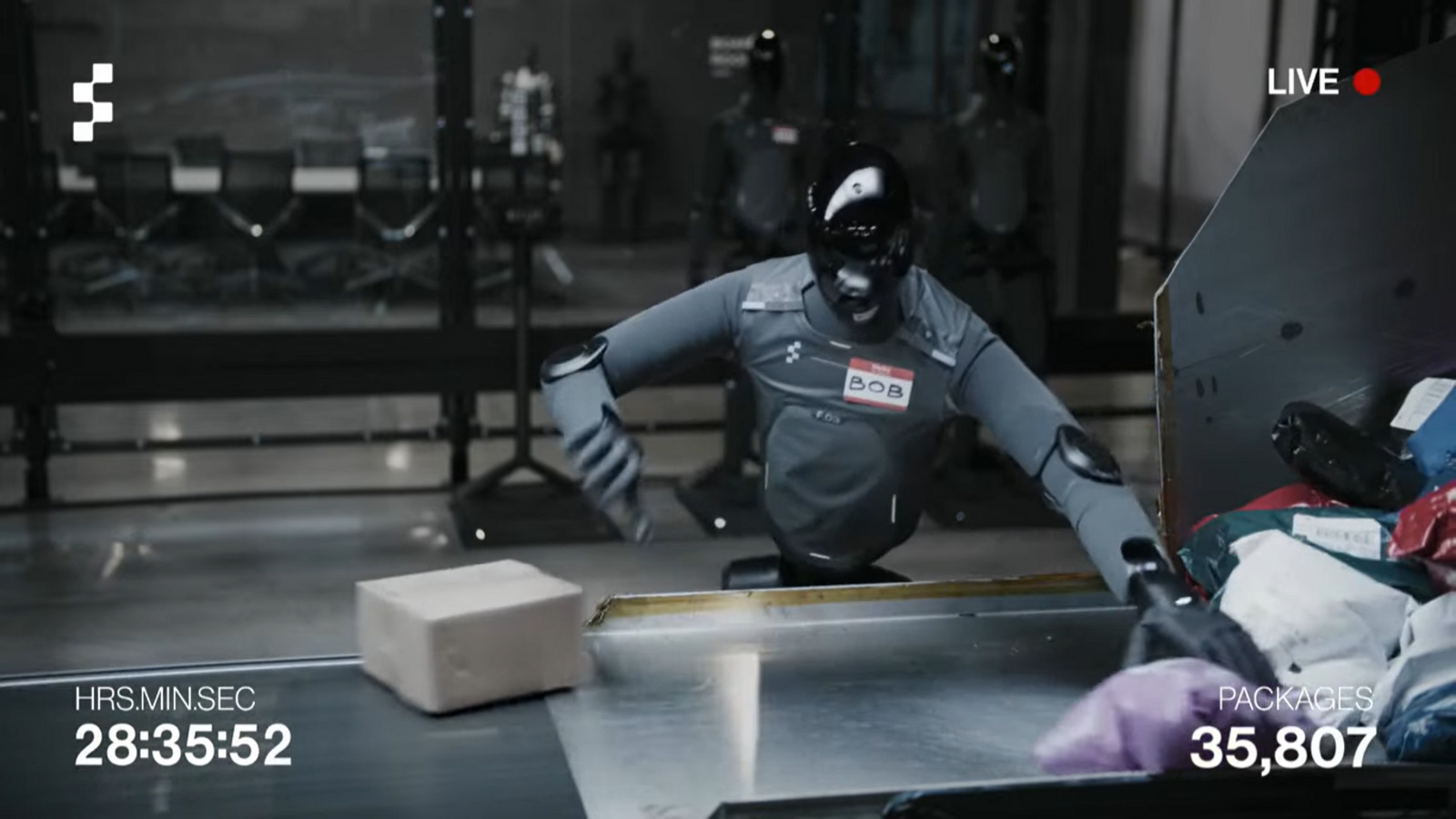
Figure 03 robots perform an autonomous 8-hour shift in warehouse tasks, while Helix-02 system integrates vision, touch, and movement to enhance AI-based industrial automation
The Figure 03 robots, from the American startup Figure AI, completed an autonomous 8-hour shift in a live event that started this Tuesday, the 13th, showcasing logistics and warehouse tasks without direct human intervention.


Figure 03 tests automation in a full shift
The public demonstration became a showcase of the advancement of AI-based industrial automation.
The humanoid robotics company, based in California, put its robots to perform typical activities of logistics centers during a full shift.
-
Helicopter Drops 180 Tons of Sand and Gravel on Swedish River to Revive Ecosystem Damaged by Decades of Exploitation

-
Brazilian Company Launches Retro Smartphone with 48 MP Camera, T9 Keyboard, and Privacy Features for Social Media-Free Use

-
Self-Taught Chinese Farmer Builds 5-Ton Submarine from Scrap, Launches It in Anhui River
-
Invisible Induction Technology Enables Wireless Power for Blenders, Coffee Makers, and Air Fryers, Reducing Countertop Cables




The experiment was not limited to showing machines walking or holding boxes. The proposal was to demonstrate that humanoid robots can take on part of the repetitive operational work done by millions of people in factories, warehouses, and distribution centers.
The displayed tasks involve activities related to the manual movement of products, a sector that includes between 15 million and 20 million workers worldwide.
This group includes conveyor operators, order pickers, packers, and those responsible for storing goods.
Helix-02 integrates vision, touch, and movement
The operation of Figure 03 in the live event depends on Helix-02, the company’s new AI architecture. The system integrates computer vision, touch, and body control into a single neural network, aimed at real-time robot command.
Figure claims that this approach differs from traditional industrial robotics models, where each function usually requires its own programming.
In Helix-02, the unified neural network coordinates the entire body of the machine during the execution of actions.
The architecture has three layers. The S2 acts as a brain for reasoning and planning. The S1 transforms perceptions into physical commands 200 times per second.
The S0, compared to the human cerebellum, operates at 1 kHz to maintain balance and stability.
A year ago, the company had demonstrated control of arms and hands with a single neural network. Now, Helix-02 expands this capability to the entire body, allowing continuous walking, navigation through real environments, and object manipulation.
Production increases at BotQ factory
The demonstration occurs as technology companies compete for space in the AI-based physical automation market. Tesla, Agility Robotics, Apptronik, and Sanctuary AI are also working to transform humanoid robots into operational workforce.
Figure claims to have increased its production from one unit per day to one unit per hour in less than four months.
In total, more than 350 machines have already been produced by the BotQ factory, within this industrial scale effort.
This advancement indicates the company’s attempt to move beyond the experimental phase and bring the Figure 03 closer to broader operational applications.
This movement, however, still appears as a demonstration of capability, not as proof of large-scale economic viability.
Warehouses concentrate repetitive tasks
Logistics has become one of the main testing grounds for automation because it involves repetitive, standardized, and physically demanding functions.
Warehouses, factories, and fulfillment centers rely on constant operations to sort, pack, and store products.
Amazon is presented as the biggest symbol of this process. The company employs about 1.58 million people worldwide, with data from 2025, and a large part of this contingent works in warehouse operations.
Functions like picking, product collection; packing, packaging; and stowing, shelf storage, still heavily depend on human labor.
This scenario helps explain why systems like the Figure 03 target this type of operation.
Brazil also appears on the logistics map
In Brazil, Amazon has more than 250 logistics centers and over 36,000 direct and indirect employees.
Mercado Livre, Shopee, and Magalu have also rapidly expanded their logistics structures in recent years.
At the same time, major operators have been accelerating the replacement of manual processes. Amazon already uses automatic packaging systems and claims to be retraining more than 700,000 workers for technical roles.
Its largest distribution center has 18 kilometers of automated conveyors and the capacity to process more than 1 million packages per day.
The Figure live reinforces the advance of physical AI over a large global market of low-skilled jobs.
With information from Exame.




-

1 person reacted to this.