






 Portuguese
  Spanish


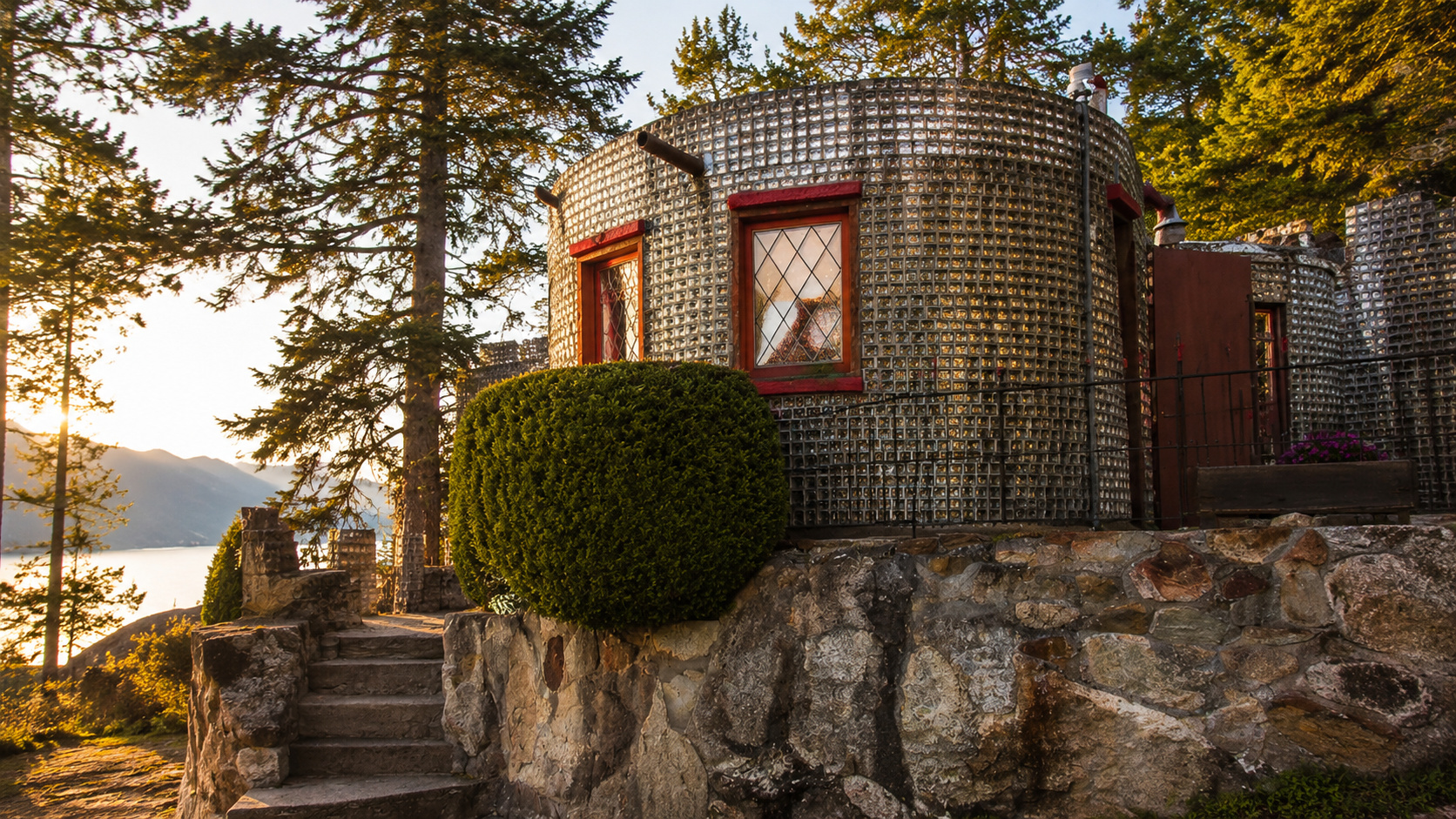


The bottle house in Canada shows how discarded jars from the funeral industry became recycled architecture, a curious attraction, and a translucent construction near Kootenay Lake in British Columbia
A Canadian house made with about 500,000 embalming jars draws attention for a rare reason: it was born from the disposal of a material linked to the funeral industry.
The construction is located in Sanca, British Columbia, on the shores of Kootenay Lake. The report was published by Atlas Obscura, a digital guide to curious places around the world, which records the work as Boswell Embalming Bottle House.
The impact of the story lies in the contrast. While glass houses are usually associated with high cost and luxury projects, this translucent structure was built with discarded jars by a retired former funeral worker.
-
Improper Outlets Can Cause Fires and Damage Devices: How to Identify the Correct 10A or 20A Model for Each Appliance

-
Entrepreneur Who Started at 13 Delivering Flyers by Bike in São Paulo Now Runs a 4,000 m² Culinary Complex in Brazil

-
In China, Workers Use VR Goggles and Body Sensors to Train Humanoid Robots for Tasks Like Folding Clothes and Stocking Stores
-
12-Year-Old Math Prodigy from Brazil Wins Two Gold Medals and Aims for Elite IMPA Tech


Bottle house in Canada transforms funeral waste into an unusual work
The Boswell Embalming Bottle House was built by David H. Brown, a retired former funeral worker. He used hundreds of thousands of embalming fluid jars that had been discarded.


Embalming fluid is used in funeral procedures. Therefore, the origin of the jars makes the house even more curious. The material came from an environment not typically associated with construction and became part of the walls of a residence.
The estimate of about 500,000 jars helps explain why the work draws so much attention. It was not just a small reuse experiment. It was an entire construction marked by volume, patience, and an unusual choice.
Translucent structure near Kootenay Lake creates a rare visual effect
The house draws attention for its translucent appearance, as the jars allow light to pass through. The result resembles a glass construction, but with a much stranger story behind it.
The location also adds to the curiosity. The work is located on the shores of Kootenay Lake, in Sanca, a region of British Columbia. The natural setting contrasts with a structure made from discarded material from the funeral industry.
This contrast makes the house even more striking. On one side, there is the lake landscape. On the other, there is a construction made with jars that few people would imagine seeing used as part of a work.
Atlas Obscura highlights the story of David H. Brown and the Boswell Embalming Bottle House
Atlas Obscura, a digital guide to curious places around the world, detailed the origin of the Boswell Embalming Bottle House and the use of embalming fluid bottles in the construction.
The story gains traction because it involves a simple yet visually impressive solution. David H. Brown repurposed a very specific type of waste and gave it a completely different function.
The house does not rely on sophisticated technology to amaze. What impresses is the central idea: transforming discarded funeral bottles into a luminous, visible, and permanent construction.
Recycled architecture gains an unusual example even by uncommon standards
Recycled architecture often appears with common bottles, repurposed wood, tires, or other more well-known materials. In this case, the difference lies in the origin of the bottles.
The use of material linked to embalming creates a layer of strangeness. The house seems light and bright, but its raw material came from a sector associated with farewells and funeral rituals.

This mix explains why the construction has become so talked about. It combines recycling, professional memory, and a glass aesthetic, but without following the traditional path of expensive works designed to appear luxurious.
Why the house made with embalming bottles draws so much attention
The curiosity is not just in the number of bottles. The strength of the story comes from the combination of place, material, and origin. A house near a lake, made by a former funeral employee, with about 500,000 bottles, is not something common.
For those who see the construction, the impact is immediate. It looks like a glass house, but it carries a story of unlikely repurposing. What would be waste turned into walls, light, and a point of interest.
The Boswell Embalming Bottle House shows how unused objects can gain a new function when someone sees value where almost everyone else would see only waste.
The Canadian house made with embalming bottles remains a rare example of creativity applied to repurposing. It mixes beauty, strangeness, and an origin that captures attention.
Would you live in a house made with thousands of bottles linked to the funeral industry, or is this story too curious to become a home? Share your opinion.


