Portuguese
  Spanish




Pierre Auger Observatory uses 3,000 km² in Argentina to study cosmic particles with extreme energy.
In western Argentina, near the city of Malargüe, in the province of Mendoza, scientists have installed one of the planet’s largest scientific structures to investigate a phenomenon that still challenges modern physics: ultra-high energy cosmic rays. According to the Argentine institute ITeDA, in a publication dated November 16, 2024, the Pierre Auger Observatory covers approximately 3,000 km² in Pampa Amarilla, between Malargüe and San Rafael, with 1,660 surface detectors and 27 fluorescence telescopes aimed at recording particles from deep space.
These particles arrive in the Earth’s atmosphere with such extreme energies that they make the observatory a kind of planetary trap for natural cosmic collisions. The Pierre Auger open data platform itself states that, at the highest energies, these cosmic rays travel almost at the speed of light and can be more than ten million times more energetic than anything produced by human accelerators, which leaves open one of the central questions of astrophysics: what objects in the Universe can accelerate particles to this level?
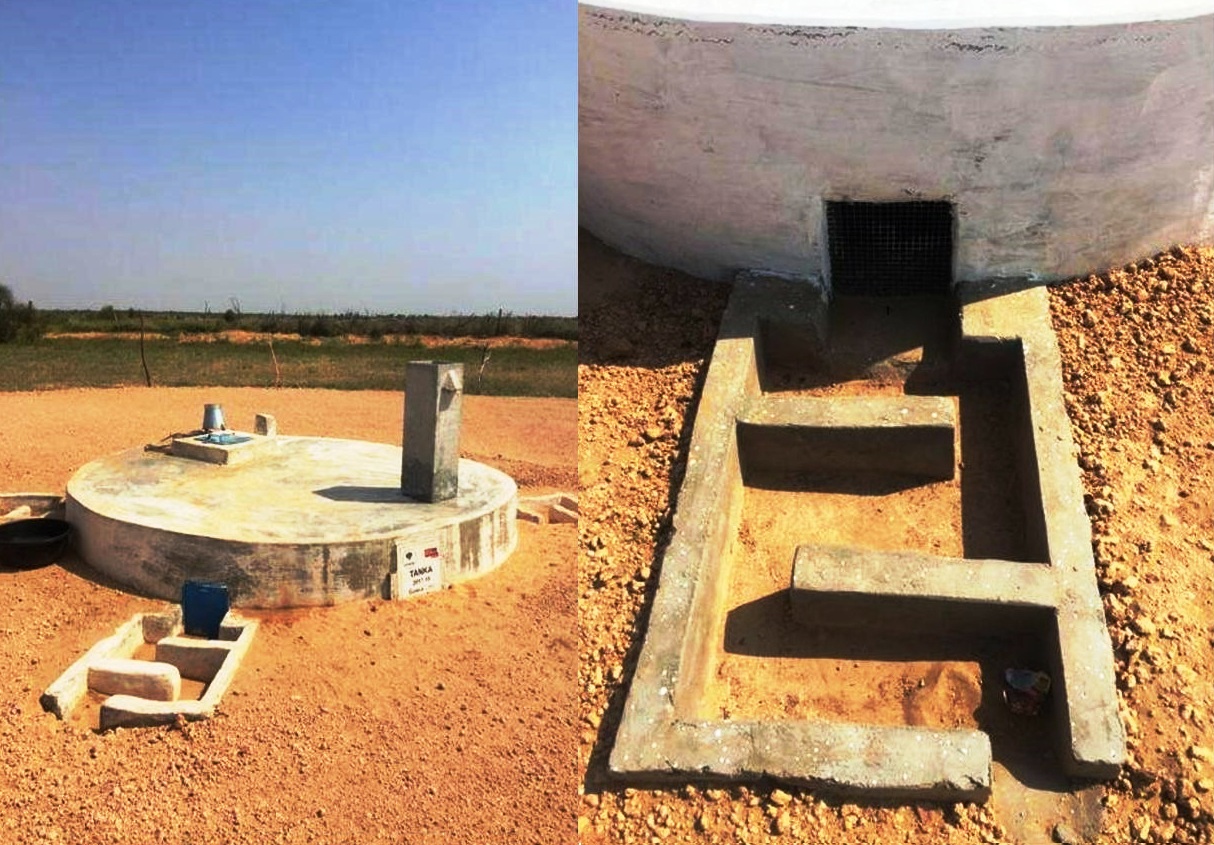
To try to answer this question, Pierre Auger combines two observation methods in the same system. According to the observatory’s official page, ground detectors record secondary particles when they interact with water tanks, while atmospheric telescopes capture the ultraviolet light emitted by particle showers in the sky.
-
Scientists Convert Food Waste into Aviation Fuel, Successfully Test 50% Blend with Conventional Kerosene to Cut Emissions and Promote Sustainable Flights

-
OnePlus N6 Smartphone to Launch in India with 8,000mAh Battery and 45W SuperVOOC Charging, Lasting Up to Three Days
-
Scientists Plan to Release Air Bubbles Underwater to Protect Antarctica’s “Doomsday Glacier” from Melting

-
Chinese R6000 Drone Combines Airplane and Helicopter Features, Carries Up to 12 People for Multiple Missions



Pierre Auger Observatory occupies an area comparable to entire cities
The size of the observatory is one of the most impressive aspects of the project. Detectors have been distributed across approximately 3,000 km² in Mendoza province, an area larger than many entire Brazilian cities.
This scale is necessary because ultra-energetic cosmic rays are extremely rare. Some particles can take years to hit a specific region of the detector.


The observatory’s main system consists of hundreds of tanks distributed throughout the region. Each tank contains ultrapure water and sensors capable of detecting flashes produced when secondary particles pass through the liquid at very high speed.
This phenomenon is known as Cherenkov radiation, a kind of “flash” generated by extremely fast particles.
Earth’s atmosphere functions as part of the giant detector
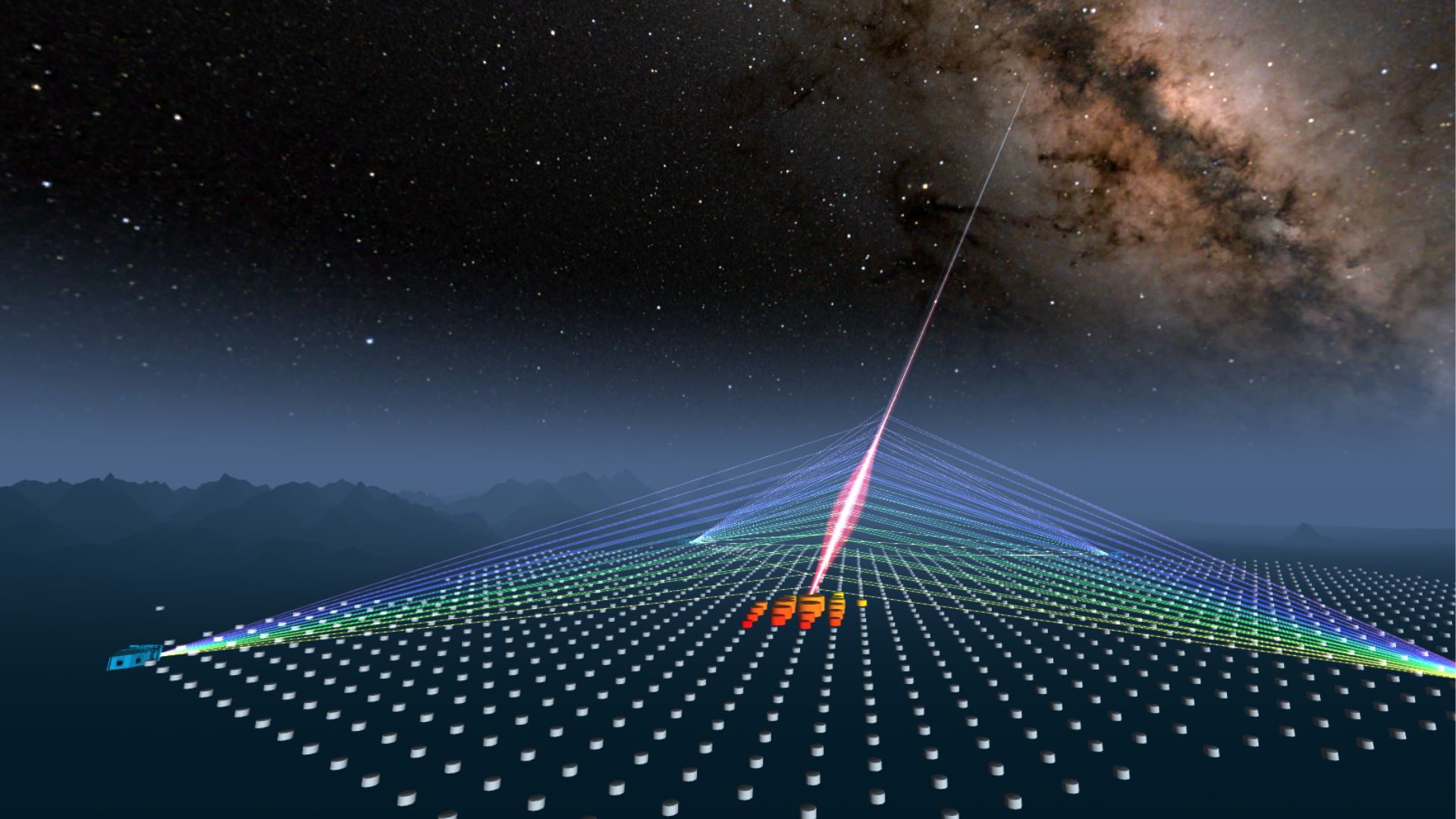
Pierre Auger does not directly observe cosmic rays coming from space. When these particles enter the Earth’s atmosphere, they collide with air molecules and produce enormous showers of secondary particles.
These showers spread for kilometers, hitting the detectors installed on the ground. The energy of some detected particles impresses even specialists.
The most extreme events recorded have energy far above what humanity can artificially produce in accelerators.
This makes cosmic rays a kind of natural laboratory for studying physics at levels inaccessible to terrestrial machines.
Scientists try to discover which objects in the Universe produce these particles
One of the biggest questions of the project is to identify the origin of ultra-energetic cosmic rays. Supermassive black holes, violent stellar explosions, and active galactic nuclei are among the main candidates.
But there is still no consensus on which objects can truly accelerate particles to such extreme energies.
When a cosmic ray hits the atmosphere, it produces a shower of particles. This cascade can cover huge areas, hitting several detectors simultaneously.
By analyzing the time and intensity of the recorded signals, scientists can reconstruct the trajectory and energy of the original particle.
Special telescopes monitor flashes produced in the atmosphere
In addition to the ground tanks, the observatory also uses atmospheric fluorescence telescopes. These instruments observe small flashes of light produced when particle cascades traverse the atmosphere.
This allows complementing the data collected by ground detectors. The Pierre Auger brings together scientists from dozens of institutions around the world.
The international collaboration involves physicists, engineers, programmers, and data analysis specialists.

Projects of this magnitude require global cooperation because the phenomena studied are among the most complex in modern science.
Argentine observatory became a world reference in cosmic rays
Since its creation, the Pierre Auger has become one of the main centers for the study of cosmic rays on the planet.
The measurements carried out by the observatory have helped produce some of the most important information ever obtained about ultra-energetic particles. This has placed Argentina at the center of a highly strategic area of modern astrophysics.
The observatory’s concept is impressive precisely because it uses the atmosphere itself as part of the experiment.
Instead of trying to directly capture particles coming from space, scientists observe the effects produced by them as they hit the Earth’s air. In practice, the sky acts as a huge screen where invisible collisions leave detectable traces.
Artificial intelligence helps interpret extremely rare events
The volume of data generated by the detectors is gigantic. Advanced computing and artificial intelligence systems help filter relevant signals and identify patterns associated with cosmic rays.
Without this processing, it would be practically impossible to analyze so many events simultaneously. Scientists believe that these particles can reveal details about:
- supermassive black holes
- gamma-ray bursts
- violent cosmic collisions
- extreme magnetic fields
- still unknown energetic events
Therefore, studying cosmic rays is an indirect way to investigate the most violent environments in the Universe.
Project transforms an entire region of Argentina into an astronomical laboratory
Few scientific experiments occupy areas as large as the Pierre Auger. The distribution of detectors across thousands of square kilometers makes the observatory a scientific infrastructure on a territorial scale.

This transforms part of the Argentine landscape into a gigantic laboratory dedicated to the study of the cosmos. Ultra-energetic cosmic rays are also important because they can reveal phenomena beyond current physics.
Extreme events help researchers test theories about particles, energy, and the behavior of the Universe under extreme conditions. Each detection can bring information impossible to reproduce artificially.
The Pierre Auger Observatory attempts to answer a question that still challenges modern science
Despite decades of research, scientists still don’t know exactly what accelerates particles to such gigantic energies. The Argentine observatory exists precisely to try and answer this question.
Each new recorded event helps bring researchers closer to a phenomenon that remains among the greatest mysteries of astrophysics. The most impressive aspect of Pierre Auger is perhaps its scale.
Instead of a single telescope, the project uses thousands of square kilometers of the Earth’s surface as part of a cosmic detector.
The ultimate goal is to capture signals from particles so energetic that they can carry clues about the most violent events ever produced in the Universe.
Did you imagine that scientists would need to spread detectors over an area of 3,000 km² to try and capture invisible particles with energy impossible to reproduce on Earth?