Portuguese
  Spanish


Technique with metallic 3D printing creates custom reinforcements in damaged areas, reduces steel consumption, and can change the maintenance of bridges, industrial buildings, towers, and railway structures
The combination of 3D printing, steel, and localized repair is opening a new front to extend the lifespan of bridges, industrial buildings, towers, and railway structures without replacing entire components. The proposal uses metallic additive manufacturing to reinforce cracks caused by fatigue.
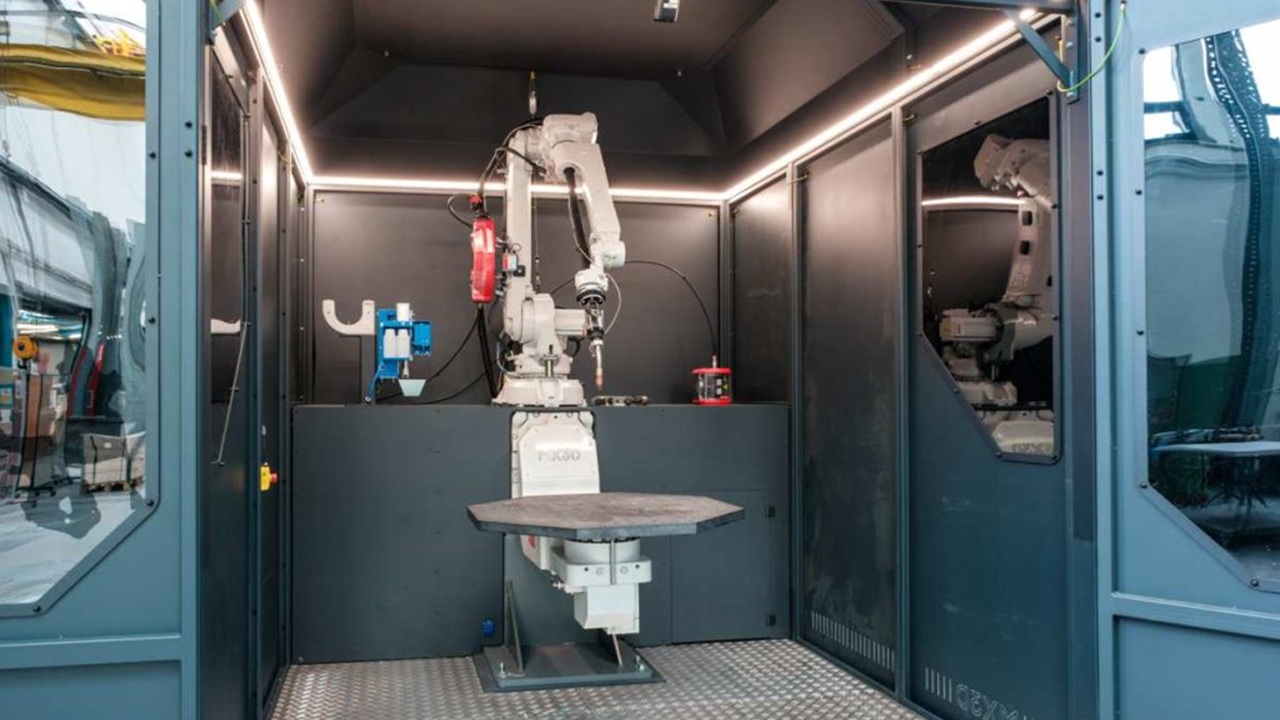
The technology studied by Empa, the Swiss Federal Laboratories for Materials Science and Technology, uses Wire Arc Additive Manufacturing, known by the acronym WAAM. The process allows printing metallic reinforcements on critical regions.
Instead of applying conventional welding, the system builds a three-dimensional piece adjusted to the point where the tension concentrates. The intention is to prevent the crack from advancing and avoid costly interventions in still preserved parts.
-
Archaeologists Discover Nearly Intact 1,500-Year-Old Byzantine Mosaic with Greek Inscriptions, Including a Message to “Burst with Envy”

-
California Student Develops AI-Powered System to Detect Elderly Falls at Home, Even in the Dark, Earning Title of America’s Top Young Scientist

-
Workers Discover Ancient Sanctuary with Temples and Roman-Era Inscriptions While Clearing Bomb Debris for Highway Construction

-
Scientists Discover Over 600 Meteorite Glass Fragments in Northern Brazil, Evidence of a 6.3-Million-Year-Old Cosmic Impact with Unfound Crater


3D Printing, Steel, and the Repair That Can Multiply Lifespan
Large steel structures age over decades. Small cracks may appear due to material fatigue, especially in constructions subjected to continuous traffic, vibrations, or repeated loads. Often, localized damage pressures for replacements.
In tests with printed reinforcements, all repaired pieces performed better than the damaged plates without treatment. The staggered two-layer configurations showed the best results among the evaluated models.
In some cases, the lifespan quadrupled. The gain is noteworthy because it allows using the healthy part of the structure, concentrating the intervention on the compromised point.
The research shows that simply adding more steel does not guarantee the best repair. The performance depends on the chosen geometry to correctly distribute mechanical stresses and reduce the chance of crack advancement.
Reinforcement Geometry Avoids New Weak Points
One of the central conclusions is that more material does not necessarily mean more safety. The reinforcement needs to be designed to redirect stresses to less critical areas of the piece.
To achieve the most efficient formats, researchers combined numerical simulations and experimental tests. The geometries were subjected to thousands of load cycles, reproducing repeated stresses that affect real structures.
The result highlighted the importance of repair design. When well-planned, the printed reinforcement increases the strength of the damaged area. When poorly designed, it can create new stress concentrations between the original steel and the deposited material.
This point is essential for practical application. Printing for the sake of printing is not enough. The repair needs to consider how forces travel through the structure, where the material is weakened, and how the new metallic volume integrates with the whole.
Less steel, less waste, and lower energy consumption
Localized repair also brings advantages related to resource use. Manufacturing a large beam or another structural component from scratch requires raw materials, steel production with high energy consumption, transportation, and assembly.
When only a small area needs reinforcement, part of this impact can be avoided. The strategy allows intervention only where necessary, reducing steel consumption and waste generation during maintenance work.
The approach can also reduce downtime for critical infrastructures. In bridges, industrial buildings, towers, and railway structures, precise repairs help avoid extensive replacements when most of the structure remains functional.
Portable robots are still a challenge to bring WAAM to the field
Despite the positive results, large-scale application still faces a significant obstacle. WAAM systems usually use large industrial robots, installed in specialized workshops.
Taking a bridge, a viaduct, or a large metal structure to this environment is not always feasible. Therefore, research groups are working on developing portable robots capable of operating directly on-site.
The goal is to allow interventions during maintenance routines, without moving entire components. There are already experimental projects aimed at automating inspections and repairs with mobile robots in civil infrastructures.
Smart materials expand the reach of metallic 3D printing
Swiss research also advances beyond crack repair. The studies investigate the combination of metallic 3D printing, advanced geometric designs, and shape-memory alloys.
These materials can partially recover their original configuration after deformation when subjected to thermal stimulus. This possibility paves the way for structures capable of absorbing energy during earthquakes, impacts, or vibrations, reducing permanent damage.
On a bridge, specific elements could deform in a controlled manner during an extreme event and then recover part of the geometry. In industrial installations or heavy machinery, the idea also favors lighter, stronger, and more economical components.
Sustainable construction gains possibilities
3D printing is no longer associated only with prototypes and small parts. Additive manufacturing is beginning to occupy more demanding sectors, such as aeronautics, energy, the medical industry, and civil construction.
The freedom of design allows for creating shapes that are difficult to produce by traditional machining, using only the material necessary to support the expected loads.
This logic connects to the circular economy: extending the lifespan, reducing natural resources, and decreasing emissions related to steel production.
Why this type of repair matters
In metal structures, small cracks can grow when the part receives repeated loads over long periods. Therefore, maintenance does not only depend on replacing damaged parts but on controlling where stresses accumulate.
3D printing in steel addresses this point: it allows adding material with a specific shape, in the exact location. When the reinforcement is well-designed, the structure can continue functioning for longer, with less waste. This logic also helps reduce the demand for new components, transportation, and energy-intensive industrial processes.
With information from empa.