Portuguese
  Spanish




Some Popular Used Models Attract Attention for Their Low Price and Attractive Appearance, but Hide Chronic Defects and High Maintenance Costs, According to Reports from Owners and Analyses from Specialized Mechanics.
Used cars that seem like “a lot for a little money” can hide chronic defects and high maintenance costs, warn mechanics and consumers who report experiences on Reclame Aqui.
In popular models within an affordable price range, the low cost is often explained by a history of failures and repair difficulty.
Below are four examples that require extra attention from those keeping an eye on a used car.
-
End of an era in Brazil: beloved sedan by Brazilians is discontinued despite having a 2.0 engine with 151 hp, CVT transmission, 466-liter trunk, and up to 650 km of range.

-
New Law Proposal in Brazil Could Heavily Penalize Drivers: Dangerous Overtaking May Become a Serious Offense with Fines Increased Tenfold and a 12-Month License Suspension; Update on 2026 Progress

-
Electric Revolution: Watts W125 Motorcycle Offers 160 km Range, 90 km/h Speed, and Affordable Price Starting at $3,000
-
General Motors Replaces Over a Thousand Workers with 50 Cobots at Electric Vehicle Plant, UAW Union Criticizes Move Amid Industry’s Automation Push



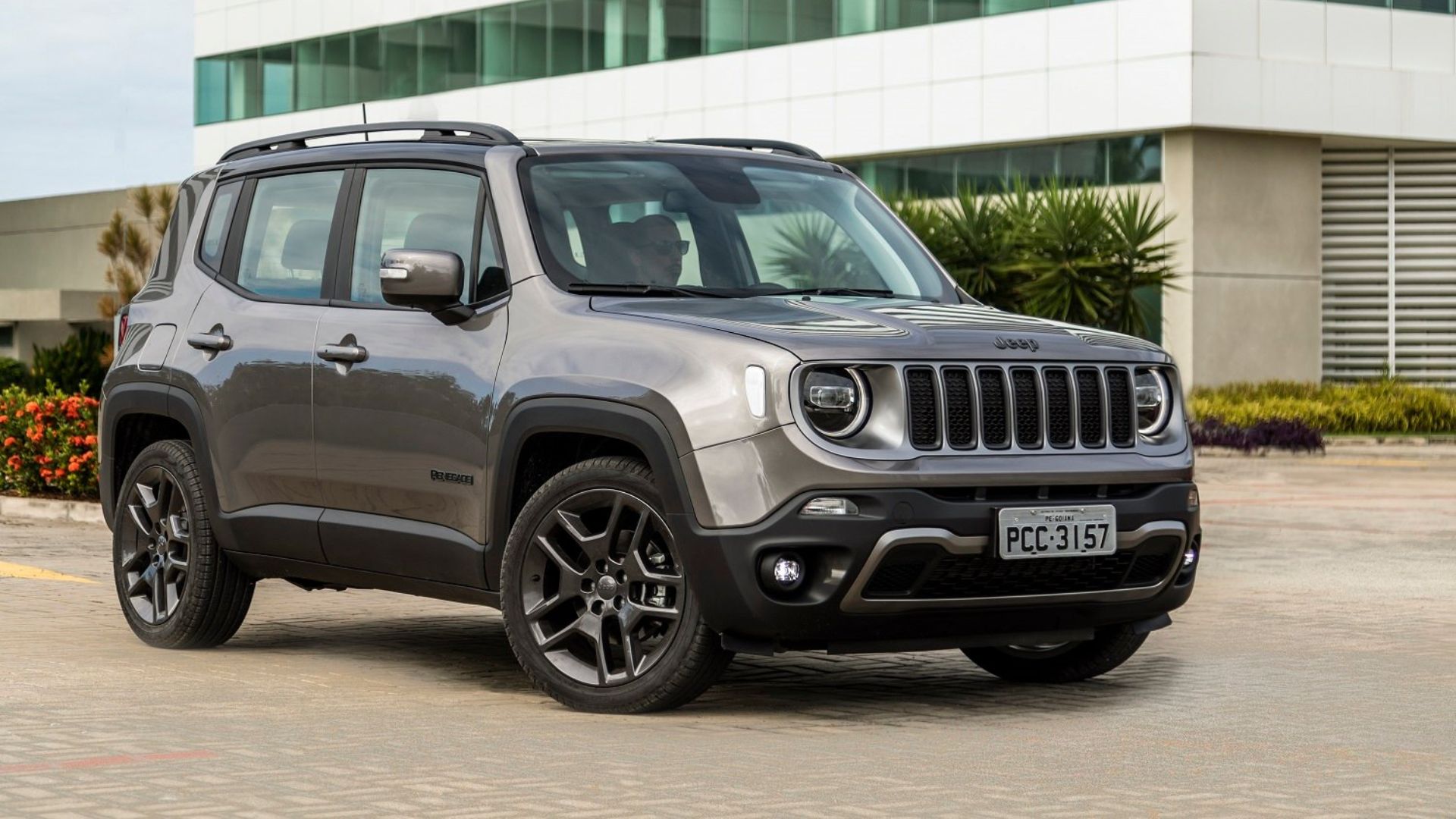
Jeep Renegade 1.8 Flex AT Longitude 2018 — R$ 73,441
The Renegade with E.torQ 1.8 flex (139 hp and 19.3 kgfm) and six-speed automatic transmission dominates the used car displays and, at the same time, adds reports of headaches.
The most cited point by mechanics is the heat exchanger, a component that should cool the transmission fluid but ends up mixing the transmission oil with the coolant.
When this happens, the oil acquires a milky appearance, loses properties, and starts a sequence of symptoms.
In workshops, complaints about jerks, engagement difficulty, overheating, and loss of transmission efficiency emerge.
In advanced cases, contamination causes costly internal damage.

The correction usually involves replacing the exchanger with a refurbished part or adopting a external radiator to isolate the oil circuit.
Although the rest of the assembly has acceptable robustness for urban use, this Achilles’ heel weighs on the total cost, especially when the owner discovers the problem only after purchase.
Caoa Chery Tiggo 2 1.5 Flex Look AT 2020 — R$ 66,023
On paper, the Tiggo 2 delivers what many people seek in a cheap compact SUV: elevated driving position, reasonable space, and a simple 1.5 flex engine (115 hp and 14.9 kgfm) with four-speed automatic transmission.
In practice, the first years of the model accumulate electrical and mechanical failures that detract from the user experience.
Among the most common complaints are wiring problems, leaks that affect modules and connectors, premature rust, and component wear before expected.

Owners also report sudden engine shutdowns, shifting failures in the transmission, and difficulty in locating specific parts in some areas.
While the brand has improved in recent projects with better electronic systems and an expanded after-sales network, units of the Tiggo 2 require thorough inspection and electronic diagnosis before closing the deal.
Volkswagen Golf 1.4 TSI Highline AT 2014 — R$ 76,780
Sharp handling, high-quality finish, and a turbo engine with 140 hp and 25.5 kgfm make the Golf 1.4 TSI seem like a find among used mid-size hatchbacks.
The assembly, however, loses points with the seven-speed DSG transmission and dry dual clutch, present in the early units of this generation.
In typical Brazilian street conditions — potholes, heat, and heavy traffic — the system shows overheating, jerking, and premature clutch wear.
The additional difficulty lies in the repair costs when the problem escalates to clutch or mechatronic replacement.

In 2016, Volkswagen migrated this model to a conventional six-speed automatic, more suitable for local use.
For those considering a Golf prior to this change, it is wise to check the maintenance history, any transmission interventions, and conduct extended tests to identify symptoms after heating.
Ford Focus 2.0 Titanium AT 2018 — R$ 70,975
Well-equipped, attractive, and with convincing performance from the 2.0 flex engine with 178 hp and 21.5 kgfm, the Focus 2.0 Titanium attracts with its package.
The obstacle is well-known: the PowerShift transmission, a dry dual-clutch automated system shared with other Ford models of the time.
Owners and workshops report overheating, loss of power, jerking, and premature clutch wear, a situation that may also be exacerbated by weaknesses in the cooling system.

Even after updates and factory campaigns, the PowerShift remained a sensitive point in ownership costs.
When purchasing used cars, it is essential to check for clutch replacements, reprogramming, and, mainly, how the car behaves in stop-and-go traffic.
A preventive diagnosis by a specialist in automated transmissions helps to separate healthy units from those prone to recurring issues.
How These Deals Lure in the Used Car Market
Seemingly low values in the Fipe Table and the good image of features attract buyers looking for a “full car” without exceeding the budget.
However, an attractive price does not eliminate the risk of endemic failures.
In many cases, consumers only discover the problem later after a basic test drive, when the vehicle faces heat, congestion, and uneven surfaces — situations that expose limitations in the transmission and cooling system.
Another point is the availability of parts and the experience of workshops with certain systems.
Dual-clutch transmissions, integrated heat exchangers, and sensitive electronics require specialized repairers and updated scanners.
When the technical network has little knowledge of the specific defect in the model, repairs tend to take longer and cost more, increasing frustration for those expecting a usage cost similar to simpler rivals.
What to Look for Before Purchase
A thorough inspection reduces the risk but does not replace the evaluation of transmission and cooling under load.
In a 1.8 Renegade, inspecting the transmission fluid and the reservoir can reveal contamination. In the DSG Golf, tests after heating help detect jerks and error messages.
In the Focus with PowerShift, slow-speed starts and repeated maneuvers expose slipping.
In the Tiggo 2, analyzing wiring, signs of leaks, and corrosion points is essential. Maintenance documents are also relevant.
Records of clutch replacements, heat exchangers, mechatronic systems, or external radiators indicate that the previous owner addressed typical issues.
On the other hand, the absence of a reliable history can be a warning sign, especially in cars with mileage consistent with the emergence of these symptoms.