





 Portuguese
  English
  Spanish
 4 min of reading
  0 comments


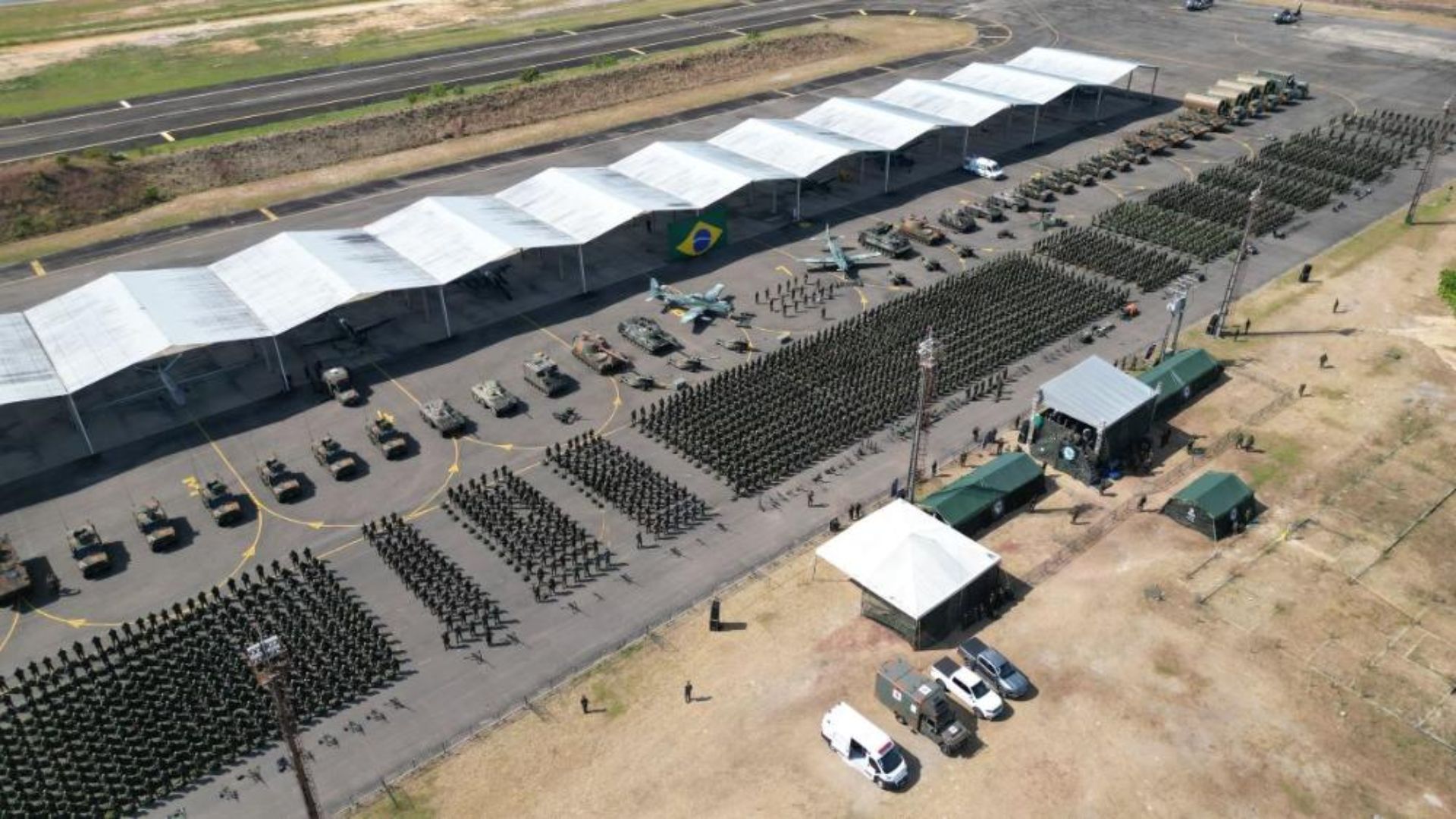
Held at Boa Vista Air Base, the 3rd phase of Operation Atlas 2025 brings together Army, Navy, and Air Force in one of the largest joint training exercises in history, focusing on interoperability, logistics, and real combat in multiple domains
With the aim of verifying readiness and the ability to project and sustain the Force anywhere in the national territory, the Brazilian Army held an operational readiness exercise on October 3, at the Boa Vista Air Base (RR), marking the beginning of the 3rd phase of Operation Atlas 2025.
The event integrated the largest joint exercise of the Armed Forces this year, mobilizing around 4,000 military personnel from 105 military organizations belonging to the eight Military Area Commands of the country.
The ceremony was attended by high-ranking civilian and military authorities, including José Múcio Monteiro Filho, Minister of Defense; General Tomás Miguel Miné Ribeiro Paiva, Army Commander; Admiral Marcos Sampaio Olsen, Navy Commander; and Lieutenant Brigadier Marcelo Kanitz Damasceno, Air Force Commander. Also present was the Governor of Roraima, Antonio Olivério Garcia de Almeida, reinforcing the strategic importance of the region for national defense.
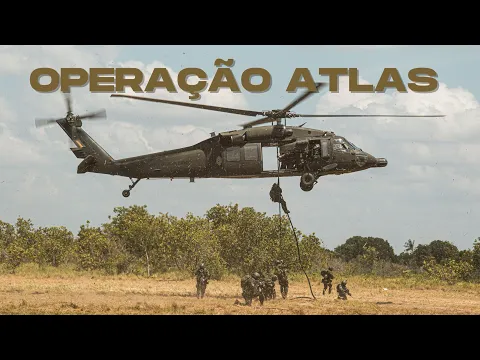

Strategic Exercise Mobilizes Multiple Domains and Validates Troop Readiness
According to information from the Green-Olive Agency, the Operation Atlas 2025 is the culmination of the joint training cycle of the Armed Forces in 2025.
Its tactical scenario was developed by the Ministry of Defense, simulating conflict situations that require the coordinated employment of capabilities in land, air, maritime, cyber, space, and electromagnetic domains.
-
With 92% accuracy, the MAX 1.2 AC anti-tank missile places the Brazilian Infantry on a new level of deterrence: Army Commander highlights the national system as a leap in lethality against armored threats and a milestone for Brazil’s defense industry.

-
The Defense Minister stated that Brazil “is without defense,” admitted concerning military vulnerabilities, and observed tests with drones and new technologies that the Army wants to use against threats at the borders.

-
The Sad End of the Brazilian Marine Corps’ Combat Vehicles: SK-105 Fleet Has Few Vehicles Running, Cannibalized Parts, and Scrap Taken to Auction

-
The Brazilian Army has just unveiled a silent arsenal of drones armed with rifles, grenade launchers, and nuclear sensors capable of operating nearly 300 km away, and this is just a preview of what will be showcased in Rio in the coming months with 33 companies.

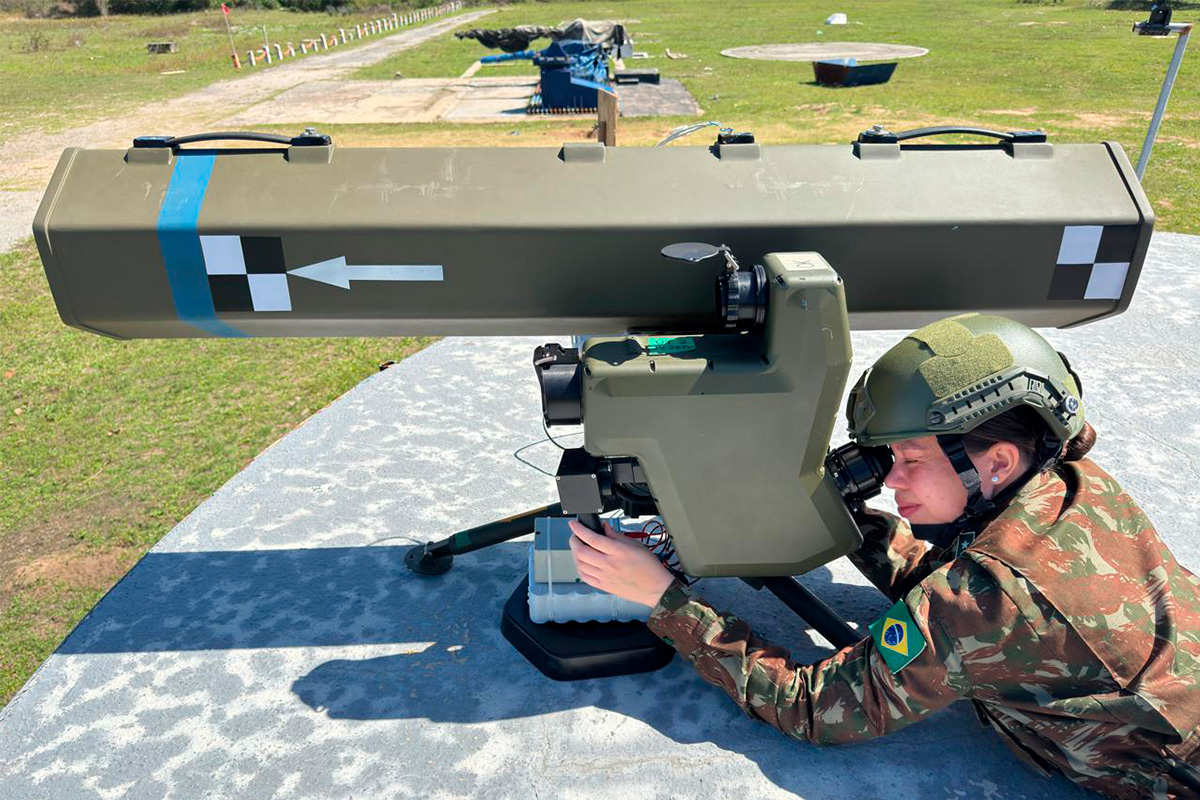


Among the main objectives are the enhancement of interoperability between the Forces, the adjustment of operational planning, the certification of strategic employment troops, and the testing of multimodal logistical mobilization, involving road, maritime, waterway, and aerial means.
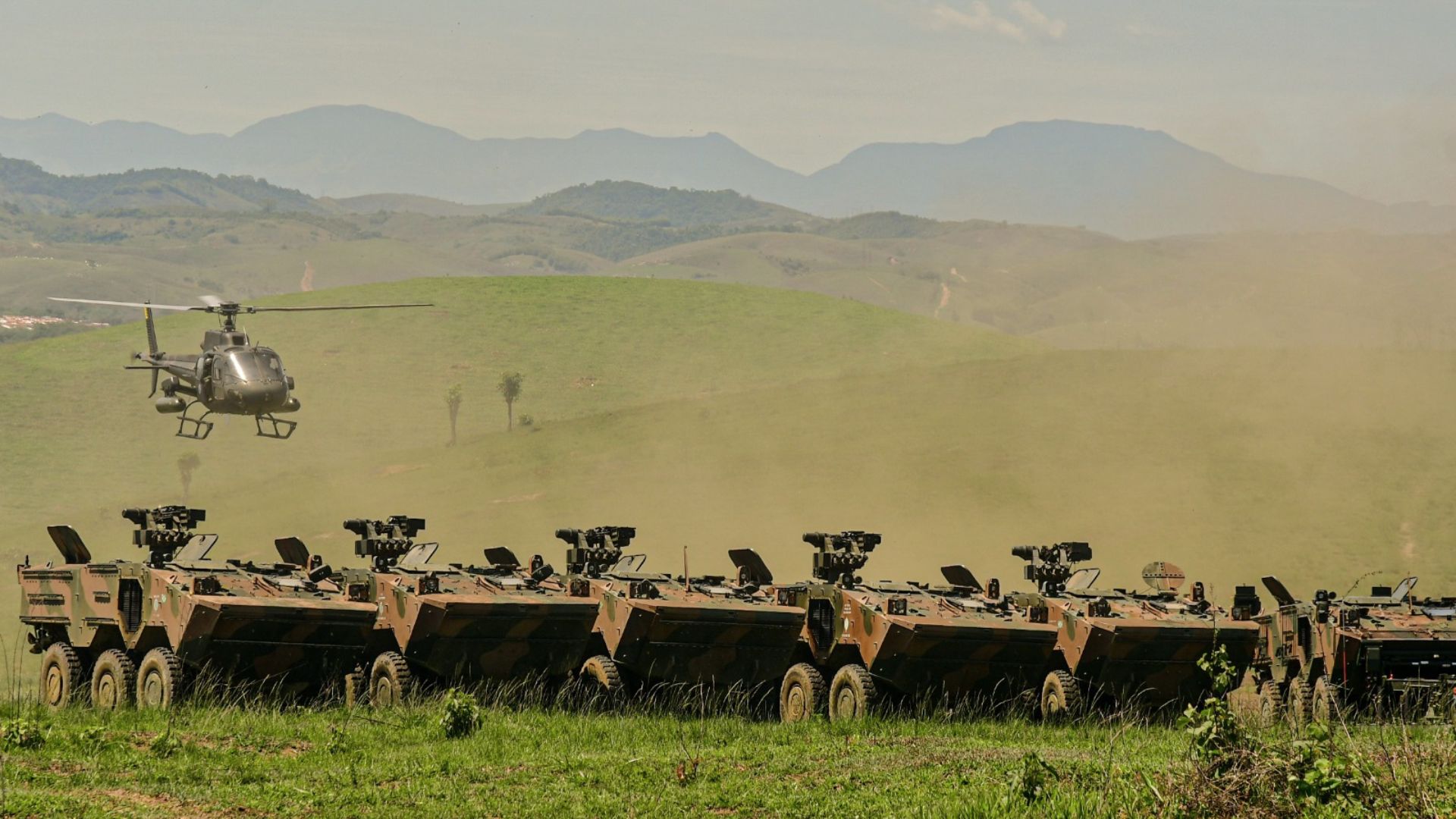
The scale of the exercise is impressive: 55 armored vehicles, 450 unarmored, 10 helicopters from the Army Aviation and the FAB, in addition to 15 aircraft for transport, reconnaissance, and attack from the Brazilian Air Force.
Cyber Capability, Robust Logistics, and Real Interoperability Among Forces
During the operational readiness exercise, high-complexity combat capabilities were presented, demonstrating technological advancements and integration among different commands.
In the cyber domain, the 1st Communications and Electronic Warfare Battalion, reinforced by units from the Cyber Defense Command, showed how it operates in electronic warfare operations, neutralizing hostile drones and command infrastructure in a digital environment.
Interoperability with civilian agencies was represented by the Civil Affairs Company of the 15th Motorized Infantry Battalion, responsible for support actions to the population and civil-military coordination in urban areas.
The Army Aviation Command, through the 4th Aviation Battalion, presented the aeromobile projection of troops, carrying out reconnaissance, surveillance, and attack missions, reinforcing the tactical flexibility of the Ground Force.
Elite Troops, Fire Support, and Strategic Readiness at All Levels
The Special Operations Command demonstrated readiness for high-complexity actions, focusing on special reconnaissance, direct combat, and unconventional warfare, even in isolated or sensitive environments.
The 9th Logistics Group ensured troop sustainability, with a continuous flow of supplies, transportation, maintenance, and health support, guaranteeing autonomy in combat.
The Division Artillery of the 3rd Army Division presented 155 mm self-propelled howitzers, while the ASTROS System, from the 16th Missile and Rocket Group, demonstrated its capability for multiple rocket launch with high precision, a key element in offensive depth and strategic fire support.
Operational Superiority and Strategic Deterrence in Focus
Among the most noteworthy tactical vectors were the paratrooper, armored, and aeromobile troops, responsible for enhancing the mobility and response power of the Brazilian Army.
The Paratrooper Infantry Brigade reinforced quick projection capability, while the 5th Armored Cavalry Brigade ensured robustness and protection in offensive maneuvers.
The aeromobile units, supported by aircraft from the 4th Aviation Battalion, completed the picture, extending the operational range of ground forces and consolidating joint operational superiority.
According to the Green-Olive Agency, Operation Atlas 2025 highlights the high level of operational capability and strategic deterrence of the Brazilian Army, proving its systemic integration with the Navy and Air Force and its commitment to technological and doctrinal modernization.
During the exercise, real combat actions will be executed, such as aeromobile assaults, river crossings, parachuting, and critical infrastructure defense, including live fire, testing the limits of troop readiness.



-

2 people reacted to this.