





 Portuguese
  English
  Spanish
  4 min of reading
  1 comment


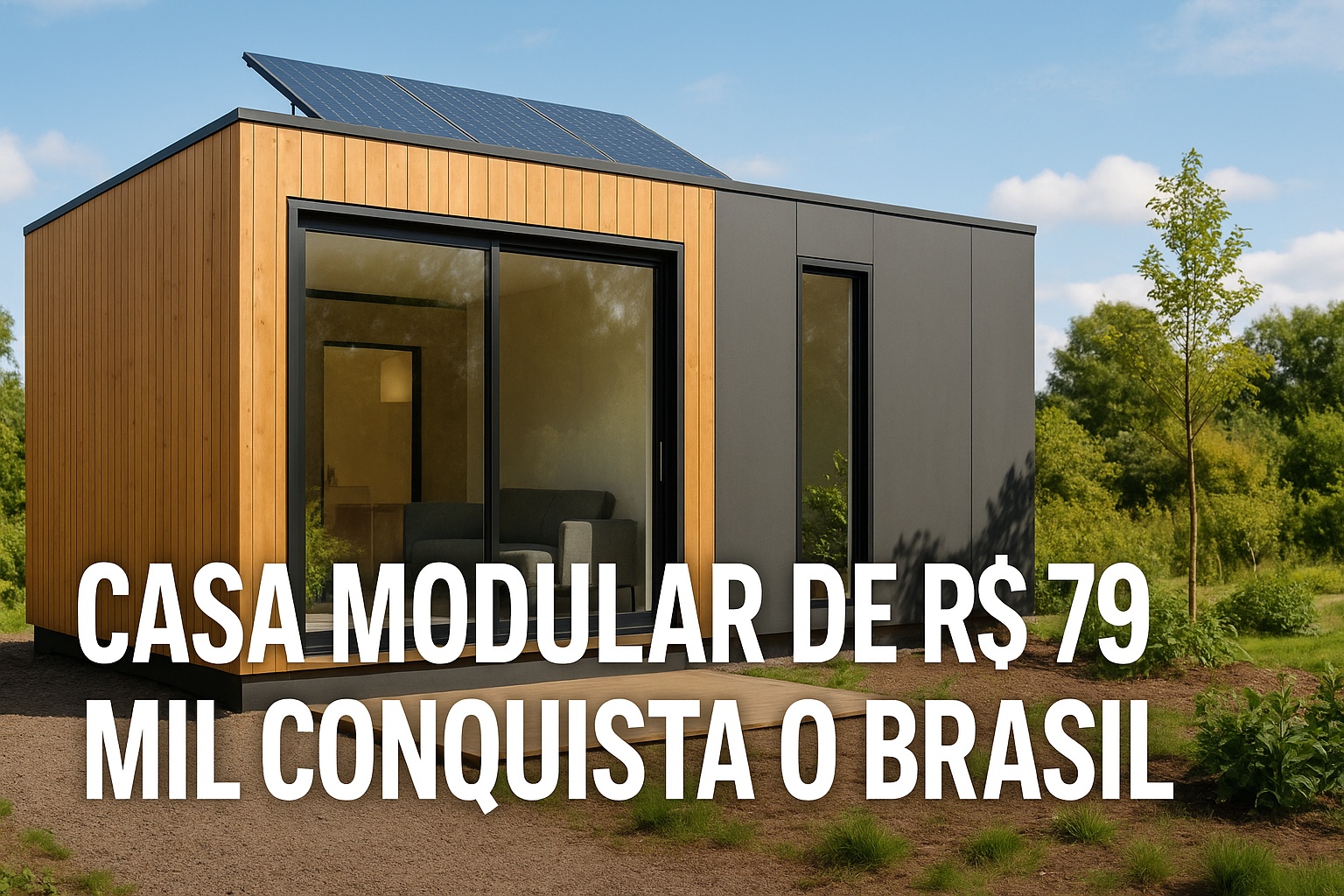


Modular House of 50 m² for R$ 79 Thousand Conquers Brazil: Ready in 90 Days, with Acoustic Insulation, Low Consumption and Cost Up to 60% Less Than Traditional Construction.
Amid the real estate crisis and high construction costs, a new housing model is beginning to gain traction in Brazil: prefabricated modular houses, assembled in record time and at a cost far below conventional construction. One of the most sought-after at the moment is the 50 m² modular house, offered by Brazilian builders starting at R$ 79 thousand, featuring a lightweight steel structure, thermal and acoustic insulation, and assembly completed in up to 90 days.
Companies like Casa Smart 3D, Modularis, and Brasil ao Cubo report significant growth in demand, driven by practicality, sustainability, and competitive pricing. In 2024, the modular construction sector recorded a 35% increase in sales, according to data from the Brazilian Association of Industrialized Construction (ABCIC).
The Advancement of Modular Houses in Brazil
Modular houses operate differently from traditional construction. Instead of erecting each wall on-site, the modules are manufactured in an industrial environment and transported ready to the construction site.
-
India has built the highest railway bridge in the world over a river in the Himalayas — it stands at 359 meters tall, higher than the Eiffel Tower, and trains cross at an altitude of 1,315 meters among snow-capped mountains.

-
Symbol of Paris, the Eiffel Tower faces corrosion, a technical challenge, and a €380 million plan until 2031, while iron wear, strikes, and incomplete maintenance reveal that the landmark depends on heavy investments to remain standing.

-
More than 200 engineers and urban planners are sounding a global alarm by showing that 44 of the 50 largest coastal cities on the planet were built for a sea level that has already been surpassed, leaving drainage systems, flood barriers, tunnels, and underground networks vulnerable to increasingly frequent and expensive-to-contain floods.

-
SC is drilling through hills with a one-thousand-meter tunnel and building viaducts 35 meters high to create a new route that will completely change the journey for those traveling on BR-280.






This model reduces construction time by up to 70% and material waste by almost 90%, since everything is produced to exact specifications.
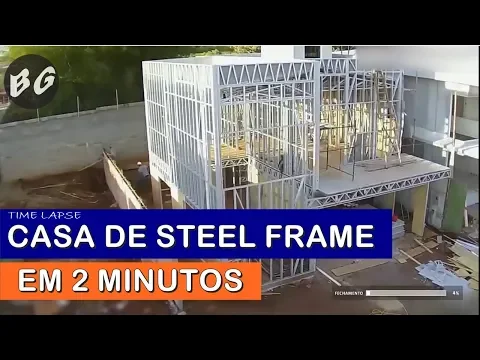

The result is a modern, sustainable, and highly customizable dwelling — something that attracts both those seeking their first home and those looking to invest in quick rental properties.
Resistant Structure and Thermal Comfort
The 50 m² model is composed of galvanized metal structure, acoustic thermal sealing with OSB panels and recycled PET wool, isotermic roof, and finishes that eliminate plastering.

The walls are designed to maintain a stable internal temperature, reducing the need for air conditioning and heaters, which guarantees savings of up to 40% on electricity consumption.
Additionally, the system is prepared to accommodate solar energy, rainwater harvesting cisterns, and smart lighting systems, features previously restricted to high-end constructions.
Assembly in 90 Days and Reduced Cost
The main differentiator is the timeline. The house arrives in ready-made modules, fitted on-site like a “habitable lego.” In up to three months, the owner can already move in — including electrical, plumbing, and internal finishing.
The average price of R$ 79 thousand represents up to 60% less than the cost of a conventional construction of the same size, which can exceed R$ 180 thousand when considering foundation, labor, and execution time.
Market Trend and Exponential Growth
According to a survey by FGV Construction and Market, the modular housing segment is expected to generate over R$ 3 billion per year by 2026 in Brazil.
The main audience consists of young couples, retirees, and investors building units for rental in sustainable condominiums.
Companies report that the average time between order and delivery is only 12 weeks, and financing is accepted by traditional banks that already recognize modular construction as having “permanent characteristics,” allowing registration at the notary office.
Sustainability and Lower Environmental Impact
Another aspect that has attracted attention is the low environmental impact. While traditional construction generates about 150 kg of debris per square meter, modular construction reduces this volume to less than 15 kg.
Most components are recyclable and reusable, and the modules can be disassembled and reinstalled in another location, something impossible in conventional constructions.
According to Casa Smart 3D, 89% of the waste generated during manufacturing is reused, and the use of renewable materials, such as engineered wood and lightweight steel, makes the process cleaner and more efficient.
The New Buyer Profile
The growing interest also reflects a change in behavior. With rising rental prices and the search for practical solutions, modular housing has moved from curiosity to a concrete alternative for middle-class families.
Research from OLX Imóveis shows that the terms “modular house” and “container house” grew by 180% in searches in 2024. Builders in São Paulo, Santa Catarina, and Minas Gerais report waiting lists of up to 60 days for new projects.
Modular houses represent a silent revolution in the construction market.
By combining speed, savings, and sustainability, they establish themselves as one of the main trends in the Brazilian housing sector.
According to experts, advancements in technology and the industrialization of construction are likely to transform the concept of housing, making accessible what was once a privilege for a few. The future of housing, it seems, will be built inside factories, not on construction sites.





Your blog is a testament to your expertise and dedication to your craft. I’m constantly impressed by the depth of your knowledge and the clarity of your explanations. Keep up the amazing work!