Portuguese
  Spanish


India took nearly 20 years to build the highest railway bridge in the world over one of the most turbulent rivers in the Himalayas — the result is a 359-meter tall structure that trains cross at an altitude of 1,315 meters
Inaugurated in 2024 after nearly two decades of construction, the Chenab Bridge is the highest railway bridge in the world. According to Wikipedia, the structure rises 359 meters above the bed of the Chenab River in the state of Jammu and Kashmir, India — 35 meters taller than the Eiffel Tower in Paris.
Moreover, the bridge is 1,315 meters long and is part of the Udhampur-Srinagar-Baramulla railway, a strategic line that connects the disputed region of Kashmir to the rest of India.
Therefore, the highest bridge in the world is not just an engineering feat — it is a centerpiece in the geopolitics of one of the most tense regions on the planet.
-
Two-Bedroom Home Built in a 40-Foot Shipping Container Delivered and Ready for Same-Day Living in São Paulo Countryside

-
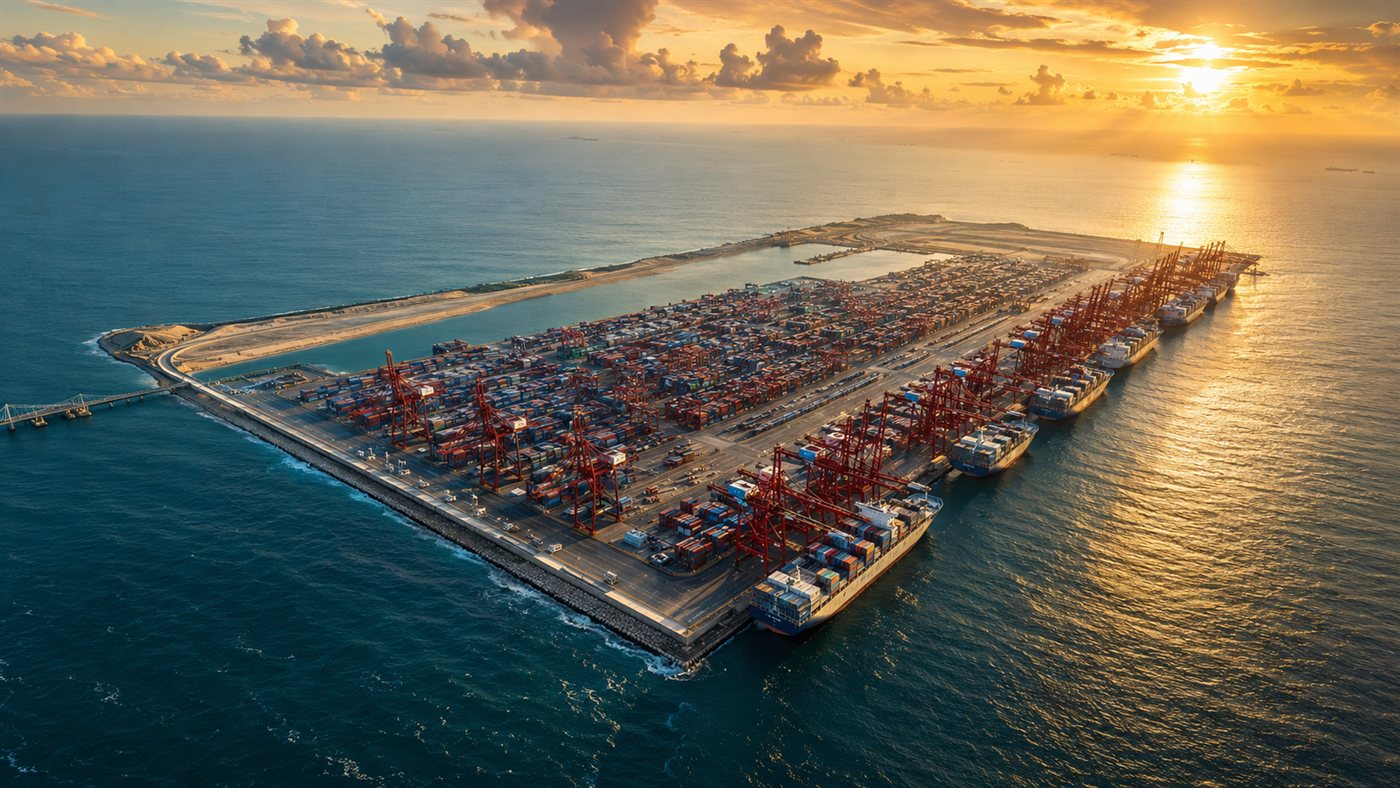
China Constructs Artificial Island 32 km Offshore for Yangshan Port, Connected to Shanghai by 32 km Bridge, Unloading 3,000 Containers in 20 Hours
-
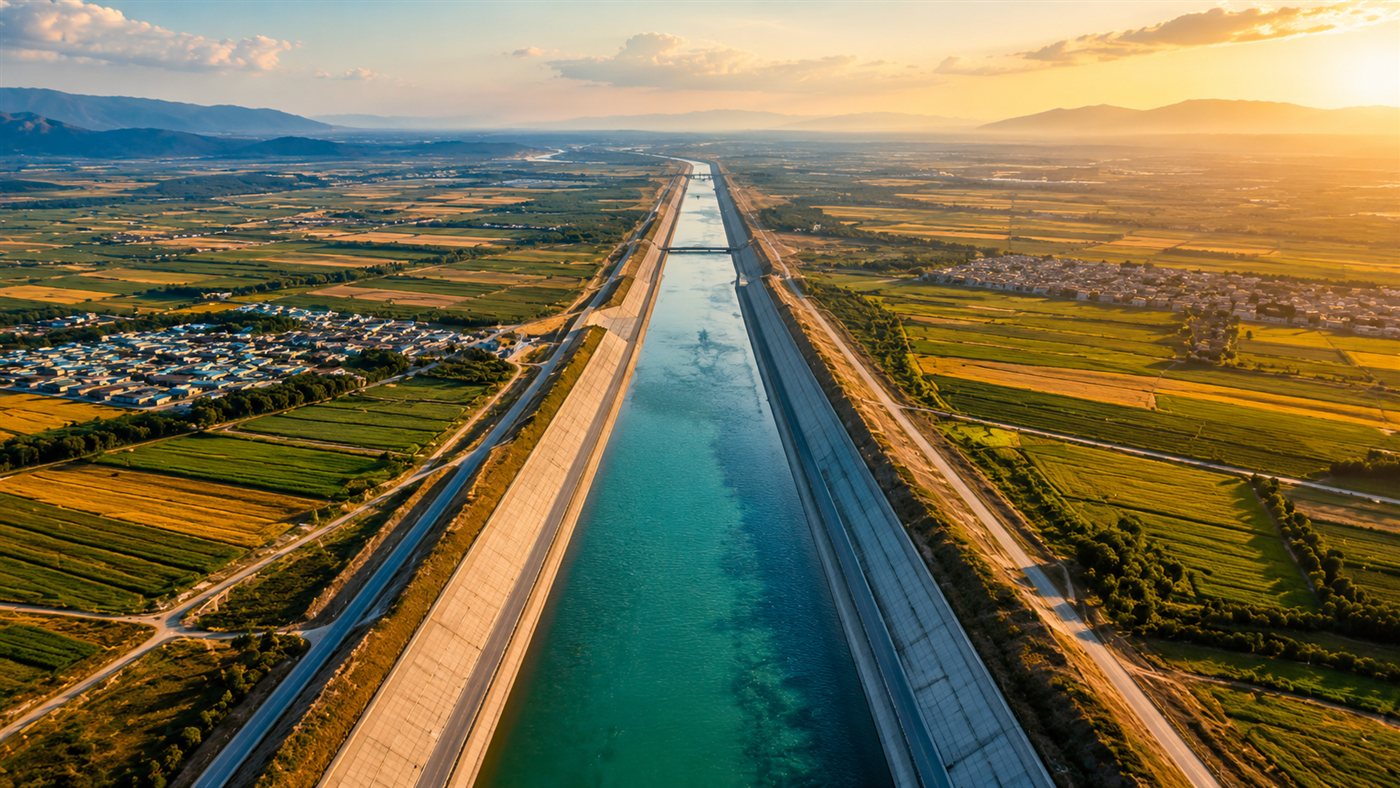
China’s $70 Billion River Diversion Project, the World’s Largest, Moves 44.8 Billion Cubic Meters Annually, Crosses Under the Yellow River, and Displaced 330,000 People
-
Indian Driver Spends 14 Years Digging 10-Meter Tunnel Through Mountain to Connect Isolated Village to the World



The numbers that make this bridge one of the most impressive works ever built

According to official project data, the Chenab Bridge consumed 28,660 tons of steel — enough to build almost four Eiffel Towers.
In fact, the main arch of the bridge has a span of 467 meters, supporting the tracks without any intermediate support over the river. In practice, imagine two pillars on opposite banks of a valley and a gigantic steel arch connecting them from above.
Furthermore, the structure is designed to withstand winds of up to 266 kilometers per hour — a speed equivalent to a category 5 hurricane.
Consequently, engineers installed hydraulic dampers on the tracks to absorb vibrations caused by wind and trains, ensuring stability even in the worst weather conditions.
In comparison, the previous highest bridge in the world — the Beipanjiang Bridge in China, at 275 meters — is 84 meters shorter than the Chenab.
20 years of construction — and the challenges that almost killed the project
According to industry reports, the construction of the highest bridge in the world began in 2004 with an expected completion in 2009. However, security issues, extreme weather conditions, and logistical difficulties delayed the work by more than a decade.
Above all, engineers faced frequent earthquakes in the region. In this regard, the bridge is designed to withstand seismic shocks of magnitude 8 on the Richter scale.
Similarly, temperatures in the valley range from -20°C in winter to +40°C in summer, creating cycles of expansion and contraction in the steel that required special engineering solutions.
To give an idea, workers could only operate for 5 to 6 months a year — the rest was too harsh winter for work at altitude.
Still, thousands of workers and engineers persisted for two decades to complete what many considered impossible.
Why India needed this bridge so much — the railway that connects a disputed region

Equally important is the geopolitical context. Kashmir has been a disputed region between India, Pakistan, and China for over 70 years. Until the construction of this railway, the only reliable land connection between Kashmir and the rest of India was a mountain road vulnerable to landslides and snowstorms.
Thus, the railway — with the Chenab Bridge as its most spectacular section — gives India a permanent and weather-resistant railway connection to the region.
On the other hand, Pakistan and China criticized the construction as a military provocation disguised as civil infrastructure.
Despite this, for the local residents of Kashmir, the railway represents a promise of economic development and integration with the rest of the country.
An earthquake has already tested the structure — and it passed
In one of the most tense moments of construction, a magnitude 3.5 earthquake struck the region while workers were still working on the bridge. According to reports at the time, the structure absorbed the vibration without suffering any structural damage.
However, the incident served as a reminder that bridge engineering in seismic zones requires safety margins much higher than in stable regions.
According to engineers, the bridge was designed with a safety factor that exceeds the minimum requirements by 3 times — precisely because the region is at the junction of two tectonic plates.
The highest bridge in the world is already attracting tourists from all over the world

In addition to the logistical and military impact, the Chenab Bridge quickly became a tourist attraction. In short, thousands of visitors come to the region just to see the highest railway structure ever built.
In practice, the view of the train crossing the bridge — with the deep valley 359 meters below and snow-capped mountains around — is already being compared to famous scenic routes like the Glacier Express in Switzerland.
However, analysts warn that the tourist flow needs to be balanced with the safety of the region, which is still a partially military conflict zone.
Will the highest bridge in the world transform Kashmir from a war zone into a tourist destination — or will it remain an engineering monument amid one of the longest territorial disputes in history?
The Chenab Bridge also represents a global technical milestone. Before it, Western engineers argued that railway bridges over 300 meters would be unfeasible due to the combined vibrations of wind and traffic.
However, the Indian team developed a system with 118 viscous dampers distributed along the structure. These devices simultaneously absorb vibrations from wind, traffic, and seismic activity.
According to tests before the inauguration, the bridge oscillated less than 2 centimeters under maximum load from wind and train combined — a result far superior to the international safety limit.
The total cost of the project exceeded $180 million. For a bridge of this complexity and duration, analysts consider the value relatively modest compared to similar projects in Europe.
Moreover, the techniques developed for the Chenab are being adapted for other railway projects in mountainous terrain in India and Southeast Asia.
The trains crossing the bridge operate at a reduced maximum speed of 100 kilometers per hour on the section of the structure, for safety reasons.
Finally, the Chenab Bridge proves that engineering can conquer mountains, rivers, and earthquakes. Still, it remains to be seen if it can also overcome the geopolitics that divide the region where it was built.