Portuguese
  Spanish


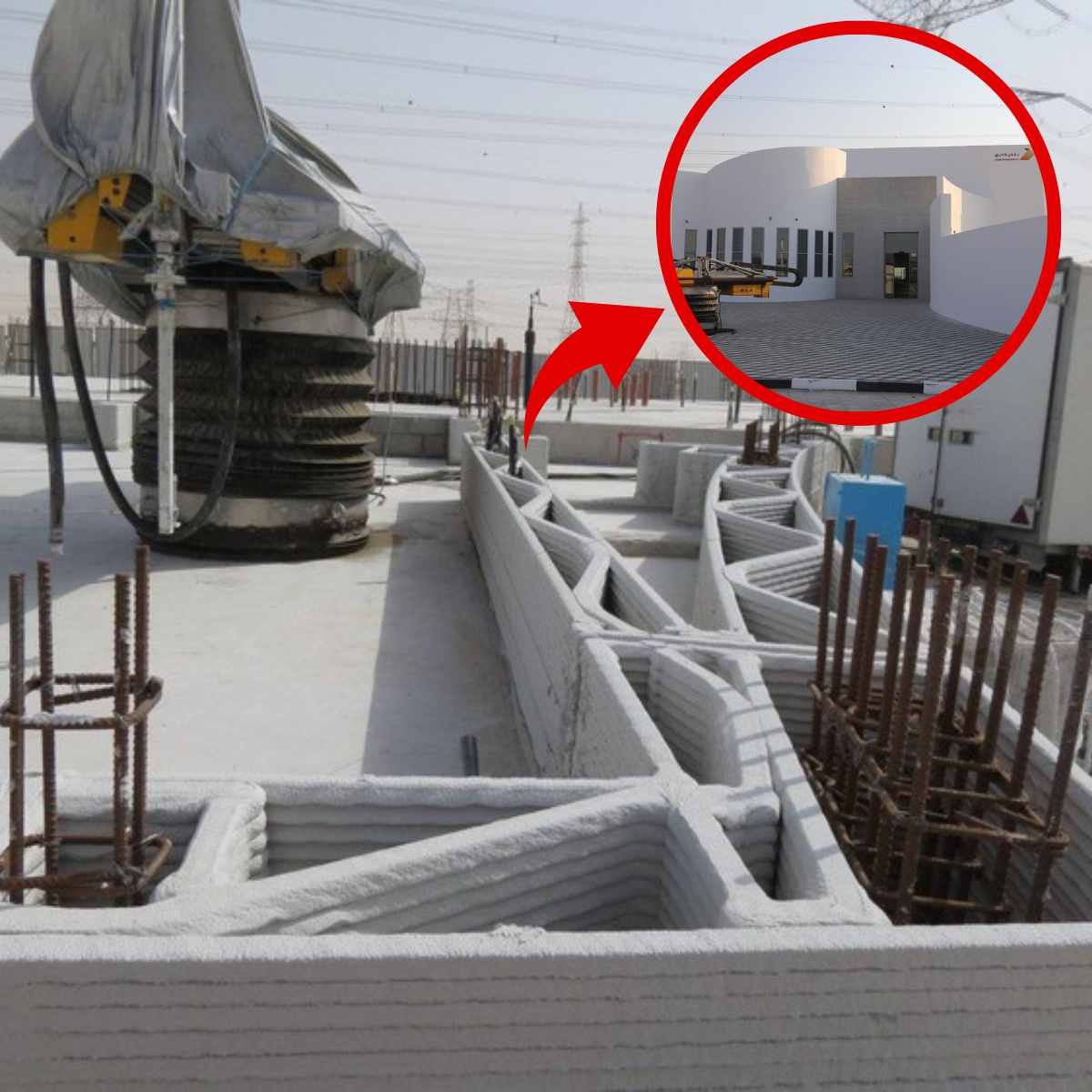


Innovative 3D printing construction in Dubai demonstrates speed, precision, and cost reduction, paving the way for global expansion of the technology and transformation of the modern civil construction industry.
In 2019, the company Apis Cor completed an administrative building in Dubai, United Arab Emirates, with approximately 640 m² of built area, considered at the time one of the largest buildings ever produced with 3D printing technology. The project was carried out for a local governmental entity and its main highlight was the use of a robotic printer capable of constructing walls directly on the construction site, depositing successive layers of cementitious material.
According to technical reports published by outlets such as Engineering.com and analyses of the digital construction sector, the main structure was printed in about three weeks, although the complete project involved months of planning, engineering, testing, and finishing with traditional methods.
The case gained international repercussion because it showed, in practice, that 3D printing had ceased to be a laboratory experiment and began to operate on a real scale within one of the world’s most ambitious construction markets. The central data that transforms this topic into a milestone is simple: a structure of hundreds of square meters had its structural base built in weeks, something that would traditionally take months.
-
Two-Bedroom Home Built in a 40-Foot Shipping Container Delivered and Ready for Same-Day Living in São Paulo Countryside

-
China Constructs Artificial Island 32 km Offshore for Yangshan Port, Connected to Shanghai by 32 km Bridge, Unloading 3,000 Containers in 20 Hours
-
China’s $70 Billion River Diversion Project, the World’s Largest, Moves 44.8 Billion Cubic Meters Annually, Crosses Under the Yellow River, and Displaced 330,000 People
-
Indian Driver Spends 14 Years Digging 10-Meter Tunnel Through Mountain to Connect Isolated Village to the World


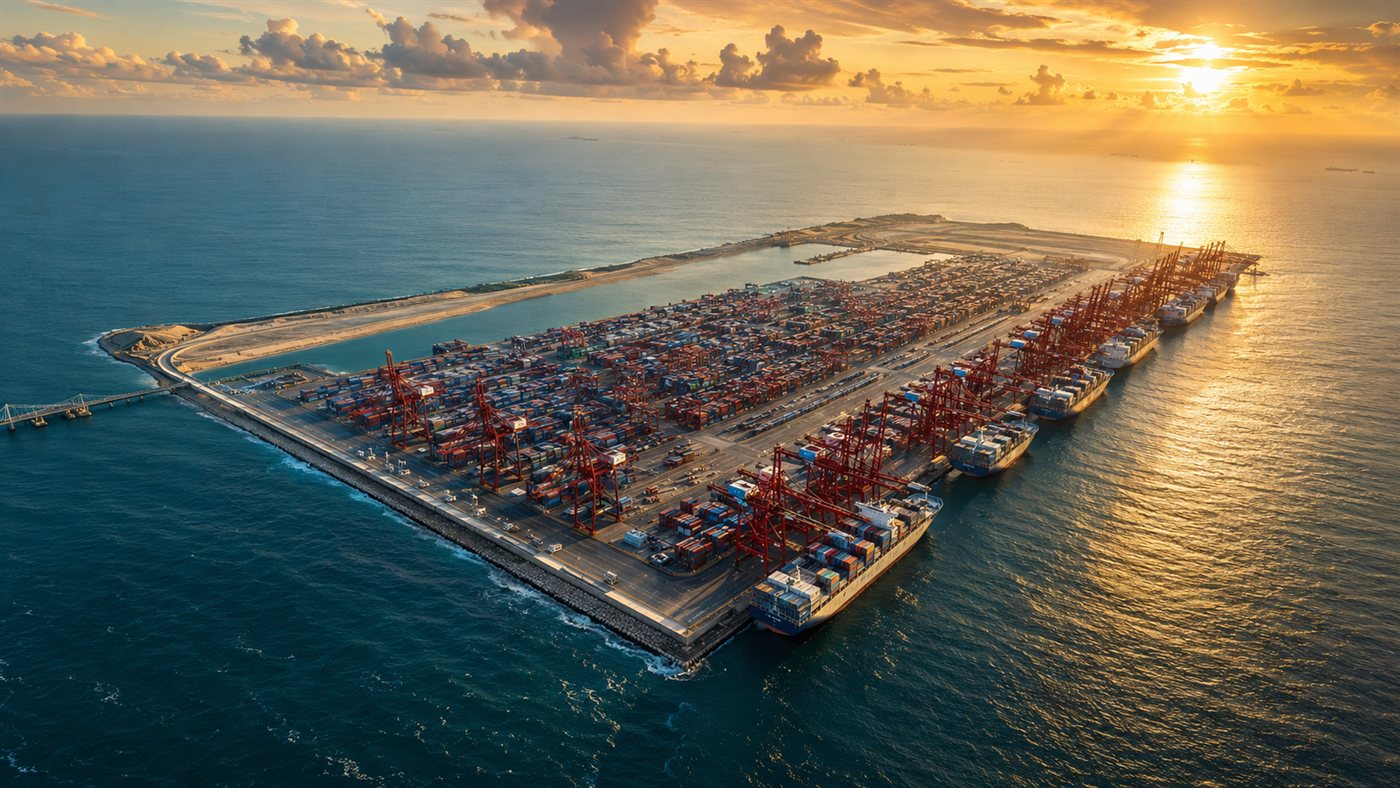


3D printing technology in civil construction uses layer-by-layer concrete extrusion with precise digital control
The system used by Apis Cor works based on a principle similar to conventional 3D printers, but adapted for construction materials. A large robotic printer moves around the construction site and deposits concrete or special mortar in successive layers, forming walls, columns, and structural elements.

This process is called additive manufacturing, as it builds the structure by gradually adding material, instead of removing or molding large volumes as in traditional methods. The printer used in the project is designed to be transportable and assembled on site, which eliminates the need to manufacture modules in a factory and transport them later.
The digital precision of the system allows for the creation of complex shapes with less material waste and less dependence on intensive labor, two critical factors in the cost and efficiency of civil construction.
Structural printing in weeks does not eliminate traditional steps, but reduces one of the biggest bottlenecks in construction
A fundamental point to maintain the accuracy of the topic is to understand what exactly was printed. In the Apis Cor project, the structural walls and vertical elements were printed, while components such as foundations, roofing, electrical and hydraulic installations, and finishes were carried out using conventional methods. This means that 3D printing does not completely replace the construction process, but acts directly on the most time- and labor-intensive stage: the execution of the structure.

The reduction in structural construction time is the main gain of the technology, as it allows for accelerated schedules and reduced indirect costs associated with long construction periods. Even with printing in a few weeks, the complete project took longer due to complementary stages, something common in hybrid constructions that combine emerging technology and traditional methods.
Dubai’s strategy to have 25% of constructions in 3D printing by 2030 places the city in global leadership of the sector
The construction of the building by Apis Cor was not an isolated case, but part of a broader strategy by the Dubai government. In 2016, the emirate officially launched the Dubai 3D Printing Strategy, with the aim of transforming the city into one of the world’s leading hubs for the technology.
The established goal is that 25% of all buildings in Dubai will be constructed using 3D printing by 2030. This initiative involves not only civil construction, but also industrial components, medical parts, and infrastructure solutions.

This public policy is one of the main factors driving the advancement of 3D printing on an urban scale, as it creates demand, encourages innovation, and attracts specialized companies. Dubai had already demonstrated this interest in 2016 when it inaugurated the world’s first functional 3D-printed office, linked to the Dubai Future Foundation, built in about 17 days.
3D Printing Can Reduce Material Waste, Operational Costs, and Labor Dependency in Civil Construction
One of the strongest arguments in favor of 3D printing in construction is the efficiency in material usage. Since concrete is deposited only where necessary, there is a significant reduction in waste compared to traditional methods.
Furthermore, the automated process reduces the need for large teams on the construction site, which can impact costs and logistics. Automation also increases project predictability, reducing human errors and allowing greater control over the schedule.
However, it is important to note that the technology still requires specialized operators, engineers, and technical support, meaning it does not completely eliminate the need for skilled labor.
Current Limitations of 3D Printing in Construction Show That Technology Still Depends on Integration with Conventional Methods
Despite advancements, 3D printing in construction still faces significant limitations. Not all building elements can be printed with current technology, especially complex structural components, installations, and finishes.
Furthermore, the long-term performance of printed materials is still under study, especially regarding durability, resistance, and structural behavior under different climatic conditions.

Another challenge is standardization and regulation, as construction norms are not always updated to include this type of technology. These factors indicate that, at least in the short term, 3D printing construction should remain hybrid, combining traditional methods and new techniques.
Projects like Apis Cor’s Show Civil Construction’s Transition to a More Automated and Digital Model
Dubai’s case represents an important transition in civil construction, which historically is one of the least digitized sectors of the global economy. The introduction of robots, automation, and additive manufacturing indicates a paradigm shift, where processes are controlled by software and executed with mechanical precision.
This transformation brings civil construction closer to sectors like advanced industry and manufacturing, where automation and digital control are already widely used. Furthermore, the ability to produce structures directly on-site can reduce logistical costs and enable construction in remote or hard-to-reach regions.
Comparison Between Traditional Construction and 3D Printing Reveals a Shift in the Logic of Project Time and Execution
In conventional construction, the process is sequential and depends on multiple manual steps. Each phase needs to be completed before the next, which makes the schedule long and susceptible to delays. With 3D printing, part of this process is automated and continuous. The structure can be built uninterruptedly, with less human intervention.

This change significantly reduces the time of the structural phase, which is one of the most critical in any project. However, the overall gain depends on integration with other stages, which still limits the final project speed.
What the Advancement of 3D Printing in Construction Indicates About the Future of Cities and Urban Engineering
The growing adoption of 3D printing in construction can transform how cities are planned and built. Projects can be executed more quickly, with greater customization and less environmental impact. Furthermore, the technology can enable innovative solutions for housing, infrastructure, and the reconstruction of disaster-affected areas.
The ability to quickly build functional structures can become a strategic differentiator in scenarios of accelerated urban growth. Dubai, by setting ambitious goals, positions itself as a real-world laboratory for these transformations.
And you, do you believe that 3D printing can replace traditional construction methods or will it only be a complementary technology in the future? Leave your opinion in the comments.