Portuguese
  Spanish


What started as a child’s question turned into Zolli Candy, a company created by Alina Morse after a trip to the bank with her father. The brand was born with sugar-free lollipops, grew in American retail, and transformed a simple question about candy and oral health into a business also present outside the United States
Alina Morse’s story began far from a boardroom. She was 7 years old when she went to the bank with her father and was offered a lollipop. Instead of accepting it, she refused the candy and asked a question that would change her routine: why did candy have to be bad for teeth?
The question turned into persistence at home. After hearing from her parents that sugar was harmful to oral health, Alina began to question whether it would be possible to create a candy or lollipop that delivered flavor but without the same problem associated with sugar.
The result of this process was Zolli Candy, a brand known for Zollipops, sugar-free lollipops aimed at children and families. According to Michigan Business, the company managed to sell its products in 25,000 stores in the United States and also in international markets.
-
Scientists Find Regular Activity Can Mitigate Alzheimer’s Impact, Even in Genetically High-Risk Individuals, Offering Strong Evidence for Cognitive Protection and Healthy Aging

-
Exploring Nazareth: Uncovering the Historical Setting of the Annunciation, Not Proving a Biblical Miracle

-
Former Student Returns to Teach Over 100 Children in São Paulo How PET Bottles Can Help Protect the Oceans
-
Man Buys Metal Detector for Recovery Walks, Discovers 27.2 kg Gold Nugget in Brazil


The case gained attention because it combines three rare elements in the same story: an idea born in childhood, a product linked to a real demand for consumption, and a brand that managed to move from homemade tests to competing for space on the shelves of major retailers.
The question at the bank became the starting point for a sugar-free brand
The scene that gave rise to Zolli Candy was simple. Alina was with her father when a bank employee offered her a lollipop. She refused because she had already heard at home that sugar could harm teeth.
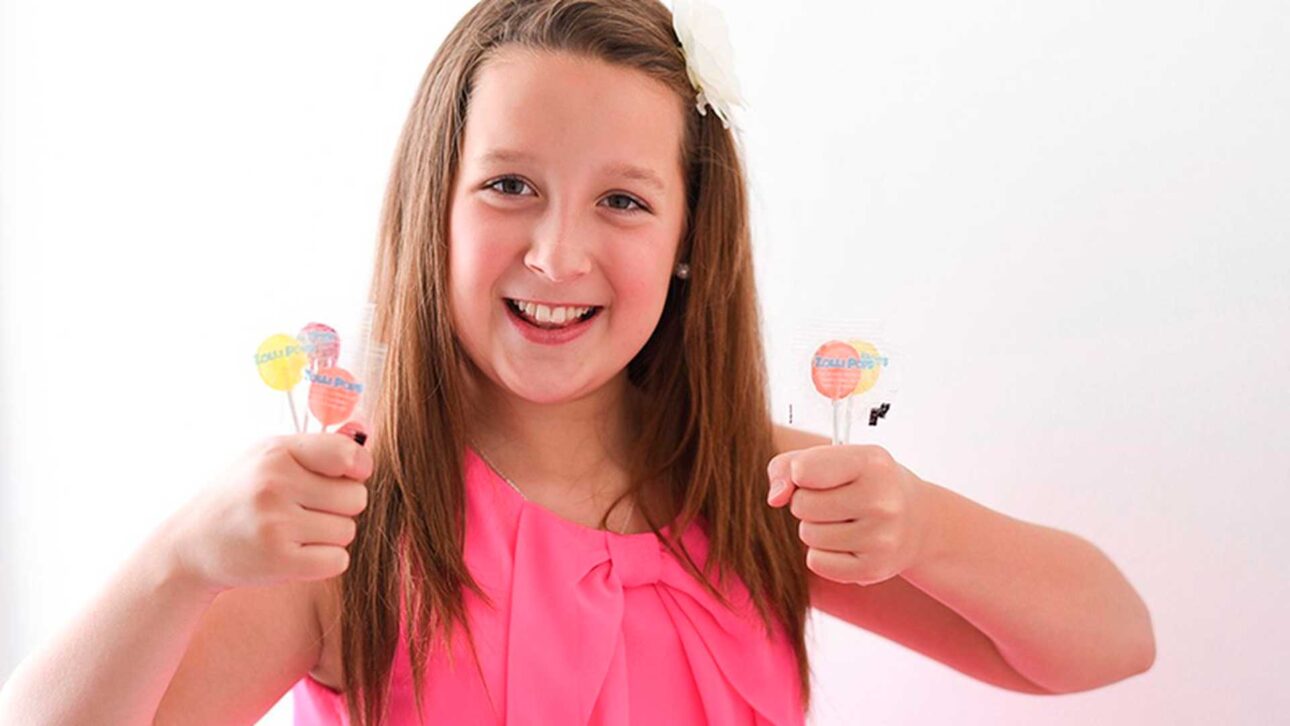
From there, the girl began to repeat the question that became the center of the project: why not make a candy more tooth-friendly? The answer didn’t come ready-made. It required research, tests, mistakes, and adult support to transform a child’s idea into a real product.
As reported by the Innovation Center at Michigan State University, Alina researched ingredients and manufacturers as a child, while her father, Tom Morse, helped structure the plan and oversee the initial steps of the business. The brand took shape even before she reached adolescence.
This detail helps explain why the story attracted so much attention in the United States. It wasn’t just a child with a curious idea, but an initiative that went through product development, supplier search, retail entry, and brand building.
The challenge was not just to remove sugar, but to make a candy that children would want to eat
Creating a sugar-free lollipop was not enough. To succeed in the market, the product needed to have flavor, texture, stability, and a competitive price. This was one of Zolli Candy’s biggest challenges in the early years.
According to the brand’s official page, the Zolli Candy line is presented as sugar-free, vegan, gluten-free, made with natural flavors, and without artificial colors. The company also started working with other products besides lollipops, such as candies and caramels.
The technical part was decisive. According to Snack Food & Wholesale Bakery, Zollipops use sweeteners like xylitol, stevia, and erythritol, ingredients associated with the proposal to reduce sugar without abandoning the experience of eating candy.
Even so, the brand had to solve typical industry problems. The company’s own history reports difficulties with unstable lollipops sensitive to heat. After adjustments in formulation, the products began to withstand transportation better, including in containers subject to high temperatures.
Oral health became central to the business, but without replacing basic habits
The appeal of Zolli Candy grew because it resonates with a common concern among parents, dentists, and schools: the frequent consumption of sugar in childhood. The World Health Organization points out that free sugars are among the main risk factors for dental cavities.
In the United States, the data reinforces this concern. The CDC’s oral health surveillance report showed that about half of children aged 6 to 9 have already had cavities in baby or permanent teeth, which helps to gauge the size of the problem.
This does not mean that a sugar-free candy alone solves children’s oral health. The American Dental Association highlights that both the amount and frequency of sugar consumption can influence the risk of cavities, in addition to the importance of brushing, fluoride, and dental check-ups.
It is in this context that Zolli Candy positions itself. The brand does not just sell a lollipop, but an alternative for families who wish to reduce sugar without completely removing the pleasure of candy during moments like parties, lunchboxes, and holidays.
From the first sales to the national retail, Zolli Candy gained scale
The brand’s expansion happened gradually but gained speed when the products started entering larger sales channels. In 2017, Snack Food & Wholesale Bakery reported that Zollipops had become the best-selling sugar-free hard candy on Amazon during that period.
With growth, Zolli Candy began appearing in entrepreneurship lists and profiles. Inc. highlighted Alina Morse in its Female Founders list of 2025, citing the brand’s presence in 25,000 stores in the United States and in 12 other countries.
This advancement shows that the company has moved beyond being just a curiosity about a child entrepreneur. The business has consolidated in a specific category, that of functional and sugar-free candies, at a time when consumers are seeking products with simpler labels and fewer artificial ingredients.
The journey also reinforces an important point for small businesses: the initial idea is rarely enough. In the case of Zolli Candy, growth came from the combination of a simple question, tested product, clear differentiation, and the ability to adjust operations as problems arose.
The company also created an initiative to bring dental education to schools
In addition to the products, Zolli Candy began supporting the Million Smiles Initiative, an organization linked to oral health education and entrepreneurship in schools. The initiative was born after the first years of the business and expanded the brand’s social reach.
According to information from the Million Smiles Initiative itself, part of Zolli’s profits and products are directed to educational actions and donations to schools and qualified organizations. The proposal is to use the candy as an entry point to talk about dental care and idea creation.
This type of strategy also helped transform the company into a brand with a cause. Instead of just selling the promise of a sugar-free lollipop, Zolli began associating its products with conversations about prevention, food choices, and child entrepreneurship.
In the end, the question Alina asked at age 7 turned into more than just a line of candies. It became a story about curiosity, persistence, and market, showing how an apparently small restlessness can gain scale when it finds support, research, and execution.
Alina Morse’s story also raises an important question: how many simple ideas, made by children or young people, end up ignored before being tested? Leave your comment saying if you believe schools and families should encourage more of this type of entrepreneurial curiosity.