Portuguese
  Spanish


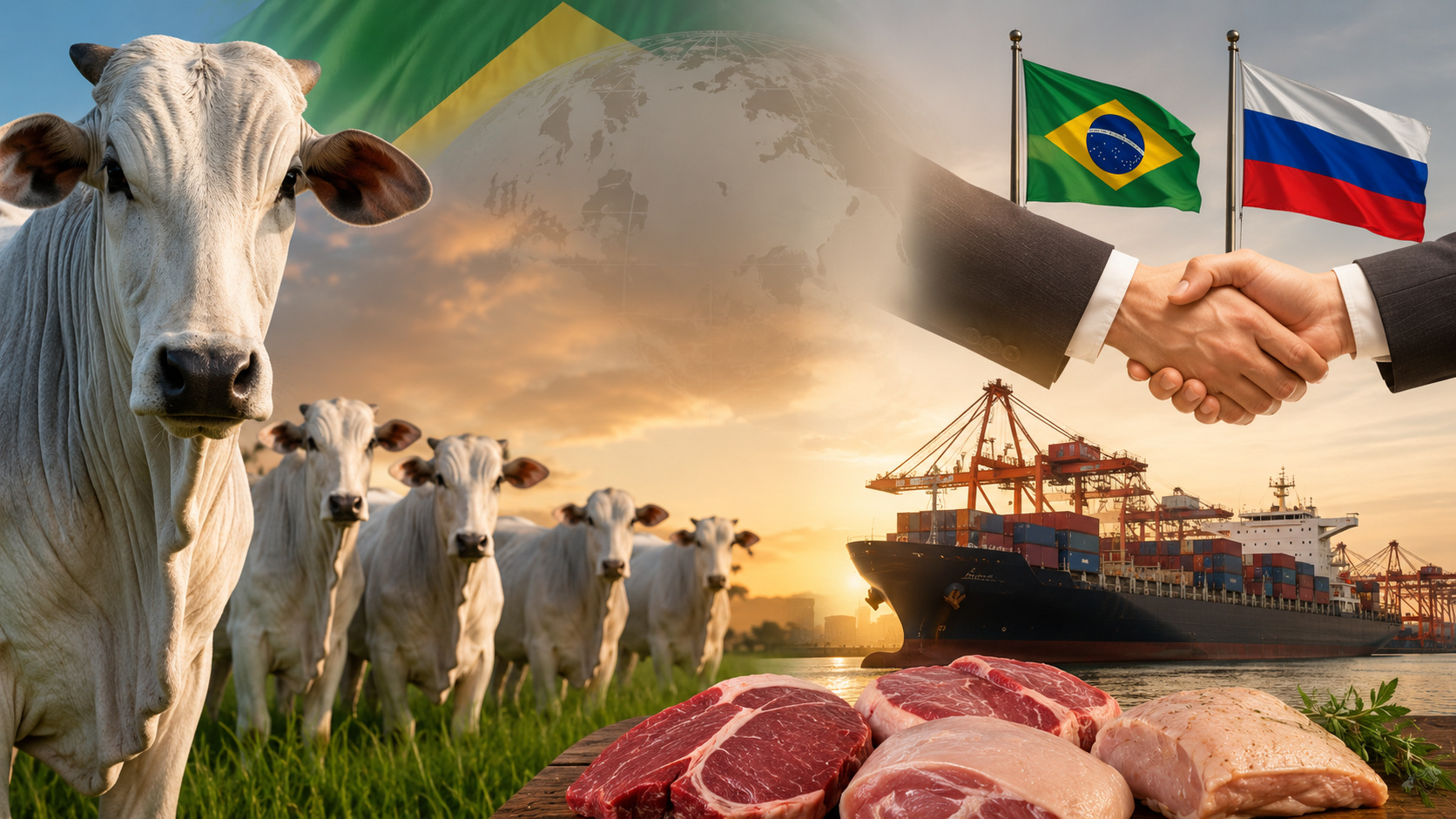

Brazilian livestock has achieved a new advancement in the international market.
On June 10, 2026, Russia officially recognized Brazil as a country free of foot-and-mouth disease without vaccination. The announcement was made by the Ministry of Agriculture and Livestock (Mapa) on June 11, 2026.
The decision came just days after China adopted the same recognition. With this, two important international markets began to accept the new Brazilian sanitary status.
Furthermore, the recognition strengthens Brazil’s image as a safe supplier of animal protein. The measure can also aid the country in new trade negotiations.
-
23-Year-Old Brazilian Turns Beekeeping into College Tuition, Harvesting Honey Twice a Year from 50 Hives

-
10-Year-Old Boy Persists After Being Told He’s Too Young, Now Helps Manage Brazilian Farm and Launches New Project
-
Chinese Farmers Develop “Blanket Greenhouses” to Grow Vegetables in Extreme Winter Without Heaters

-
Centuries Before Modern Greenhouses, English Gardeners Used Horse Manure to Grow Pineapples in Cold Climates




What Russia recognized
Russia recognized the entire Brazilian territory as free of foot-and-mouth disease without vaccination.
This status indicates that the country maintains sufficient sanitary control to dispense with the mandatory immunization of herds. Additionally, it shows that Brazil has advanced in animal surveillance, border control, and sanitary tracking.
The Ministry of Agriculture reported that the Russian decision follows the certificate granted by the World Organization for Animal Health (OMSA). The entity recognized Brazil as free of the disease without vaccination.
Therefore, Russia’s decision carries commercial and diplomatic weight.
China had made a similar decision
Before Russia, China also recognized the new Brazilian sanitary status.
The Chinese recognition occurred on June 2, 2026. At that time, the Brazilian government reported that the entire national territory was accepted by China as free of foot-and-mouth disease without vaccination.
The decision came after an official mission by the Minister of Agriculture, André de Paula, to the Asian country. During the trip, the Brazilian government presented the advances of the national agricultural defense system.
Moreover, China is one of the main buyers of animal protein from Brazil. For this reason, the recognition was of great importance to the sector.
Why this matters for agribusiness
The new sanitary status can facilitate access for Brazilian meat to more demanding markets.
Many countries use strict sanitary criteria to authorize imports. Thus, international recognition reduces technical barriers and improves the competitiveness of Brazilian products.
Furthermore, Brazil gains more strength in negotiations involving beef, pork, and other animal products.
The measure also increases the confidence of foreign buyers. In this way, the country can expand its presence in the global protein trade.
What is foot-and-mouth disease
Foot-and-mouth disease is a viral disease that affects cattle, pigs, sheep, goats, and other cloven-hoofed animals.
The disease causes fever, lesions in the mouth and hooves, decreased productivity, and significant economic losses.
Although it does not pose a great risk to humans, foot-and-mouth disease has a strong commercial impact. Importing countries often impose severe restrictions on regions with occurrences of the disease.
Therefore, achieving disease-free status without vaccination is a milestone for any producing country.
Brazil took decades to reach the current status
Brazil worked for decades to eliminate foot-and-mouth disease from the national territory.
For many years, the country conducted mass vaccination campaigns. In addition, states, rural producers, and public agencies reinforced surveillance and inspection systems.
The National Program for the Eradication of Foot-and-Mouth Disease (PNEFA) coordinated this process in the country.
With the advancement of sanitary control, Brazil gradually suspended vaccination in different regions. After that, it sought international recognition for the new status.
Decision strengthens the country’s image
The recognition from Russia reinforces the credibility of Brazilian livestock.
Moreover, it shows that major international buyers are following the country’s sanitary advances.
For the productive sector, this validation helps to enhance the value of Brazilian meat. It can also favor new contracts and increase the predictability of exports.
Meanwhile, the Brazilian government is seeking new market openings. The foot-and-mouth disease-free status without vaccination has become an important argument in these negotiations.
Exports may gain new momentum
China and Russia have significant weight in the international food trade.
Therefore, the recognition by the two countries may encourage other markets to review their own sanitary requirements.
Furthermore, the decision may improve Brazil’s position against global competitors. Among them are major meat exporters from South America, Oceania, and North America.
The direct impact on sales depends on new negotiations. Even so, the recognition creates a more favorable environment for Brazilian livestock.


Government sees strategic advancement
The Ministry of Agriculture classified the recognition as a result of the technical work of Brazilian agricultural defense.
The government also highlighted the joint efforts with the Ministry of Foreign Affairs. Both departments participated in negotiations with foreign authorities.
Additionally, the Ministry states that the new status helps Brazil diversify trade destinations.
This diversification is important because it reduces dependency on a few buyers. It also protects the sector against sudden changes in import rules.
Producers also have a central role
The sanitary advancement does not depend solely on the government.
Rural producers, veterinarians, cooperatives, and sector entities participated in the disease control process.
They followed vaccination schedules for decades. Later, they adapted production systems for the non-vaccination phase.
Moreover, field surveillance remains essential. Even without vaccination, the country needs to maintain constant monitoring to preserve the new status.
Recognition can open doors
Russia’s approval comes at an important time for Brazilian agribusiness.
The country seeks to expand its participation in higher value-added markets. For this, it needs to demonstrate sanitary safety, traceability, and supply regularity.
The status of being free of foot-and-mouth disease without vaccination aids in this process.
Additionally, the achievement can benefit slaughterhouses, producers, and the entire animal protein chain.
Brazil targets new markets
With the recognition from China and Russia, Brazil gains more strength to negotiate with other countries.
The trend is that the government will use the OMSA certification as a technical basis in new negotiations.
Moreover, the private sector can take advantage of the moment to expand international contracts.
Even so, progress requires continuity. The country needs to maintain active surveillance, a quick response to health risks, and efficient border control.
Milestone for national livestock
The recognition from Russia marks another stage in Brazil’s health consolidation.
After decades of vaccination, inspection, and technical work, the country has come to be seen by major markets as free of foot-and-mouth disease without vaccination.
Furthermore, the decision strengthens the Brazilian position in the global meat trade.
With China and Russia recognizing the new status, Brazil gains credibility, competitiveness, and new possibilities for agribusiness.
Do you believe that this recognition can open even more space for Brazilian meat abroad? Share your opinion in the comments.