Portuguese
  Spanish


The handing over of the keys to April Stringfield and her teenage son in Williamsburg became more than just a Christmas story. The three-bedroom concrete house, made with 3D printing, marked a real attempt to reduce construction time, maintenance costs, and housing access barriers in the United States.
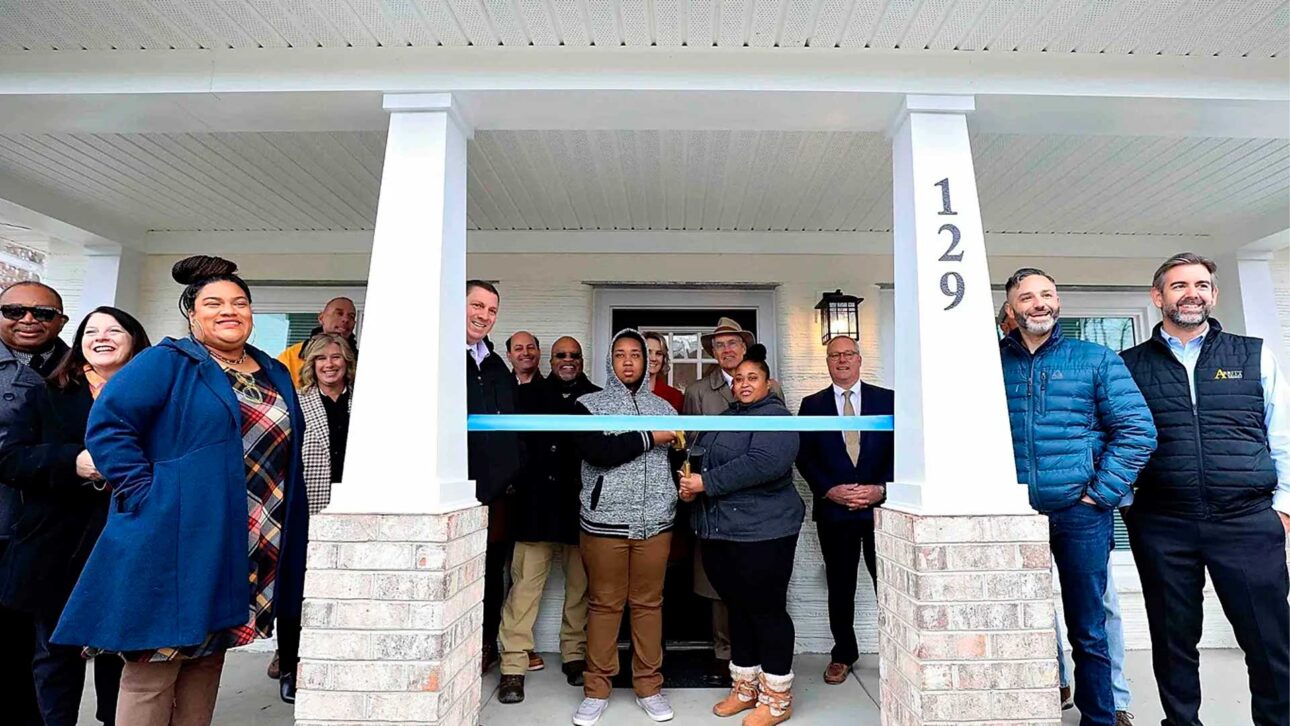
A few days before Christmas, April Stringfield received the keys to the house she had been waiting for years. A single mother living in the Williamsburg area of Virginia, she was able to purchase the property through the Habitat for Humanity Peninsula and Greater Williamsburg program.
The residence gained international attention for an unusual reason. Instead of following only the traditional wood construction method, the house had walls made by 3D concrete printing, a technology that is beginning to be tested as an alternative to speed up construction and reduce waste.
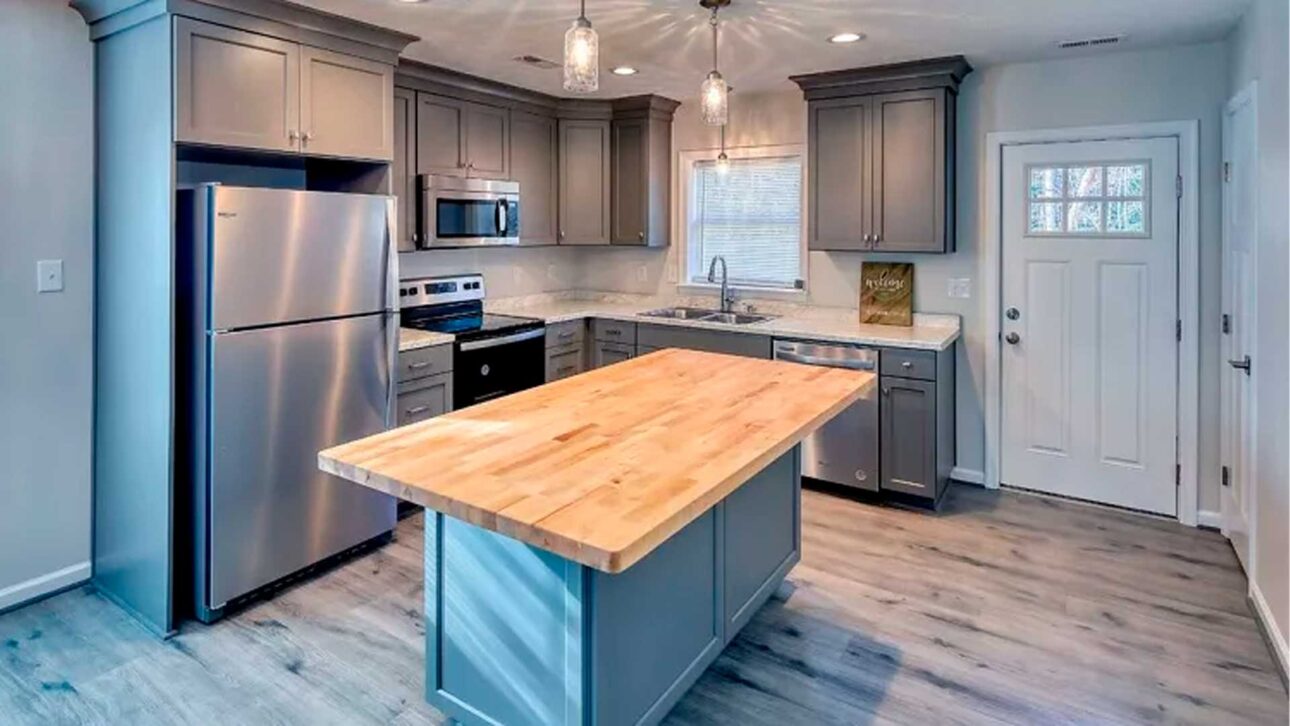
The property was handed over to April and her teenage son with three bedrooms and two bathrooms. The scene drew attention because it brought together two urgent issues at the same address: affordable housing and innovation in civil construction.
-
Simple Technique to Restore Rusty Metal Window Grilles Gains Attention for Revitalizing Old Structures Without Full Replacement

-
Couple Transforms Suffolk’s Last 1891 Windmill into Luxurious Four-Story Home with Zinc Observation Room in England

-
Father and Son Build 97 cm Thick Circular Stone House in Brazil, Inspired by Scottish Architecture, Creating a New Agrotourism Hub
-
Sweden Removes 200-Ton Concrete Gallery to Restore Pjältån River’s Natural Flow in Europe’s Largest Aquatic Restoration Project



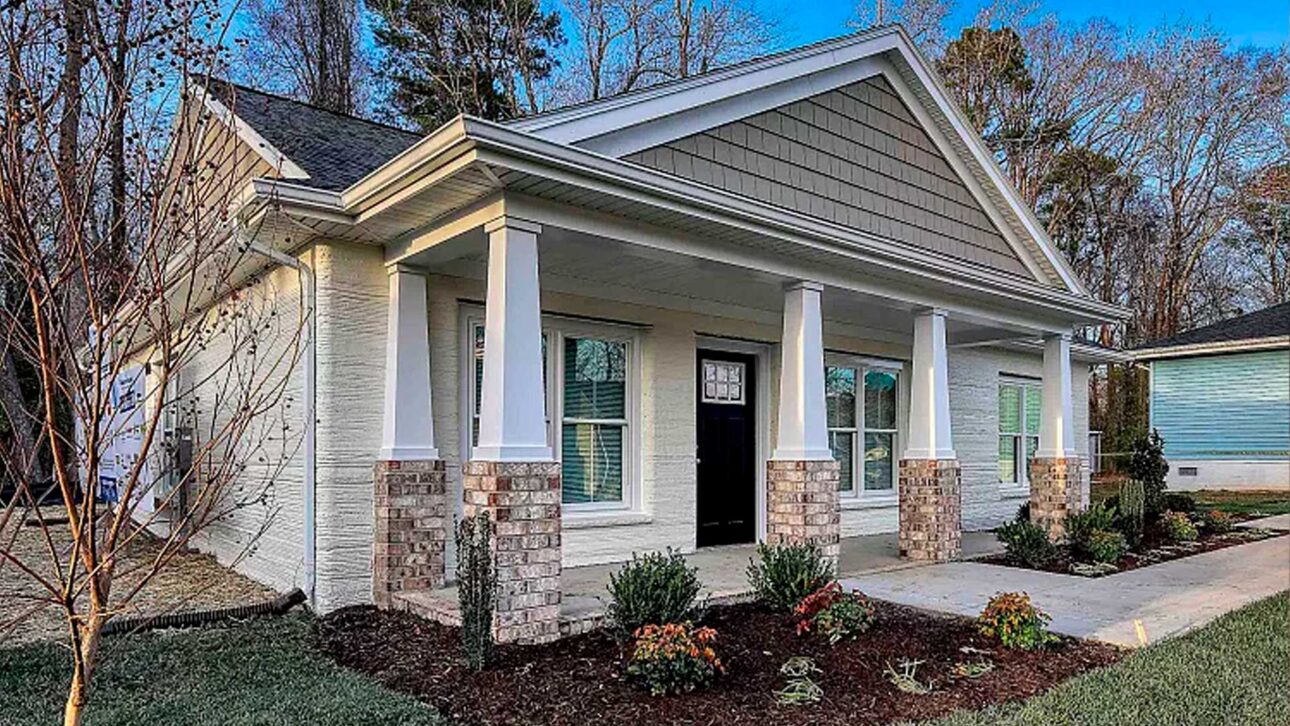
According to Habitat for Humanity Peninsula and Greater Williamsburg, the project represented the first 3D printed house completed by the organization in the United States. The construction was developed in partnership with Alquist, a company specializing in 3D printing construction.
The house that arrived as a Christmas gift but was born from years of waiting
April’s story did not begin with the handing over of the keys. According to information released by Habitat, she had long dreamed of owning her own home but faced the reality common to many American families: tight income, intense work, and difficulty entering the real estate market.
Before qualifying to purchase the home, April completed hours of practical participation in the organization’s program. Habitat works with a model where selected families help in construction, renovation, or community support activities before acquiring a house under facilitated conditions.
This detail is important because the residence was not simply donated. The family went through the organization’s purchase program, which aims to sell properties without profit and with accessible financing, ensuring that the installment does not compromise an excessive part of the income.
In April’s case, the house represented stability. For her son, it also meant a fixed address and the chance to grow up in an environment designed for permanence, not just to solve a temporary emergency.
The giant printer entered the site and changed the pace of the work
The part that drew the most attention was the use of a large-scale printer on the site. Instead of erecting all the walls with blocks or conventional wooden structures, the equipment deposited layers of concrete following a digital design.
As reported by Euronews in December 2021, the printing of the internal and external walls took about 12 hours, which would have reduced by at least four weeks a stage of traditional construction. The number does not mean that the entire house was ready in this period, but it shows the impact of technology on a critical phase of the work.
Alquist records the Williamsburg project as a house of approximately 1,240 square feet, about 115 m², with three bedrooms and two bathrooms. The difference compared to the 111 m² mentioned in other publications occurs due to the conversion and rounding of measurements.
Even with the printer, the work did not eliminate all traditional services. Foundation, roofing, electrical installations, plumbing, finishing, windows, and doors still required specialized labor, supervision, and stages common to any regularized residence.
Concrete replaced part of the wood and promised savings beyond the handover of the keys
One of the reasons for testing 3D printing was the pressure on construction costs. During the pandemic, wood prices rose sharply in the United States, increasing the final value of many houses and making it even more difficult for low-income families to access them.
Habitat reported in its technical material that printing with concrete could generate preliminary savings of up to 15% per square foot. The advantage would come from waste reduction, less dependence on conventional labor, and speed in structural stages.
Another point mentioned in the project is thermal performance. Concrete walls tend to retain temperature differently from wood, which can help reduce heating and cooling costs, especially when combined with energy efficiency solutions.
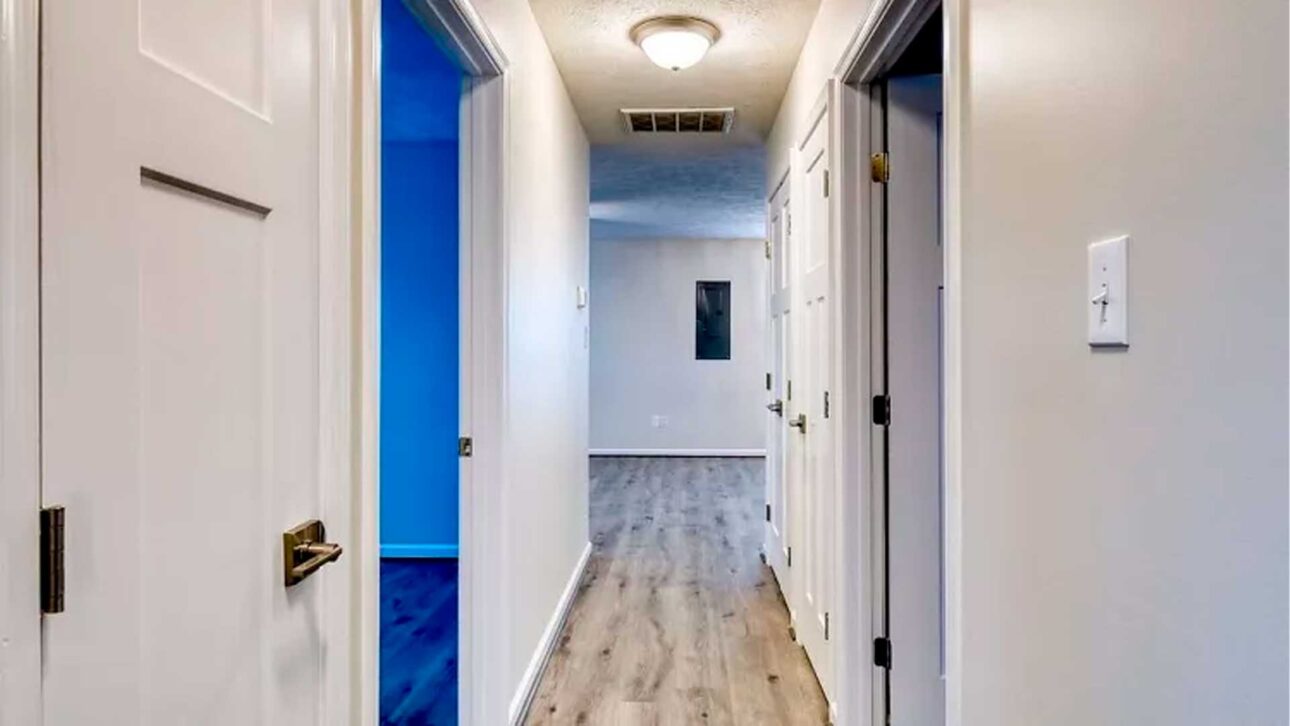
The house was also designed to accommodate solar panels, expanding the idea of long-term savings. For a family moving into their own home with a limited budget, lower bills after moving can be as important as the purchase price.
The house’s resilience became part of the debate on climate and safety


Besides the cost, structural resilience emerged as an argument in favor of the technology. The concrete house was presented as more resistant to damage associated with hurricanes and tornadoes, events that concern several regions of the United States.
This does not mean that 3D printing makes a house indestructible. Safety depends on design, material, local regulations, foundation, roofing, and correct execution of each stage.
Even so, the choice of concrete opened an important discussion. In a scenario of extreme weather events, affordable housing cannot be thought of only as cheap structures but as constructions capable of lasting and better protecting their residents.
April’s house also received a curious detail: a small home 3D printer. The idea was to allow the family to produce simple replacement parts, such as switch covers and doorknobs, reducing everyday maintenance costs.
Innovation helps, but does not solve the housing crisis alone
Despite the impact of the story, experts treat 3D printing as part of the solution, not as the sole answer to the lack of affordable housing. The final price of a home involves land, licensing, financing, infrastructure, taxes, labor, and materials that are not replaced by the printer.
The State of the Nation’s Housing 2026 report from Harvard’s Joint Center for Housing Studies showed that housing challenges in the United States remain severe. The institution pointed out rising costs for renters and homeowners, as well as insufficient housing assistance in the face of demand.
This context helps explain why the Williamsburg house resonated so much. It emerged in a country where millions of families spend a high portion of their income on rent or mortgage, while the construction of affordable units still does not meet the need.
Studies and analyses on 3D concrete printing also highlight technical obstacles. Among them are adaptation to building codes, professional training, standardization of materials, and integration of printed walls with doors, windows, roof, and internal systems.
And you, do you believe that 3D printed houses can help reduce the housing deficit or is this technology still far from the reality of most families? Leave your opinion in the comments and tell us if you would live in a house made by 3D printing.