






 Portuguese
  Spanish


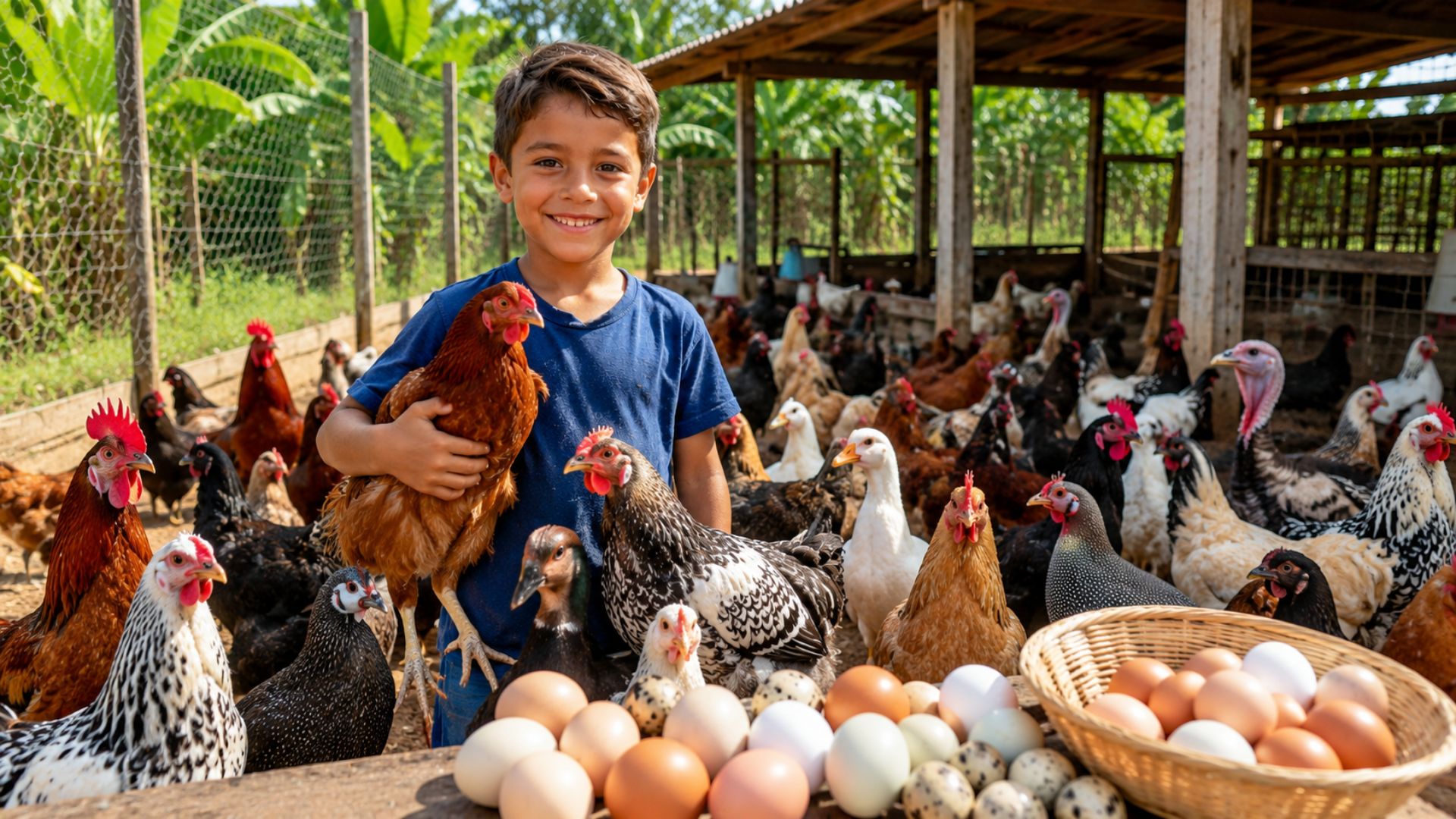
Gustavo José Mandro, 8 years old, is a young entrepreneur from the rural area of Piracicaba who raises chickens and sells eggs. He got his first chicken at 2, today he has 80 birds of 23 breeds, serves even the school principal, and in Sebrae’s JEPP, he already plans to be an agronomist.
Some kids get a toy and forget about it the next day. Gustavo José Mandro got a chicken at 2 years old and turned it into a lifelong venture. Today, at 8, he manages a flock of 80 birds of 23 different breeds in the rural area of Piracicaba, in the interior of São Paulo, and has a client list that would make many adults envious. Among his regular customers are his own teachers, the coordinator, and the school principal.
The story was told by the Sebrae News Agency SP in October 2025. A 3rd-grade student at the Municipal School Professor Manoel Rodrigues Lourenço, in the rural area, Gustavo is a young entrepreneur who raises chickens, sells eggs, and already knows exactly what he wants in life. “I want to be an agronomist, study at Esalq,” says the boy, referring to the famous agronomy school located in his own city.
From 1 chicken at 2 years old to 80 birds of 23 breeds
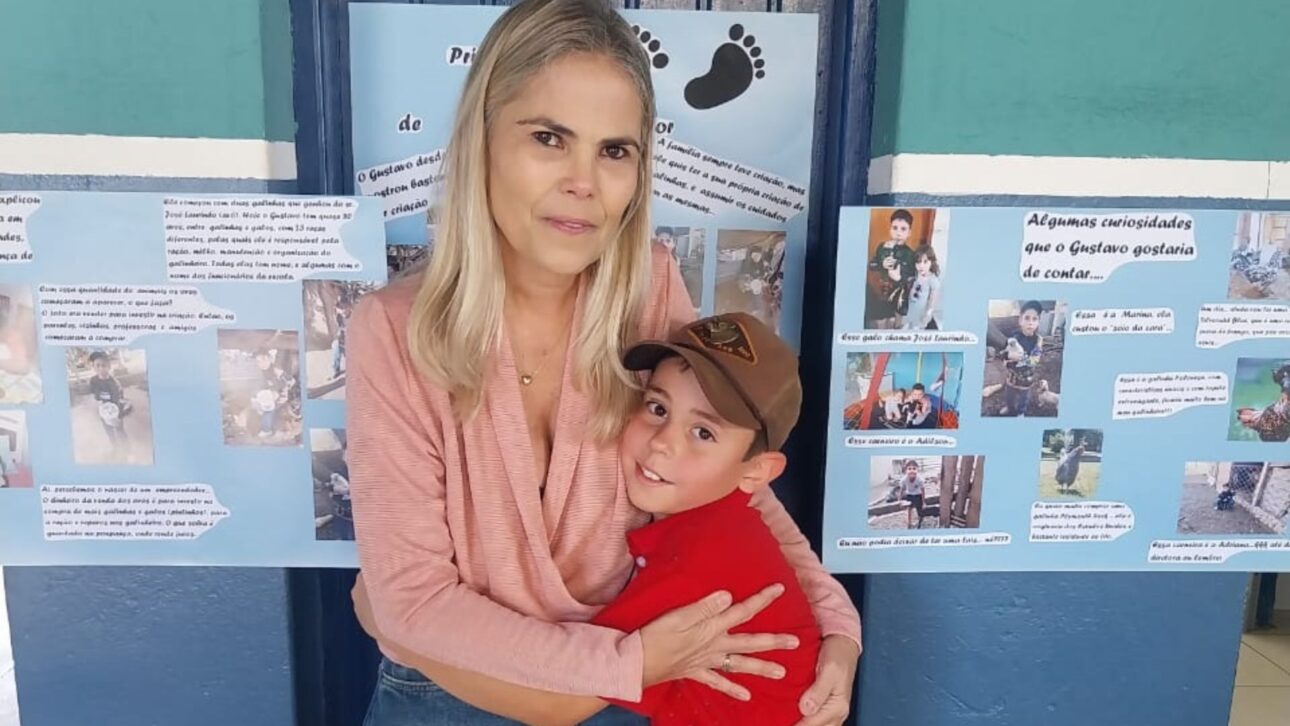
At 2 years old, in the rural area of Piracicaba, Gustavo received his first chicken from the family, and the grandparents, who already sold eggs from their own flock, started selling his as well. It was from this small gesture that the boy’s first capital came, money that he, instead of spending, reinvested to buy more birds.
-
Couple Transforms School Bus into Mobile Home with Full Bathroom Using YouTube Tutorials, Invests $50,000

-
Chester County, USA, Achieves “Functional Zero” in Chronic Homelessness by 2026 with Housing First, Reducing Shelter Use by 52%

-
Brazil Extracts 12 Million Cubic Meters of Sand for Largest Beach Expansion Project, 82% Complete Along 8.8 km Coastline
-
Bosch Unveils Revolutionary 2.3 kg Hub Motor for E-Bikes with 45 Nm Torque and 400 Watts Power, Eliminating Resistance Above 25 km/h in Historic Shift for German Manufacturer


Reinvestment is what transforms the story into a true entrepreneurship case. With the profit, Gustavo bought chickens of different breeds, improved the chicken coop, and funded the animals’ feed. He grew gradually, from one chicken to dozens, until reaching the current 80 birds of 23 breeds, a variety that impresses even among adult breeders.
And it’s not an automatic pilot breeding. Those who raise chickens with his seriousness study the subject, and Gustavo researches breeds, compares prices, and understands feed. “I learn from my grandfather, my grandmother, and on Google,” the boy says, mixing the wisdom of the farm with the curiosity of the internet. It’s this mix that turned the backyard into a business.
The business: sells eggs even to the school principal
Gustavo’s differential is not only in raising chickens, but in knowing how to sell. The boy sells eggs to neighbors, relatives, and, the detail that enchants, to the teachers, the coordinator, and the principal of his own school. “I offer the eggs and now I even have orders,” says the young entrepreneur, with the ease of someone born for commerce.
The way he approaches customers shows early commercial instinct. According to Gustavo, sometimes it’s the customers who ask, sometimes it’s him who initiates the sale, turning the offer into a game that almost no one refuses. Selling eggs, for him, is fun and income at the same time, and the result is a loyal clientele inside and outside the school.
The money that comes in doesn’t disappear on frivolities. True to the logic that brought him here, Gustavo reinvests to buy new breeds, improve the structure, and feed the flock. It’s the cycle of someone who understood early that selling eggs today is what pays for tomorrow’s chickens, a grown-up reasoning in an 8-year-old boy.
A “partnership” with his sister and grandmother
Behind the young entrepreneur is an entire family involved. The business operates like a kind of “partnership”: Gustavo raises chickens with his younger sister and grandmother, who share the daily care. It’s not a child alone playing farm, it’s a family project with the boy in charge.
His routine balances childhood and responsibility in a rare way. “In the morning I go to school. When I get home, I rest. Then I do my homework, play with my grandmother, or play ball with my grandfather. Then we take care of the livestock,” Gustavo describes. First school and play, then work with the animals, in the right order for his age.
His mother, Dayane Cristina Nascimento Mandro, sees it all naturally. “It’s natural because we live on the farm. He was born in the midst and liked it more and more. He goes out with his grandfather, who buys pigs, chickens, calves… and even negotiates together,” she said. The boy’s talent, therefore, was nurtured by an environment that breathes agriculture every day.
JEPP from Sebrae: the school of the young entrepreneur
Gustavo’s instinct gained method with a push from entrepreneurial education. He participates in JEPP, the Young Entrepreneurs First Steps program by Sebrae-SP that brings notions of entrepreneurship to children, and he has already gone through it in 2023 and 2025. It was in JEPP that the boy learned to structure as a project what he already did by instinct.
The highlight was the JEPP Fair, in September 2025, where Gustavo presented his own business. The school principal, Adriana Vargas Mendes Janousek, noticed the transformation. “He has always been communicative, but he is more confident after the fair, more secure. He wants to tell others about the creation,” she stated. Giving a stage to the boy’s passion made him even more the owner of his own story.
For Sebrae, cases like this show the value of encouraging early. “With Gustavo’s story, we see the importance of increasingly encouraging children to be protagonists of their own stories,” said Vivian Lourenço, business analyst at Sebrae-SP. The young entrepreneur inadvertently became an example of what entrepreneurial education can awaken.
The dream of Esalq and agro
What is most surprising about Gustavo is not the present, but the size of his plans. The boy wants to be an agronomist and study at Esalq, the Luiz de Queiroz College of Agriculture, one of the most respected in the country, which luckily is located in his own Piracicaba. Having a world reference in agriculture in his hometown gave the dream a concrete address.
And the plan is as detailed as that of an executive. “I want to work with sugarcane. I will spend a year working at the cooperative. Then I will go to Mato Grosso, I want to stay there for about five years and then go to the United States,” the boy projects. At 8 years old, he already has a career map that many people don’t have at 30.
This broad horizon is what turns the story of chickens into a story of the future. Today’s 80 birds are the first step of a project that aims at university, the field, and the world. For this young entrepreneur from Piracicaba, selling eggs is just the beginning of a path he already sees in full.
Why this story enchants and what it teaches
Gustavo’s case touches because it brings together things we like to see. There is the child who dreams, the family that supports, the work that teaches, and the reinvestment that makes the small become big. Who raises chickens and sells eggs at 8 years old and reinvests every cent is learning, in practice, lessons that many schools don’t teach.
There is also a message about opportunity. Gustavo had a rural environment, the support of his grandparents, and the encouragement of a program like JEPP, by Sebrae, and it was this combination that turned potential into a project. A child’s talent flourishes when someone waters it, and the story shows the effect of taking entrepreneurship seriously from an early age, without stealing the boy’s childhood.
Of course, it’s important to maintain lightness. Gustavo is, above all, a child who likes chickens, plays soccer with his grandfather, and plays with his grandmother, and the business coexists with this without rushing his age. It’s entrepreneurship with the look of a happy childhood, and perhaps it’s precisely this balance that is most inspiring in the journey of the young entrepreneur from Piracicaba.
In the end, Gustavo José Mandro proves that big dreams fit in small people. From a chicken he received at 2 years old to a flock of 80 birds of 23 breeds, he raises chickens, sells eggs even to the principal, and already has his sights set on Esalq, all without losing his childlike nature. It’s the kind of story that makes us believe more in the future.
And you, did you have any business sense when you were a child, or do you know any young entrepreneur like Gustavo in your family or neighborhood? Share here in the comments the story of this mini entrepreneur you know.


Be the first to react!