






 Portuguese
  Spanish


Ticonderoga cruisers combine Aegis, SPY-1 radar, large missile arsenal, and central role in the air defense of US aircraft carrier groups.
The Ticonderoga-class cruisers have established themselves as some of the most influential warships of the modern era by bringing together, in a single platform, the Aegis system, long-range multifunctional radar, battle command, and large missile launch capacity. Created to face complex aerial threats, they have come to occupy a central position in the naval architecture of the United States Navy, especially in the protection of battle groups led by aircraft carriers.
More than heavily armed escorts, these ships were designed to function as decision centers in naval combat. The US Navy itself describes the class as a multi-mission platform, capable of operating alone or integrated into carrier strike groups, with the combat system centered on the Aegis Weapon System and the SPY-1 radar.
Ticonderoga Class was born in the Cold War to face high-intensity aerial attacks
The development of the Ticonderoga class began in the late 1970s, when the United States sought a response to increasingly sophisticated aerial threats in an environment dominated by the rivalry with the Soviet Union. The concern was clear: to protect aircraft carrier groups against aircraft, anti-ship missiles, and coordinated multi-layered attacks.
-
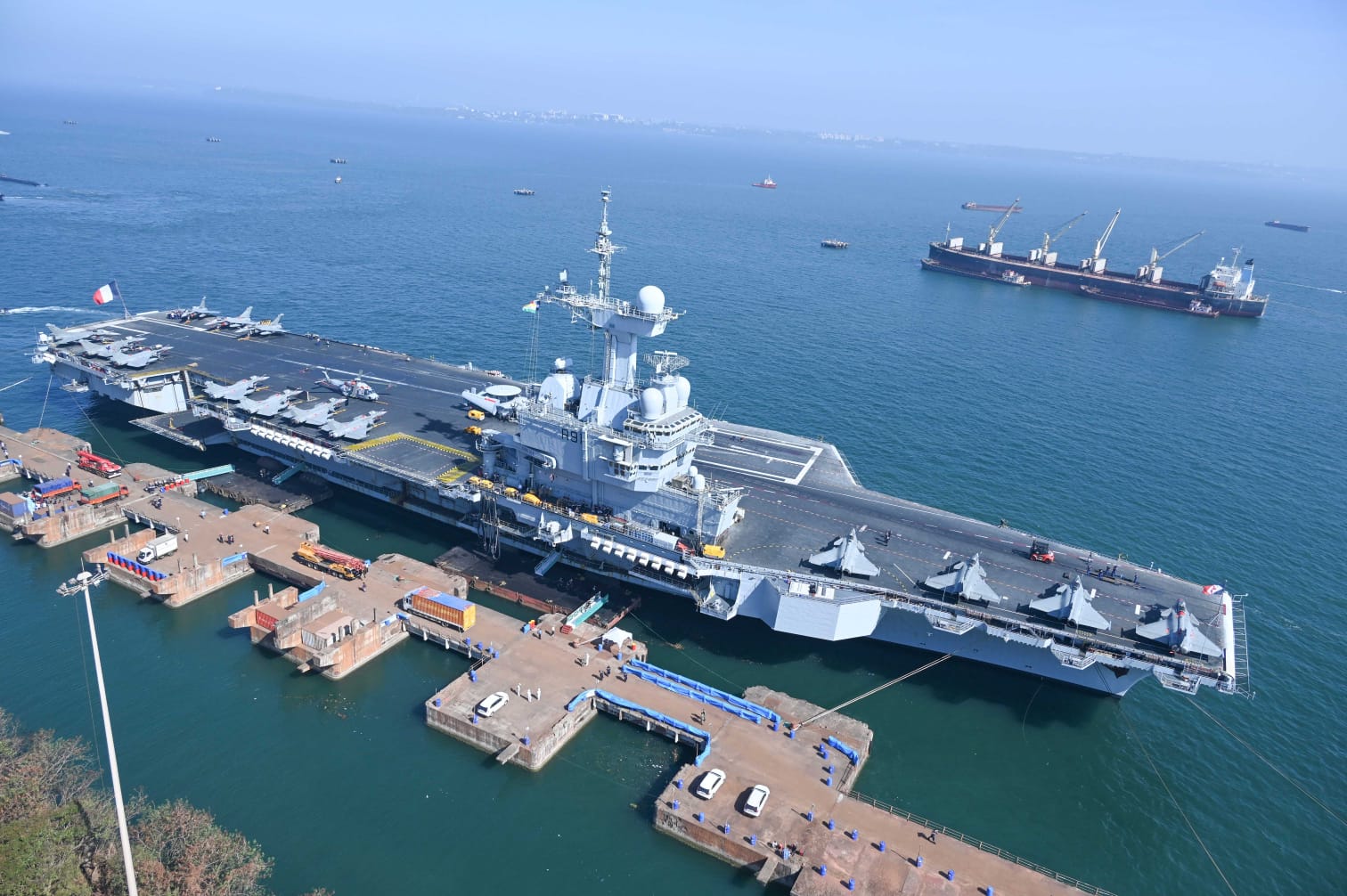
France’s Charles de Gaulle: The Sole Nuclear-Powered Aircraft Carrier Outside the US, Weighing 42,500 Tons and Equipped with Two Atomic Reactors

-
The military spaceplane that almost took the Cold War into orbit: Boeing X-20 Dyna-Soar was designed to re-enter above Mach 20, fly for up to 40 hours, land like a plane, and transform Titan rockets into a gateway to a new era of orbital warfare.

-
FAB bets on national drones and increases investments to strengthen the Brazilian aerospace industry

-
Six times, a luminous crescent the size of the Moon startled the Soviet sky at dusk: it seemed like a wave of UFOs, but it was a secret orbital weapon created to attack the United States via the South Pole and evade Cold War radars.




The solution was to combine a large surface ship with an automated command and control system that could detect, track, and engage threats at a much faster pace than previous generations. The first ship of the class, the USS Ticonderoga (CG-47), was commissioned in 1983, marking the entry of the first cruiser equipped with Aegis into the American fleet.
This origin explains why the Ticonderoga were never seen merely as presence or patrol ships. From the beginning, the central mission was to serve as the axis of naval air defense, protecting high-value strategic assets and coordinating rapid responses in threat saturation scenarios.
Aegis System transformed the cruiser into a battle command and control center
The heart of the Ticonderoga class is the AEGIS Weapon System, described by the U.S. Navy as a centralized, automated, command, control, and weapon direction system, designed to integrate the complete chain between detection and engagement. This system allowed the cruiser to no longer rely on sensors and weapons operating in a more fragmented manner.
At the center of this arrangement is the AN/SPY-1 radar, a multifunctional phased-array radar capable of performing search, tracking, and missile guidance simultaneously.
According to the official Aegis page of the U.S. Navy, the system has the capability to track more than 100 targets simultaneously, which helps explain its weight in fleet anti-aircraft and anti-missile defense.
With this architecture, the Ticonderoga began to act as Air Defense Commander platforms in carrier groups, coordinating sensors, communications, and weapon launches in an integrated manner. It was this leap in integration, not just the size of the arsenal, that transformed the class into a reference for modern naval warfare.
Ships with Mk 41 VLS carry up to 122 cells and drastically expand combat flexibility
One of the strongest images associated with the Ticonderoga class is that of the large embarked arsenal, but here there is an important correction.
The 122 vertical launch cells apply to units equipped with the Mk 41 Vertical Launching System, inaugurated in the class with the USS Bunker Hill (CG-52), which the U.S. Navy describes as the first Aegis ship with VLS.
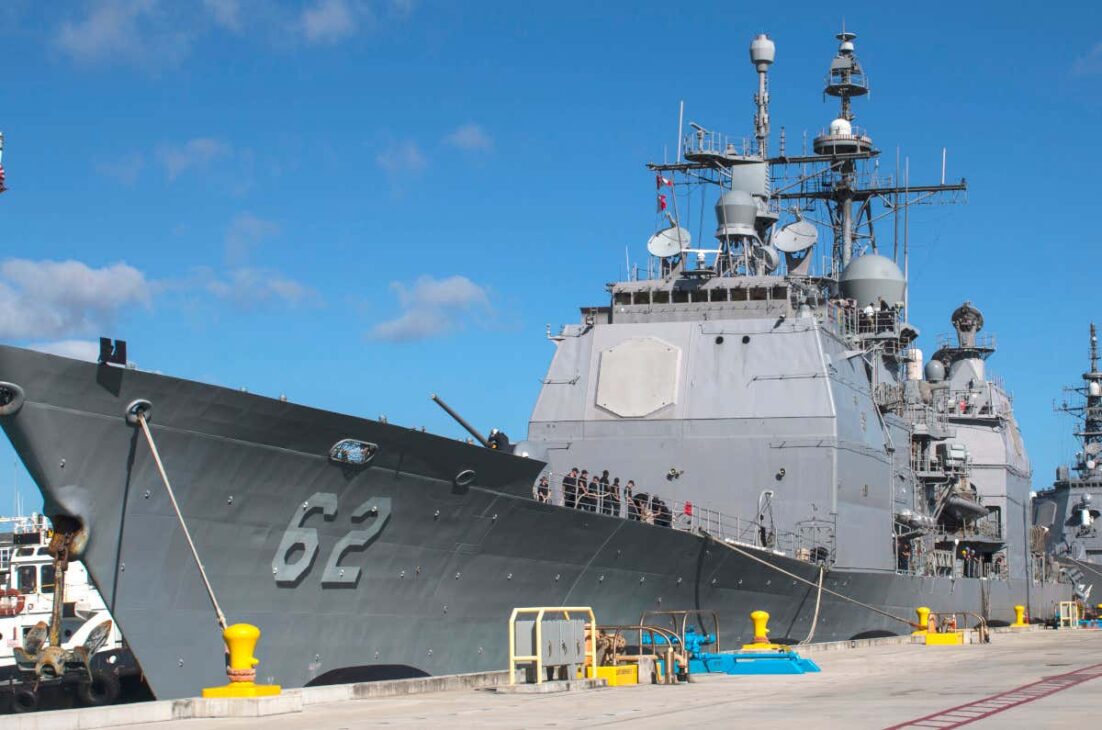
In a historical assessment by NAVSEA about the USS Mobile Bay (CG-53), the ship is listed with two sets of 61-cell Mk 41, totaling 122 launch positions, capable of accommodating a combination of missiles from the Standard family, SM-3 interceptors, Tomahawk land attack weapons, and VL-ASROC systems for anti-submarine warfare.
This architecture gives the cruiser a rare flexibility. Instead of being limited to a single mission, the ship can be configured for area air defense, missile defense, long-range attack, and anti-submarine protection, which helps explain why the class was treated for decades as a true floating arsenal.
Dimensions, propulsion, and sensors show why the class became a key part of the fleet
In the official fact file of the U.S. Navy, the Ticonderoga class is listed with 567 feet in length, 55 feet in beam, and 9,600 long tons fully loaded, in addition to propulsion by four General Electric LM2500 gas turbines and speeds exceeding 30 knots. The same file also records complementary armament with naval guns, torpedoes, Phalanx systems, and the capacity to operate two SH-60 Seahawk helicopters.
These numbers help to understand the class as something more than a simple escort. The ship combines size, autonomy, sensors, and firepower in a package designed to stay with the task force and sustain prolonged operations in high-demand scenarios.
At the same time, the design of the class revealed an important technological transition. The U.S. Navy notes that the Aegis cruisers used hull and machinery derived from the Spruance-class destroyers, but combined with a much more sophisticated command and combat layer, which radically increased the tactical reach of the ship.
Aircraft carrier defense placed the Ticonderoga among the most strategic ships of the fleet
Few roles summarize the function of these cruisers as well as the protection of aircraft carrier battle groups.
The U.S. Navy itself states that the class provides multi-mission offensive and defensive capability and operates as part of aircraft carrier strike groups and surface action groups in support of global operations.
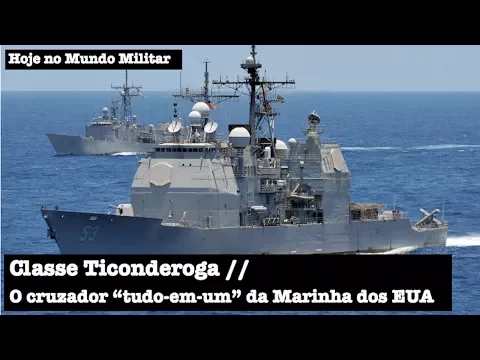

In practice, this means monitoring the airspace around the group, processing a large volume of data in real-time, and coordinating the response against threats approaching the aircraft carrier and other escorted ships. That is why the Ticonderoga were treated for years as specific platforms for the fleet’s air defense command.
This role gained even more importance because the aircraft carrier concentrates air power, command, and strategic projection.
Protecting this core requires ships capable of seeing far, reacting quickly, and maintaining coordination between sensors, communications, and weapons, precisely the operational space where the Ticonderoga became central.
Real operations proved that the class was not restricted to the theoretical role
The Ticonderoga cruisers were not limited to the doctrinal plan. In a historical evaluation by NAVSEA, the USS Mobile Bay (CG-53) appears as a participant in the Desert Shield and Desert Storm operations, where it acted as Battle Force Anti-Air Warfare Commander, launched 22 Tomahawk strikes, and helped coordinate actions against Iraqi naval forces.
Another example of real employment appears in the Navy’s historical documentation on the Gulf War. The Naval History and Heritage Command records that the USS Princeton (CG-59) was hit by Iraqi mines while maneuvering to provide air defense coverage in the northern Persian Gulf during Operation Desert Storm, an episode that shows how these ships were indeed embedded in the front line of operations.
These records help support a central point: the class combined air defense, tactical coordination, and offensive power in real conflicts. It was not just a technologically impressive ship but a platform used in complex operations in the Middle East, the Pacific, and missions related to missile defense and task force protection.
Legacy of the Ticonderoga shaped the standard of modern naval warfare
The Ticonderoga represented a turning point because they helped transform naval warfare into an environment of digital integration of sensors and weapons. Before this generation, radars, fire control, and armaments operated with much less coordination. With Aegis, area defense began to operate at another level of automation, response speed, and situational awareness.

This impact was so significant that the logic created for the class directly influenced other American surface platforms.
The U.S. Navy itself highlights the continuity of Aegis in later destroyers and in upgrades that have kept the system relevant far beyond the original Cold War moment.
Even with the gradual retirement of part of the class, the legacy remains evident. The Ticonderoga helped define the standard of how a modern fleet integrates advanced radar, battle command, air defense, and multimission capability, establishing itself as one of the clearest symbols of American naval power at the end of the 20th century and the beginning of the 21st.





Be the first to react!