






 Portuguese
  Spanish




The Desmont Law Tried to Curb the Illegal Trade of Parts, but Weak Oversight and Organized Crime Keep Illegal Scrap Yards Active in the Country.
Many stolen cars in Brazil are never recovered. They are likely dismantled. This feeds the old “scrap metal mafia.” An underground market for stolen parts. In 2014, the Desmont Law promised to change that. The idea was to trace parts and curb theft. Did it work? Why does crime involving scrap yards persist?
The “Wild West” of Used Parts: The Reality Before the Desmont Law
Before 2014, the used parts sector was lawless land. A massive network of scrap yards operated on the fringes. Parts were sold with no guarantee of origin. Many came from stolen cars. There was no control over quality or safety. Components like brakes could be sold defective. This put drivers at risk. This lack of control made vehicle theft profitable. Cars were quickly dismantled. The parts easily supplied the underground market. It was a scenario of constant vulnerability.
The Desmont Law (2014)
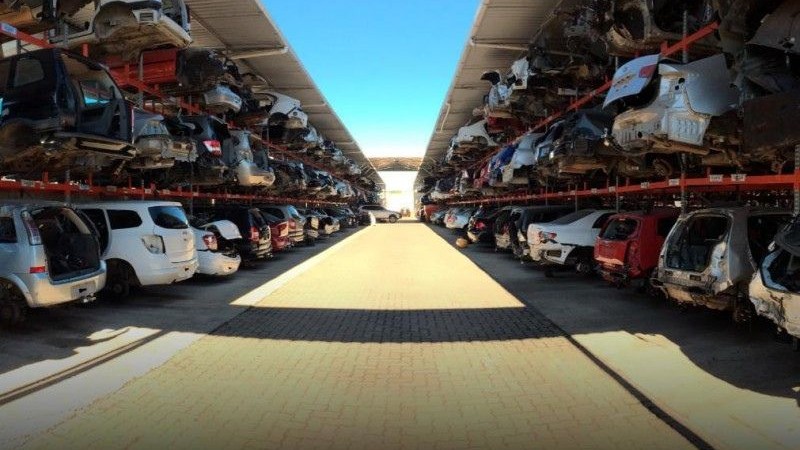
Federal Law No. 12,977/2014, or the Desmont Law, changed the landscape. It created national rules for dismantlings and the sale of used parts. It required companies to register with the local vehicle registration services (Detrans). Every part sold would need to have registered and traceable provenance. The objective was to combat illegal trade nationwide. However, the federal law needs state regulations. São Paulo, for example, created State Law No. 15,276/2014. It details procedures for accreditation and control of parts. It even requires a “clean record” from the owners of dismantling facilities.
-
Major Company Shuts Down 70-Year-Old Factory in Brazil, Relocating Production and Impacting Over 100 Families

-
Toyota Shuts Down Brazilian Plant After Producing Over 1 Million Vehicles, Plans Special Destination for Final Corolla Produced Following $2.1 Billion Investment and Expansion.
-
Shoe Factories Close, Leaving 528 Workers Jobless in Sudden Turn of Events Affecting Hundreds of Families After Decades of Operation.
-
Chinese Automaker Plans Second Mega Factory in Brazil with $2 Billion Investment to Produce Electric and Hybrid Cars in Strategic Location.


Where the Law Worked (and Where the Scrap Metal Mafia Adapted)
The law brought changes, but results vary across Brazil. In São Paulo, there was success. The number of vehicle thefts and burglaries fell by half between 2014 and 2021 (from 221,000 to 112,000). Researchers from USP link this to the law and rigorous oversight. Changes in organized crime (PCC focusing on trafficking) and the arrival of cheap Chinese parts also helped.
However, in other regions, crime has adapted. Criminals circumvent rules or move to areas with less oversight. The lack of effective oversight (“lax or nonexistent”) is a major issue. In Rio de Janeiro, for example, vehicle recovery fell (from 1 in 2 to 1 in 3). This suggests that more cars are being dismantled to supply illegal scrap yards, as if the law did not exist.
Police Operations and New Crimes
The police have intensified operations against scrap yards and illegal dismantlings. In Juiz de Fora (MG), “Operation Hefesto” brings together several forces. In Goiás, Vila Canaã is a well-known illegal hub (70% of stores are illegal), constantly targeted by law enforcement. In Rio Grande do Sul, “Operation Dismantling” in Caxias do Sul (since 2016) seized 90 tons of scrap and reduced thefts by 58%. In São Paulo, the Detran increased oversight by 96.4% in 2024, seizing thousands of illegal parts.
At the same time, a new crime has emerged: the theft of luxury car headlights (Porsche, Mercedes). Parts can be worth up to R$ 22,000 in the parallel market. Interestingly, some LEDs from these headlights are used in clandestine marijuana greenhouses.
Ineffective Oversight: The Weak Link that Keeps the Scrap Yard Scheme Alive


Despite the operations, the central problem persists. The law exists, but oversight is weak and inconsistent in many parts of Brazil. Organized crime adapts quickly. The lack of investment in technology (tracking, cameras), cooperation between police, and training hampers an effective fight against illegal scrap yards. Where oversight is weak, crime thrives, as the chances of punishment are low. Constant and comprehensive oversight is essential for the Desmont Law to work effectively and weaken the scrap metal mafia.







Como diz um amigo meu que e policial……Nao se fecha industria que da lucro…….todo mundo ganha….$$$$$$$$$$