






 Portuguese
  Spanish


Turkey has closed the cycle that separates a country that buys warships from a country that sells them: it has incorporated another modern submarine assembled in its own shipyards and at the same time is preparing to deliver corvettes of national design to foreign navies, transforming its defense industry into an export powerhouse from the Mediterranean to the Indian Ocean.
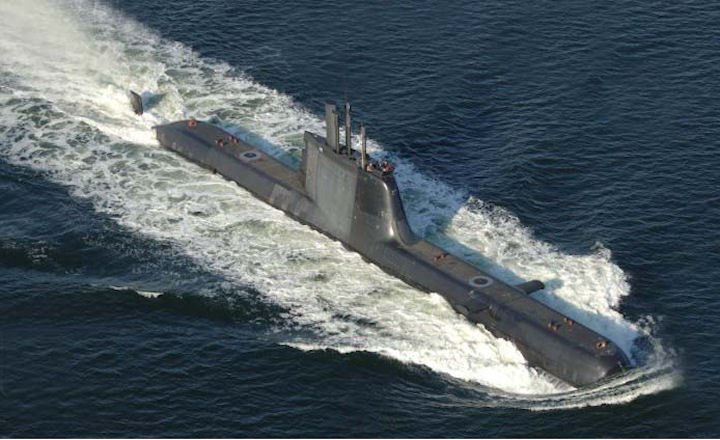
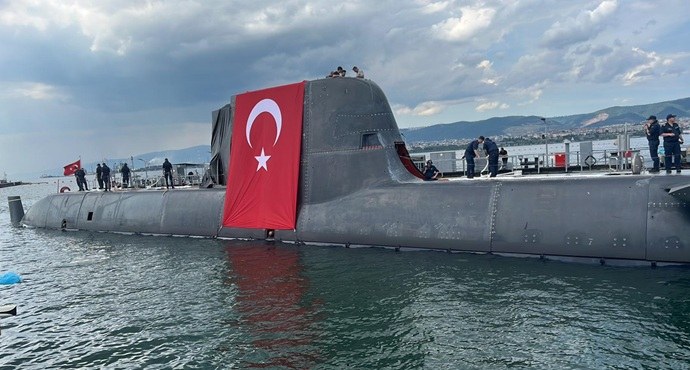
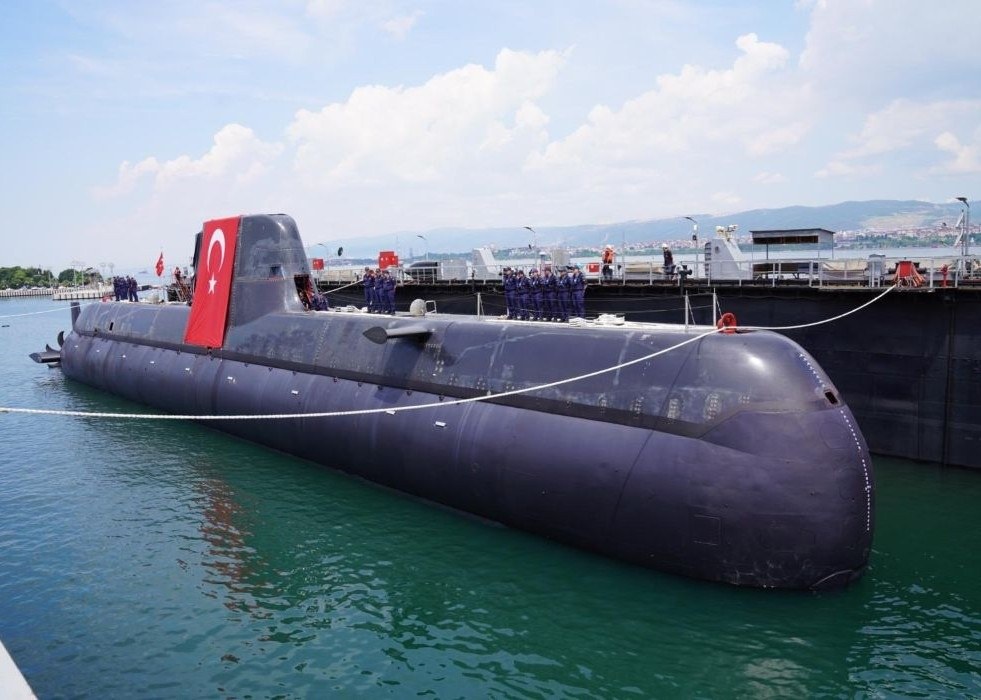
Anyone looking at the naval map of the eastern Mediterranean notices a name that appears with increasing strength: Turkey. Not because of the number of ships, but because of the speed with which the country learned to build and, most importantly, to sell. The Turkish Navy has just reinforced its submarine fleet with another unit of the Reis class, and the shipyard that delivered it is already busy finishing ships ordered by other governments.
The submarines of the Reis class were born from a technology transfer agreement with Germany, but the assembly takes place on Turkish soil, in Gölcük, with an increasing national share in each hull. These are air-independent propulsion boats, allowing them to stay submerged much longer than a common diesel, with advanced sonar and the ability to operate silently in the shallow and busy waters of the Aegean. With each unit delivered, Turkey becomes less dependent on the outside and more in control of the process.
From buyer to manufacturer
For decades, Turkey was a client. It bought fighter jets, submarines, defense systems, and was in the queue of suppliers. The turnaround began with a strategic decision to heavily invest in the national defense industry, creating companies like ASELSAN, Baykar, and STM, and requiring that each foreign contract be accompanied by knowledge transfer. The result first appeared in the air, with the drones that became famous in various conflicts, and now consolidates at sea.
-
France doubled the firepower of the new frigates and increased the missiles from 16 to 32 tubes ready to fire.

-
Spain sent its most advanced frigate to Cyprus and set up an anti-missile shield in the Mediterranean with an eye on Iran.
-
India places 52 spy satellites in orbit for R$ 16 billion to monitor every meter of its own borders.
-
Poland took control of its own constellation of radar satellites in less than a year and now sees through clouds and darkness.


The flagship of this naval strategy is the MILGEM program, a family of corvettes and frigates of entirely Turkish design. Unlike the submarines, there is no foreign license in the design: the ship was conceived, calculated, and built by the country’s own engineering. And it is precisely this national design that has become an export product, with units being delivered to partner navies outside Europe.
The corvette that becomes an export product
The best example is the contract with Pakistan, which ordered four MILGEM class corvettes. Part is built in Turkey and part transferred to Pakistani shipyards, in an arrangement that repeats the logic that Turkey itself received from the Germans years ago: not only the ship is sold, but also the capability to manufacture it. One of the units is scheduled for delivery in the coming days, and there is interest from other countries in following the same path.
This movement has a weight that goes beyond money. When a country exports warships, it creates lasting military ties, trains foreign crews, supplies parts for decades, and gains diplomatic influence that is difficult to measure. Turkey understood early on that selling defense is selling presence, and uses this to position itself as a bridge between Europe, the Arab world, and Asia.
From drones to the seabed
The naval trajectory did not arise from nowhere: it is the continuation of a strategy that had already succeeded in the air. The Bayraktar drones, manufactured by Baykar, became a symbol of Turkish military power after appearing in conflicts in the Caucasus, Libya, and Eastern Europe, and opened up markets for the country in dozens of nations. It was this recipe, selling good and cheap equipment with a package of training and support, that Turkey now replicates with ships.
The country’s defense exports jumped from a few billion dollars a year to a record level, and the official goal is to keep rising. At sea, besides the MILGEM corvettes, Turkey is developing the Istanbul frigate, a larger and more armed version of the same design, and even an amphibious assault ship capable of operating drones, the TCG Anadolu. Each of these programs feeds the national supply chain and reduces the bill with the outside.
An industry that grows with surprise
The pace is impressive because it was fast. In just over a generation, Turkey went from almost total dependence to designing drones, missiles, corvettes, and now mastering much of submarine construction. We usually associate heavy naval industry with old powers, and seeing a medium-sized country break into this queue shows that the global defense game has changed. Capital, political will, and the demand for national technology opened the door.
There are, of course, limits. The submarines still carry German DNA in the design, and some critical systems depend on external suppliers. But the direction is clear, and each new contract increases the genuinely Turkish share. The declared goal is to reach 100% national platforms, and recent history suggests it’s not just rhetoric.
For Brazil, which is also trying to establish a significant military naval industry, the Turkish case serves as a mirror. It shows that the secret is not a single grandiose project, but consistency: chaining program after program, demanding transfer with each purchase, and treating export as a goal from the start. That’s how you move from the position of a client.
In the eastern Mediterranean board, where interests in natural gas, trade routes, and old rivalries with Greece and Cyprus intersect, having an increasingly national fleet gives Turkey a strong card that does not depend on the goodwill of foreign suppliers. And selling it abroad, with a package of training and long-term support, multiplies the political reach of this card far beyond its own waters, creating a network of partners that orbit the Turkish military industry.
Will Turkey really be able to build the entirely national submarine it promises for the coming years?


