






 Portuguese
  Spanish


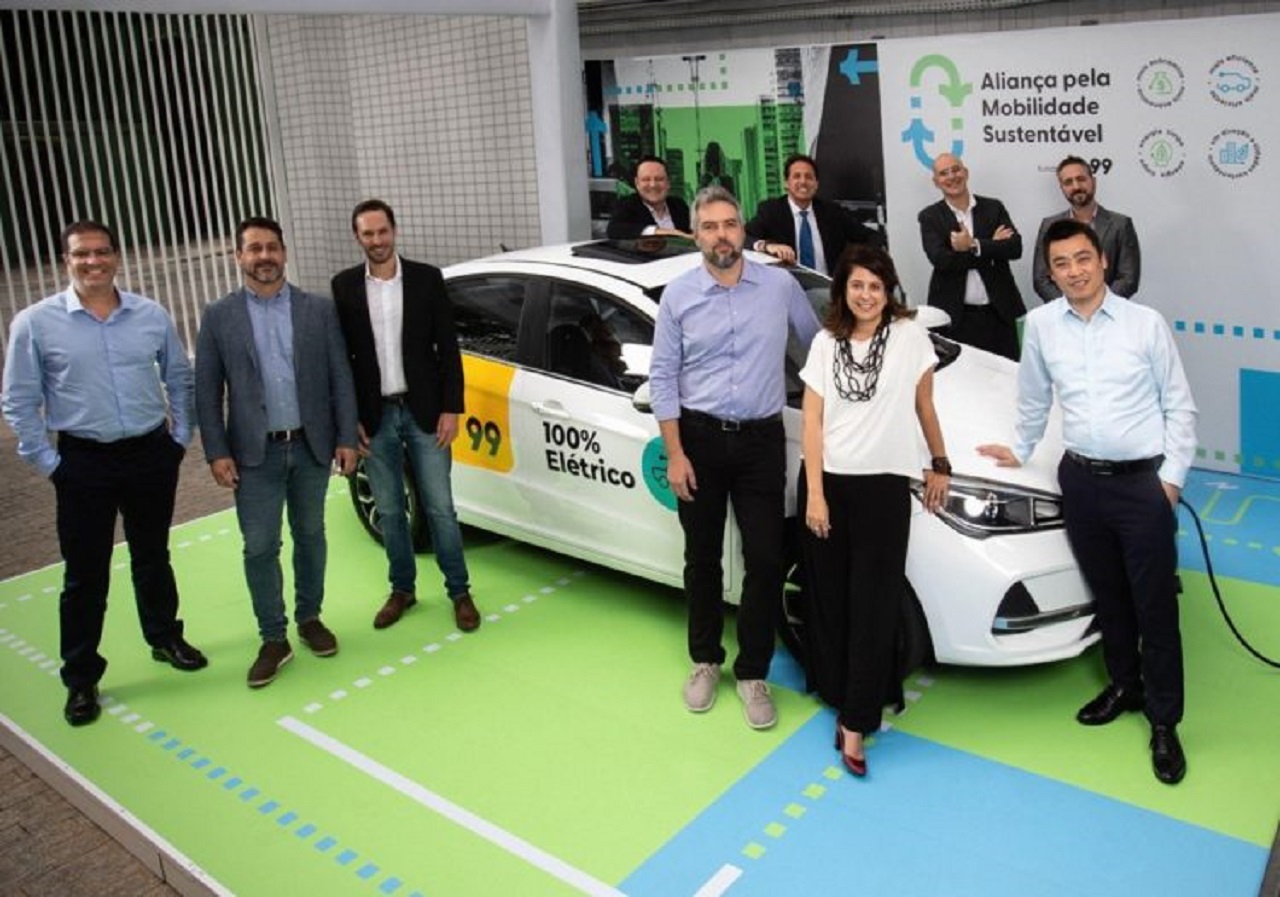

99, Raízen, Caoa Chery, Ipiranga, and Other Companies Are Investing in the Installation of 10 Thousand New Charging Points in Brazil to Boost Electric Car Sales in the Country.
About nine companies in the urban mobility sector, highlighted by 99, Raízen, Caoa Chery, and Ipiranga, announced on Tuesday (26) that they are launching a coalition aimed at democratizing access to electric cars in the country. Known as the Alliance for Sustainable Mobility, the initiative is led by the app company 99 and aims to enhance the infrastructure for electric cars in the country through the installation of charging points. Other companies involved in the initiative include Movida, Unidas, Eletric, and Tupinambá.
10 Thousand Charging Points Will Be Installed in Brazil
Among the goals set by 99, Raízen, Caoa Chery, and Ipiranga is to expand the share of new electric cars to 10% of sales by 2025, which currently stands at 2%, as well as the creation of 10 thousand public charging points. Additionally, the companies plan to launch at least 300 electric cars from 99 as early as 2022, aiming to reach 10,000 by 2025 and 10% of the fleet by 2030.
According to Thiago Hipólito, in the initial phase, the main companies in the mobility sector, such as 99, Raízen, Caoa Chery, and Ipiranga, are being united to enable cross-investments within each company’s area of expertise. In this first phase, it will also be defined how each company will contribute to achieving the goals.
-
2027 Toyota Corolla Cross Unveiled: New Design, Enhanced Fuel Efficiency, Reduced Maintenance Costs, Advanced Technology, Connected Services, and Up to 10-Year Warranty

-
Fiat Cronos Precision 2018: Affordable Sedan with Spacious Trunk and Reliable Maintenance
-
Volkswagen to Cut Production by 1 Million Cars by 2030, Reducing Jobs and Platforms, Focusing on More Profitable Models

-
Toyota Launches First 100% Electric Car in Brazil: bZ4X with 343 HP, All-Wheel Drive, 361 km Range, Priced at $419,990 BRL, Limited to 99 Units




As Hipólito had already explained, initially 99 will bring 300 electric cars in 2022 to be tested on the platform. The vehicles will be purchased largely through partnerships with manufacturers and rental companies, as well as from their own resources.
São Paulo Will Be a Pioneering Hub in the Initiative of 99, Raízen, Caoa Chery, and Ipiranga
According to Hipólito, with the lessons learned from this first phase, the companies will study the best way to offer 10,000 electric cars to drivers by 2025, ultimately reaching 100% of the fleet by 2030.
The aim is to develop joint strategies to finance projects and boost the development of the entire ecosystem to expand the use of vehicles. Discussions are still ongoing among the companies.
With the alliance, 99, Raízen, Caoa Chery, and Ipiranga aim to achieve zero carbon emissions by 2030, with São Paulo being the first pioneering hub for the installation of charging points. According to alliance members, the goal is to make the most sustainable and clean cars accessible to the company’s partner drivers in terms of infrastructure and finance.
Alliance for Sustainable Mobility Aims to Reduce Bottlenecks in the Market and Electric Vehicles
The initiative to implement new charging points aims to enhance the entire infrastructure necessary for the electrification of the Brazilian fleet by supporting parts suppliers and manufacturers of these vehicles, making their rental among app drivers easier and more affordable.
The electric vehicle market is advancing in the country, and in 2021 alone, the sector grew by about 77% compared to 2020, totaling around 35,000 vehicles sold according to data from the Brazilian Association of Electric Vehicles – ABVE.
Among the challenges that still need to be overcome are the high price of the vehicle, especially when compared to combustion vehicles, and infrastructure bottlenecks, with few charging points located outside major centers. According to Hipólito, the alliance between 99, Raízen, Caoa Chery, and Ipiranga aims primarily to reduce these bottlenecks in the segment by combining efforts from various sectors working side by side.








