





 Portuguese
  English
  Spanish
  3 min of reading
  1 comment


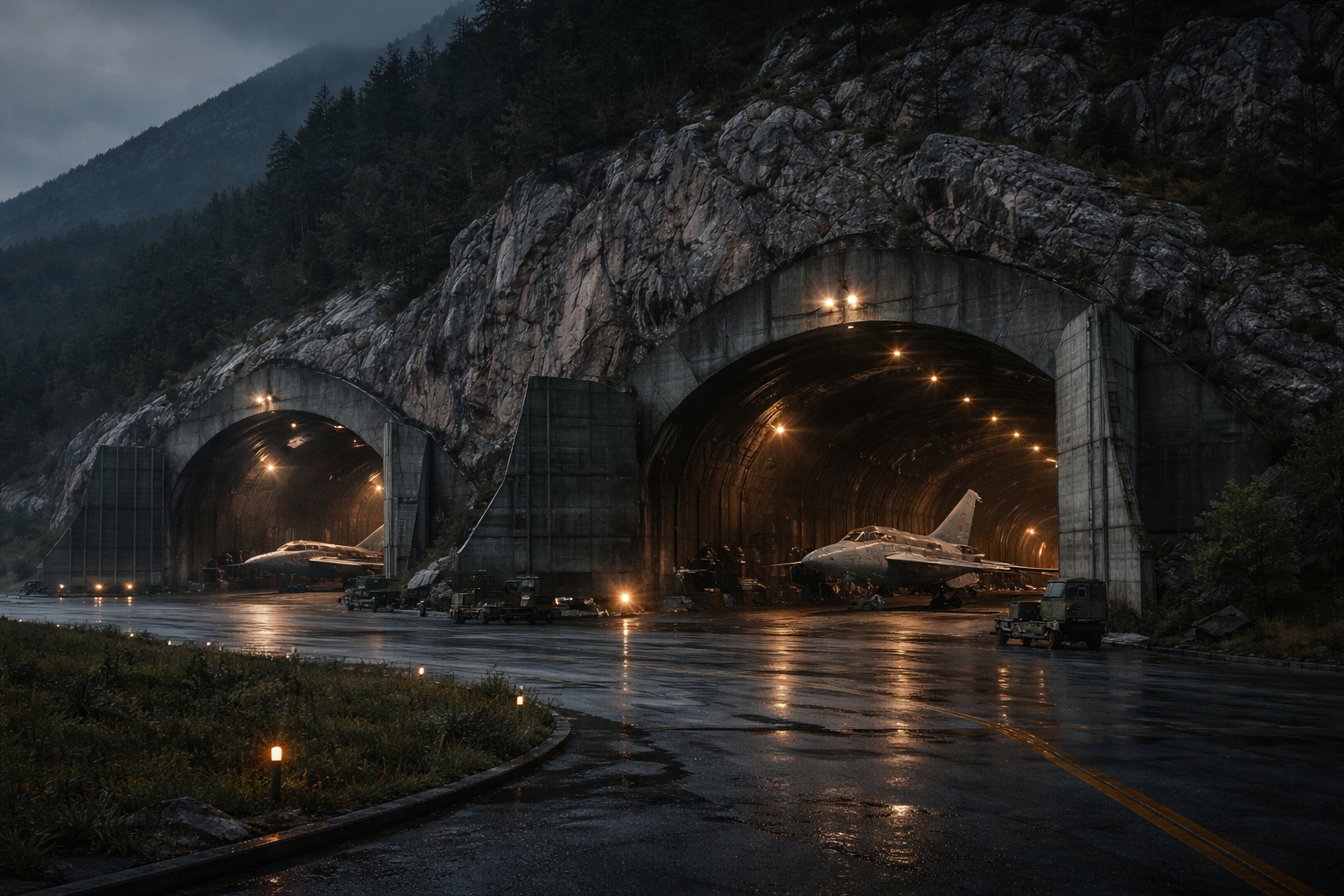


The Željava Air Base Hid 3.5 Km of Dug Tunnels in the Mountain, Hangars for Fighters and Integrated Runways, Being One of the Largest in the World.
During the Cold War, when the threat of nuclear attacks was part of daily military planning, the former Yugoslavia decided to invest in an extreme solution: hiding its main air base inside a mountain. The result was the Željava Air Base, one of the most ambitious underground military projects ever executed in Europe and recognized as one of the largest underground air bases in the world.
A Mountain Transformed Into an Air Base
The Željava was dug directly into the Plješevica Mountain, taking advantage of the thick layer of limestone as natural shielding.
Instead of building exposed hangars, engineers created an underground system capable of sheltering aircraft, personnel, fuel and armaments in an environment protected against conventional bombings and even nearby nuclear explosions.
-
Two giant deserts were about to merge and swallow the last oasis between them in northern China, but in 2004 a group of volunteers started planting trees, and 22 years later the region was reborn and became a tourist destination.

-
A parachutist crashed into the giant screen of the stadium and hung from the structure in front of thousands of people while carrying the flag of the United States during an exhibition flight.
-
Social experiment leaves a bottle on the ground and reveals who ignores the trash and who picks it up right away, showing why clean cities live in more peace.

-
A couple fled from the most expensive coastline in Brazil in Santa Catarina and is now paying R$ 400 for rent with a house, land, and nearby beach, while those who stayed in Itapema continue to pay a fortune to live in cramped conditions.




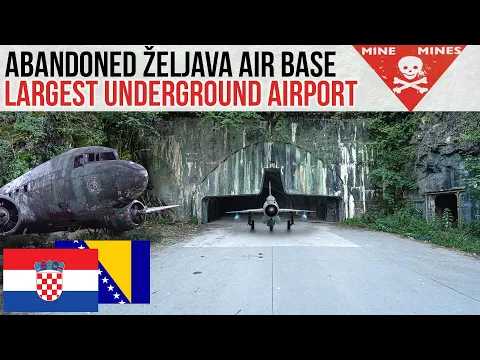

The underground complex featured approximately 3.5 kilometers of main tunnels, along with internal branches connecting hangars, technical areas, and operational zones.
Invisible Hangars and Monumental Armored Doors
The tunnels functioned as complete hangars. Fighters could be parked, refueled, and prepared for missions entirely underground, without exposure to aerial or satellite reconnaissance.
Each entrance to the base was protected by giant armored doors, designed to withstand shockwaves and seal the interior in case of an attack.
These doors, combined with dozens of meters of rock above the structure, made the base a practically invisible fortress and extremely difficult to neutralize.
Runways Integrated Into the Terrain
Unlike conventional bunkers, the Željava was not just a shelter. It operated as a fully functional air base.
The runways were built on the surface but directly connected to the internal tunnels, allowing fighters to emerge from the mountain, take off quickly, and return underground in just a few minutes.
This concept drastically reduced reaction time and increased the survival of the aerial fleet in a total war scenario.
Operational Capacity in Extreme Scenarios
The base was designed to operate even after a large-scale attack. The complex included its own ventilation, energy, fuel storage, and areas for technical teams, ensuring operational autonomy for long periods.
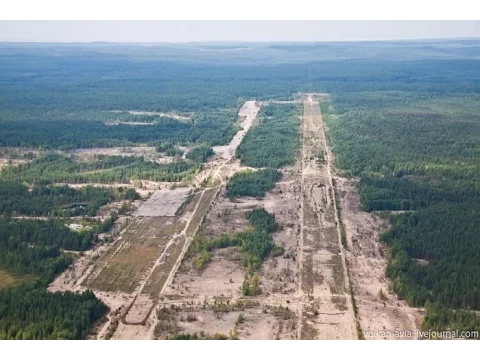
The central idea was simple and brutal: even if the airspace was attacked, the base would remain functional, protected by the geology.
One of the Most Expensive Military Projects in the Region
Although exact numbers vary depending on the source, it is estimated that the construction of the Željava cost billion dollars in updated values, becoming one of the most expensive military works ever carried out by the Yugoslavs.
The investment reflected the ambition of the project and the complexity of digging and equipping kilometers of tunnels in solid rock.
Abandonment and Deliberate Destruction
With the collapse of Yugoslavia in the early 1990s, the base lost its strategic function. To prevent the infrastructure from being captured by enemy forces, parts of the complex were deliberately destroyed, including internal explosions that rendered tunnels and systems unusable.
Today, the Željava remains a monumental ruin, with partially accessible tunnels, abandoned runways, and clear remnants of the gigantic scale of the work.
Even deactivated, the Željava continues to be studied and visited by enthusiasts of engineering, military history, and extreme infrastructure. Few works in the world have managed to integrate, so completely, aviation, underground, and geology into a single operational system.
The air base dug into the mountain was not just a military installation. It was the materialization of an era when engineering had to think of the worst possible scenario — and respond with kilometers of tunnels, rock as a shield, and runways that literally emerged from the mountain.








There’s even bigger one in Eastern Bosnia under the Zep Mountain. That one is still fully functional and has dual functions Underground airbase and underground Military Base. Over 300 of them all over Bosnia ranging from Zep Underground airport Base to the smaller underground military outpost