Portuguese
  Spanish


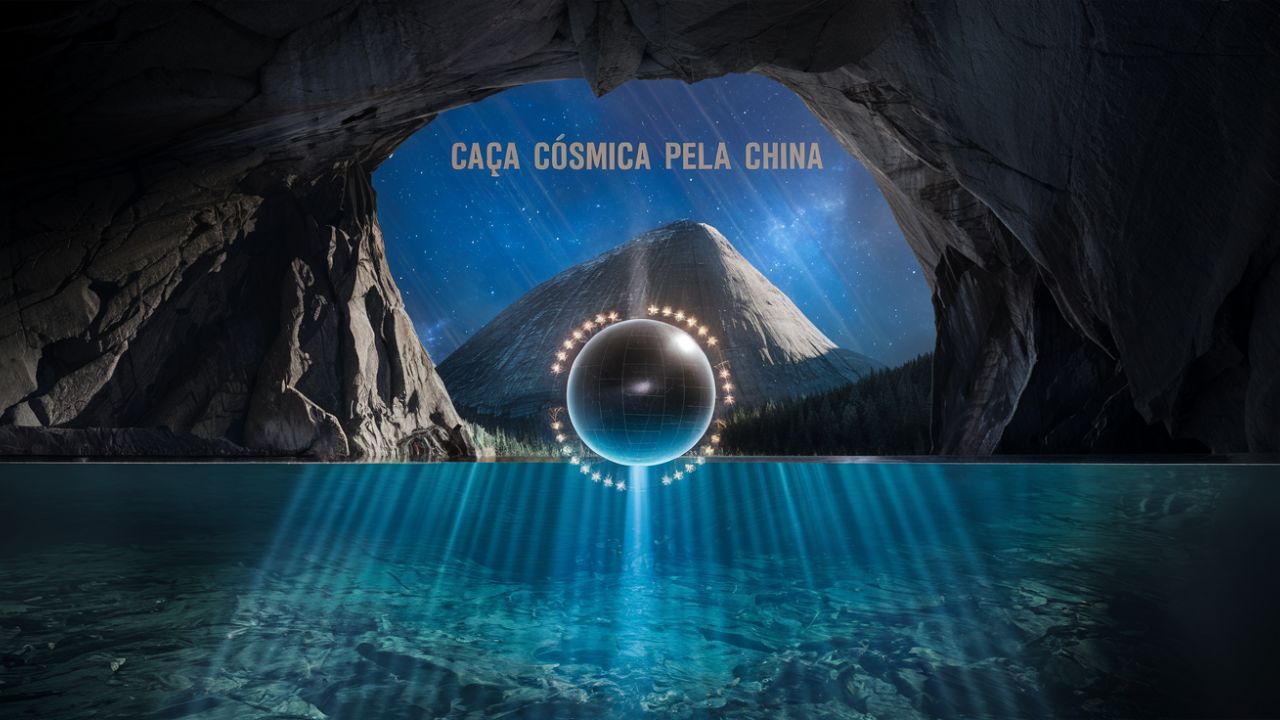


With a subterranean installation at almost 800 meters deep, China’s construction replaces the famous Daya Bay detector and leads the hunt for neutrinos, the invisible particles that cross the Earth and reveal the secrets of the universe.
Did you know that the universe is full of particles so mysterious that they seem like cosmic ghosts? They are called neutrinos, and China is about to take a bold step to unveil them. With a new impressive subterranean installation, the country reinforces its position at the forefront of modern science. But why all the excitement? Let’s explore!
The Fascination with Neutrinos: What They Are and Why They Matter
Neutrinos are like the introverts of the universe. Invisible, electrically neutral, and almost massless, they pass through matter unnoticed. However, despite their “shyness,” they are fundamental to understanding how our universe works.
Imagine a ghostly traveler who crosses walls without leaving a trace. That’s how neutrinos are, crossing stars, planets, and even the Earth as if nothing were there. They primarily come from the Sun, but also from cosmic events like supernova explosions and even from our planet’s core.
-
Brazilian Researchers Develop Cost-Effective Method for Key Component of Green Hydrogen Electrolyzers, Enhancing Energy Efficiency and Equipment Longevity

-
1,700-Year-Old Roman Mosaic Discovered by Farmer Planting Cherry Trees in Turkey

-
Brazil launches $1.9 billion plan in response to El Niño, issuing national extreme heat alert and bolstering public health system

-
Polyformer Machine Converts PET Bottles into 3D Printer Filament, Reducing Costs and Expanding to Over 50 Countries



Besides the Sun, scientists are particularly intrigued by the neutrinos generated on Earth. These terrestrial particles could reveal deep secrets about what happens beneath our feet.
China’s New Subterranean Installation

China has decided to retire its neutrino detector at Daya Bay, but it hasn’t remained idle. A grand substitute is under construction, buried almost 800 meters beneath a granite mountain.
This installation acts like a “prison” for neutrinos, but instead of bars, it uses pure water and ultra-sensitive sensors. This deep isolation reduces the “noise” from other cosmic particles, making it easier to capture the discreet signals from neutrinos.
Neutrinos leave no conventional traces, but when they interact with molecules, they ionize atoms and release electrons. These electrons are like clues that scientists follow to identify the presence of neutrinos.
Why China’s Construction Stands Out
While other countries are also investigating neutrinos, China’s construction draws attention for its size, cost, and strategic location.
The new installation replaces Daya Bay, which led neutrino studies for years. Now, China aims to achieve even greater precision and efficiency with this new structure.
Subterranean detectors are like soundproof studios for neutrinos. The depth protects the experiment from noise caused by other particles coming from space.
The Scientific and Technological Impact of the New Installation
China’s construction is not just a national project, but a significant contribution to global science.
This new detector will help scientists better understand neutrinos and, consequently, phenomena like star formation and the mysteries of the Earth’s core.
The quieter the environment, the better scientists can hear the “whispers” of neutrinos. This advanced installation promises to redefine research standards.
The Future of Neutrino Science
The new Chinese installation is not just a final point, but a stepping stone for new discoveries.
This project paves the way for more detailed studies and may inspire advances in sensor technology and detection methods.
Neutrinos are like pieces of a cosmic puzzle, and each discovery brings scientists closer to understanding the whole.
China’s construction is not just an engineering feat but a window into the secrets of the universe. As scientists explore these ghostly particles, revolutionary discoveries may be lurking, ready to change how we understand the cosmos. Fascinating, isn’t it?