






 Portuguese
  Spanish
  4 min of reading
  1 comment





The Peigneur Lake Disaster Began With A Texaco Drilling Error, Flooded A Salt Mine Beneath The Lake And Made The Gulf Of Mexico Invade The Basin, Changing The Location Forever
Peigneur Lake was a shallow and peaceful lake in southern Louisiana, United States, famous for fishing and with a maximum depth of about 3 meters. On November 20, 1980, it ceased to be a water mirror and became a destructive phenomenon, with a whirlpool that sucked everything in.
The seemingly impossible happened because, beneath Peigneur Lake, there was a massive salt mine that had been in operation for decades. When the drilling of an exploratory well hit underground structures, water entered, the salt began to dissolve, and the collapse became inevitable.
What Was Hidden Beneath Peigneur Lake
For decades, Peigneur Lake had about 1,300 acres, roughly 5.3 km², and was shallow. Almost nobody imagined that just below, there was a maze of tunnels inside the Jefferson Island salt dome.
-
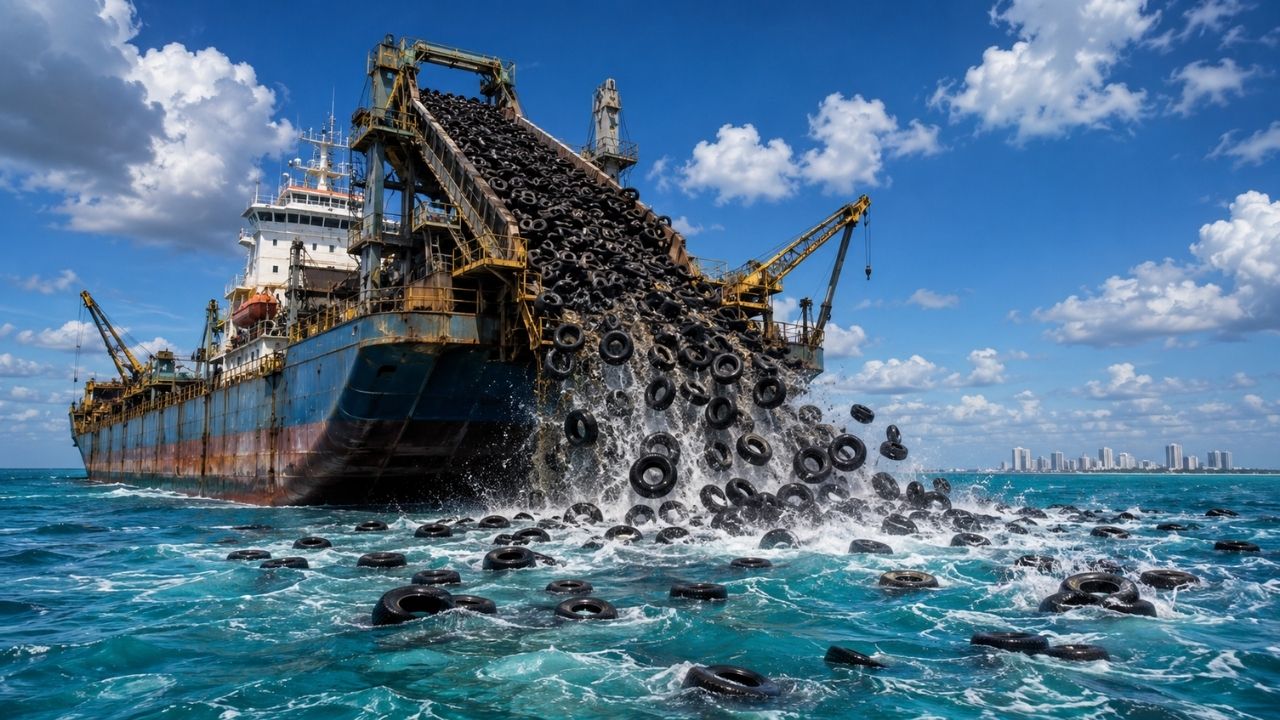
Florida dumped 2 million tires into the ocean near Fort Lauderdale to create an artificial reef, but hurricanes scattered the rubber across the seabed, and cleanup efforts initiated decades later are still trying to correct the environmental disaster without a guarantee of full coral recovery.

-
Google employee lived in a 12 m² truck in the company parking lot, used the campus facilities, and exposed the burden of rent in Silicon Valley.

-
To escape one of the most dangerous seas in Europe, Norway is advancing with a giant tunnel that will allow ships to pass through a mountain, avoiding storms, unpredictable waves, and a route that has frightened sailors for generations.

-
INSS issues alert to retirees: decisive deadline ends this week and millions of beneficiaries may lose access to amounts that already total R$ 3.2 billion; measure involves deductions made between 2020 and 2025


The mine had been operating since 1919, exploited by the Diamond Crystal Salt Company, using the chamber and pillar method, with large salt pillars supporting the ceiling. The chambers were about 30 meters wide and 24 meters high, with tunnels at depths exceeding 457 meters.
How Texaco’s Drilling Triggered The Disaster
In 1980, Texaco received a permit to drill an exploratory well in Peigneur Lake and hired Wilson Brothers, which installed a floating drilling platform. The procedure was treated as standard, and both the surveys and available maps indicated no risk of interference.
The problem was that something failed in the calculation. The drill mentioned in the material, 14 inches in diameter, got stuck at about 374 meters deep. The team attempted maneuvers to free the equipment, without success.
The Morning The Lake Began To Collapse
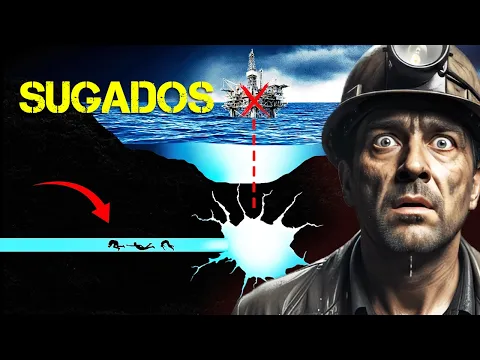

Before even dawn, inside the mine, a chief electrician noticed a strange sound and saw murky water advancing across the floor. That should not be happening. Fuel drums began to move in the shallow current, and the infiltration became a signal of emergency.
An evacuation was initiated, power was cut off at the lowest levels, and workers rushed to the only elevator. In a salt mine, the risk is brutal: when water enters, the salt dissolves, and the supporting pillars begin to lose strength.
The “Giant Drain” That Swallowed An Entire Platform
On the surface, the signs intensified rapidly. Around 5:45, faint cracking sounds were heard. By 6:30, the platform tilted. Workers decided to leave as a precaution, heading for the shore.
At 7:25, Peigneur Lake descended into collective panic. Cables snapped, the structure staggered, and the platform vanished completely, even though it was larger than the approximately 3 meters maximum depth of the lake. Then water began to swirl, forming a dark whirlpool, as if a drain had opened at the bottom.
Barges Sucked, Earth Collapsing And An Island Being Torn Away
The vortex created a suction force that dragged everything to the center. Eleven anchored supply barges were pulled one by one into the whirlpool.
Destruction extended to solid ground. Parts of Jefferson Island collapsed into the sinkhole, trees toppled and disappeared. Materials indicate that about 65 acres of land were swallowed. It was a chain collapse, with the underground giving way and the surface being pulled along.
The Gulf Of Mexico Invaded And Peigneur Lake Changed Forever
With the lake collapsing, the air trapped in the underground chambers was forced up and created a jet that launched water and debris about 122 meters high.
Then came the most unbelievable turn: the channel that previously drained Peigneur Lake into the Gulf of Mexico reversed its flow. With no lake to oppose, the channel began to pull millions of gallons of saltwater from the gulf into the empty basin. A waterfall approximately 15 meters high formed in what was once the lake bed, pouring water for two days.
When everything stabilized, Peigneur Lake was unrecognizable. It became about 61 meters deep, making it the deepest in Louisiana, and its freshwater was replaced by saltwater, with a direct impact on the ecosystem.
Who Was Held Accountable And Why No One Died
Subsequent investigations had a central problem: there was no way to collect physical evidence because the platform and mine were buried under enormous volumes of water, and the drilling point turned into a sinkhole.
Two explanations were disputed: coordinate error in drilling, or incorrect mine maps. The official report cited in the material, from 1981, confirmed the essential sequence: drilling hit the mine, water entered, salt dissolved, and the collapse occurred.
There were financial consequences. The material indicates that Texaco and Wilson Brothers paid 32 million dollars to Diamond Crystal for the destruction of the mine and another 12.8 million dollars to the Live Gardens Botanical Garden for land losses. The mine never reopened.
And the most impressive detail remains: despite the scale of the Peigneur Lake disaster, no human life was lost, attributed to the quick reaction and evacuation procedures.
Do you think what happened at Peigneur Lake was more a failure of human planning or an inevitable risk when mining and drilling share the same underground?






Ambos!