





 Portuguese
  English
  Spanish
  4 min of reading
  0 comments


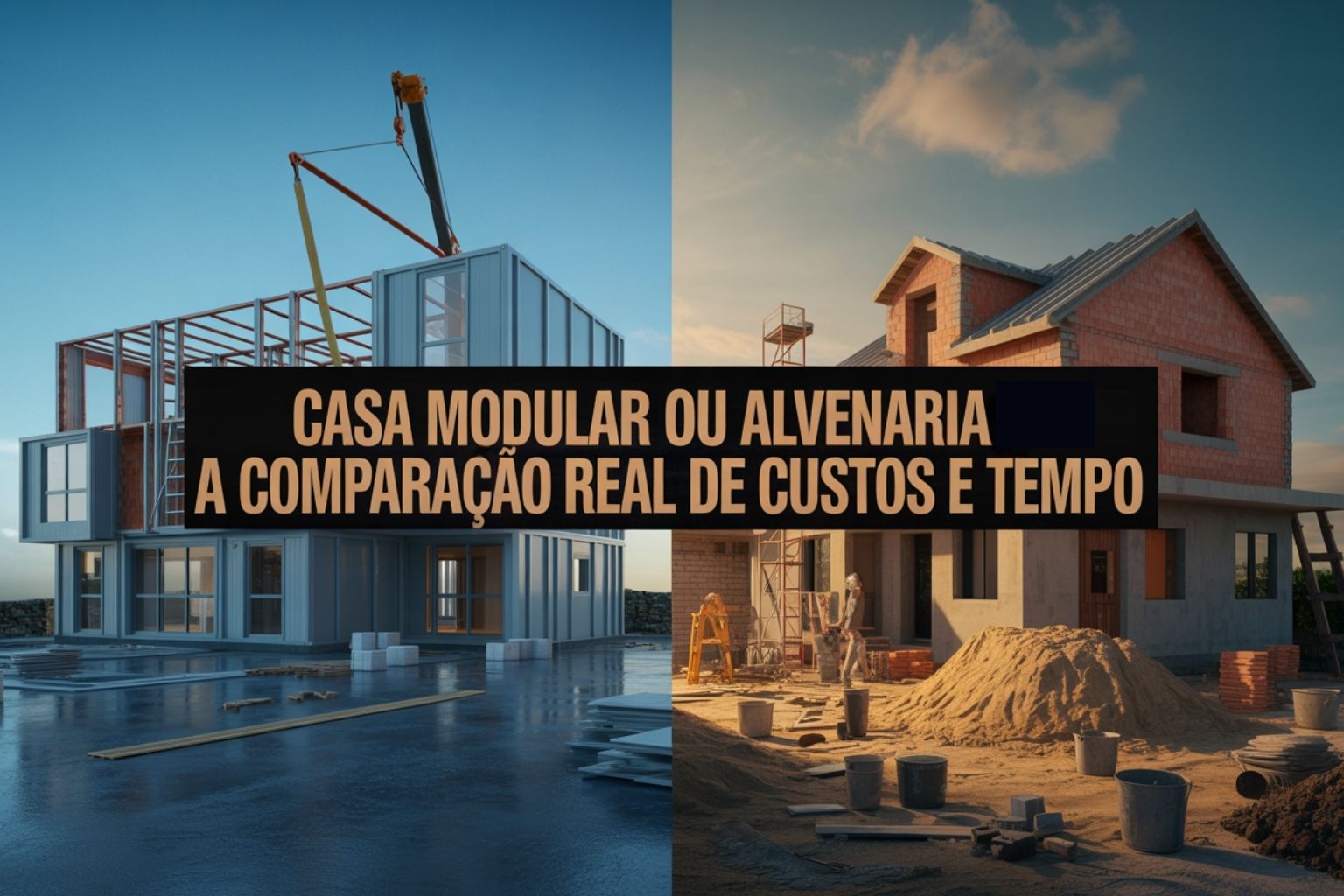
Comparison Reveals How Much It Costs to Build a Modular House Versus a Brick House in 2025, Including Real Prices, Construction Time, Waste, and Structural Performance.
In 2025, modular construction has established itself as one of the most sought-after alternatives for those looking to reduce construction time, save materials, and maintain tight control over costs. National and international companies have expanded operations in the country, offering complete modules — structural, electrical, plumbing, and finishing — manufactured in an industrial line and assembled directly on-site.
Meanwhile, the traditional masonry method, although widely used, struggles with rising labor costs, productivity loss, material waste, and unpredictable timelines, especially in small and medium-sized residential projects. This difference in approach has led engineers, architects, and consumers to compare real numbers: cost per square meter, execution speed, structural performance, thermal insulation, and waste.
Below, a comprehensive comparison using data from Brazilian modular suppliers, regional construction companies, and updated market tables in 2025.
-
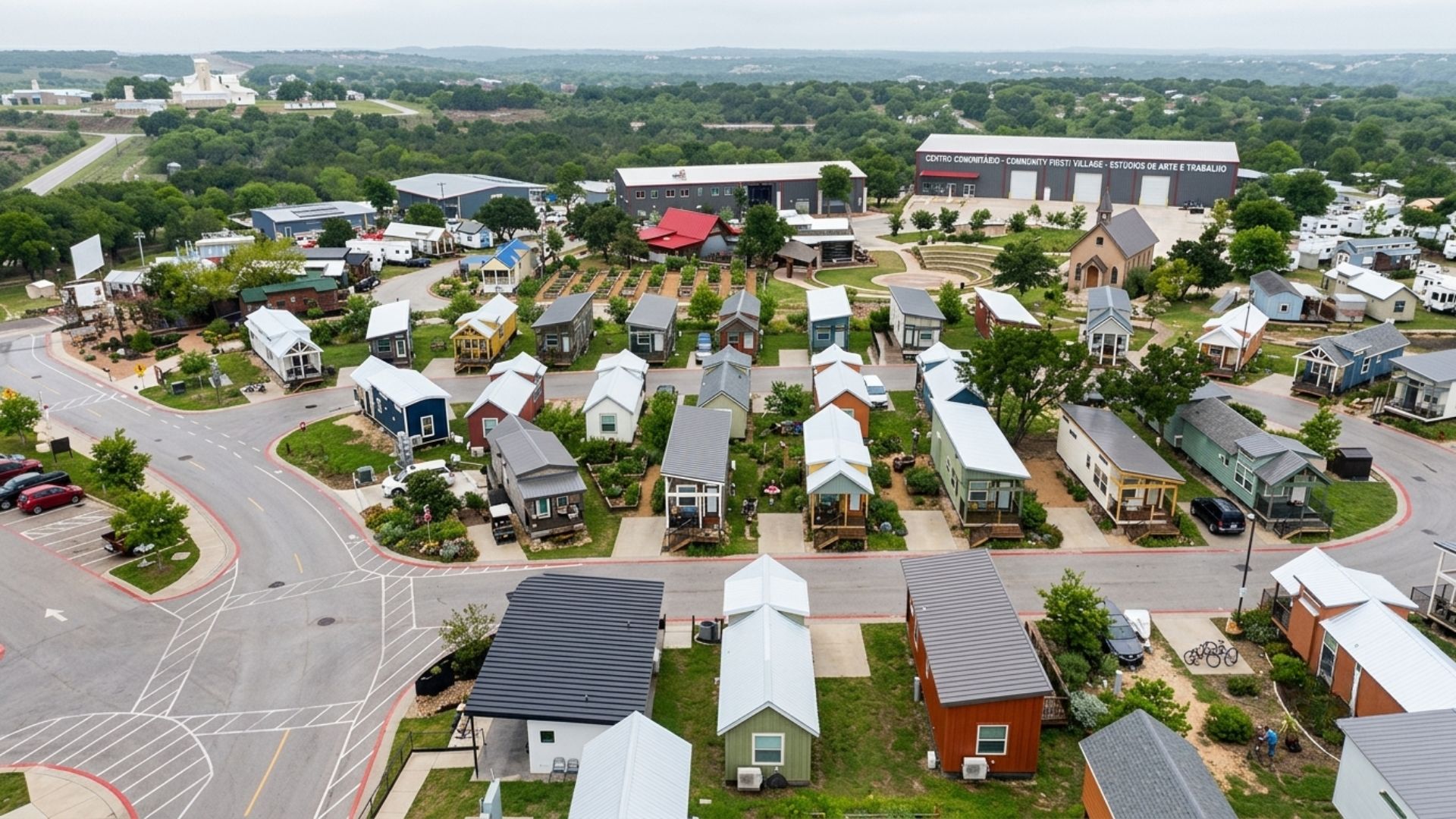
Austin creates an entire neighborhood for those who lived on the streets for years: a 51-acre community brings together micro-houses, gardens, a cinema, a market, a clinic, and transportation to rebuild lives with permanent housing.

-
Engineers want to carve through Africa with a giant canal to bring water from the world’s second-largest river to a dying lake on the edge of the Sahara Desert that has already lost 90% of its water.
-
Family builds their own barn using two 12-meter shipping containers and a roof between them, spending about 21 thousand dollars after receiving quotes above 100 thousand dollars for a conventional construction.
-
Reusing Styrofoam that would otherwise be discarded, a single bag of cement yields about 50 lightweight blocks measuring 30 by 60 centimeters, intended for partition walls and boundary walls that do not bear structural loads.


How Much Does a Modular House Cost in 2025
The price of modular construction depends on the type of system (light steel, steel frame, cross-laminated timber, industrial container, precast modules), but the national average remains between:
- R$ 2,200 to R$ 3,500 per m²
for complete residential modules with installations, finishes, windows, doors, and painting.
Simple modular houses, provided by pre-assembled kit companies, can reach lower values, between:
- R$ 1,800 to R$ 2,400 per m²,
when part of the assembly is carried out on-site.


On the other hand, premium projects, with superior finishes, can reach:
- R$ 4,000 to R$ 5,000 per m²,
while still maintaining much shorter timelines than traditional construction.
The main advantages of modular construction are:
- standardized industrial execution;
- zero significant waste;
- reduction of construction time by up to 70%;
- fewer workers on-site;
- lower costs for logistics and material storage;
- clean construction sites with constant quality control;
- predictability of timelines and budgets.

How Much Does a Traditional Brick House Cost in 2025
The cost of conventional construction varies according to the region, complexity of the project, labor prices, and materials. On average:
- R$ 2,800 to R$ 4,500 per m²
for houses of medium standard, using ceramic bricks, concrete blocks, and conventional structure.
High-standard constructions cost:
- R$ 5,000 to R$ 7,500 per m²,
depending on the finish and structural complexity.

An important difference is that, in masonry, the final cost is not fixed. The budget usually increases throughout the work due to reasons such as:
- increases in material prices;
- rework;
- waste exceeding 10%;
- extended timelines;
- project reformulations;
- additional labor hiring.
Meanwhile, in the modular system, the price is fixed before manufacturing.
Direct Cost Comparison: Who Wins?
Initial Cost per m²
- Modular: R$ 2,200 to R$ 3,500
- Traditional: R$ 2,800 to R$ 4,500
The modular tends to be up to 30% cheaper depending on complexity.
Waste
- Modular: practically zero, with an average rate below 2%
- Traditional: can exceed 15% in poorly managed works
Labor
- Modular: small specialized team
- Traditional: larger number of workers, more days of execution
Construction Time
- Modular: 20 to 60 days for houses of 40 to 120 m²
- Traditional: 6 to 10 months on average
The modular is unbeatable in speed.
Structural Performance: The Difference Between Systems
Modular Construction
Depending on the system, it exhibits excellent performance:
- steel frame and light steel: high strength, lightness, and flexibility;
- CLT (engineered wood): structural performance superior to masonry in many cases;
- precast concrete: excellent stability and durability.
All systems follow technical standards and, when designed correctly, have efficient thermal and acoustic performance.

Traditional Brick Construction
- robust and massive structure;
- natural acoustic performance due to density;
- greater thermal inertia, ideal for areas of intense heat;
- excellent structural behavior when combined with beams, columns, and slabs.
In structural comparisons, both have strengths — but the modular wins in efficiency and speed, while traditional masonry remains advantageous in high-load environments.
Construction Speed: The Greatest Economic Impact
The difference in schedule is one of the most important factors.
A modular house ready in a factory can be installed on-site in one day, with modules arriving pre-assembled, while masonry progresses slowly, dependent on weather, team, logistics, and curing times.
As a result:
- indirect costs (electricity, rent, water, transportation) drop drastically;
- unforeseen events practically disappear;
- the client receives the finished house much faster.
For investors, this means accelerated returns.
Maintenance and Durability
Modular
- lifespan of 40 to 80 years depending on the system;
- little maintenance;
- easy replacement of parts;
- metal and engineered wood structures are highly controlled;
- reduced risk of infiltration when installed correctly.
Traditional
- lifespan of 50 to 100 years;
- constant maintenance for cracks, plaster, painting, and roofing;
- excellent longevity when carried out by qualified professionals.
Both are durable — the difference lies in maintenance over time.
Thermal and Acoustic Insulation
- Modular: high performance with insulating panels, rock wool, EPS, and CLT.
- Traditional: moderate performance, which can improve with additional coverings and insulation.
The modular surpasses masonry in thermal efficiency when using adequate panels.
Which Is More Worth It in 2025?
Modular House Is Ideal For:
- those seeking a fixed price without surprises;
- those who need to build quickly;
- projects on difficult-to-access terrains;
- those wanting less waste;
- investors and families wanting total predictability.
Traditional House Is Ideal For:
- large customized architectural projects;
- lots requiring more complex adaptations;
- high-standard houses with specificities;
- projects requiring high structural mass.
In practice, for a 70 m² house, the modular can cost R$ 30,000 to R$ 50,000 less and be delivered in a timeframe up to five times shorter.








-

1 person reacted to this.