Portuguese
  Spanish


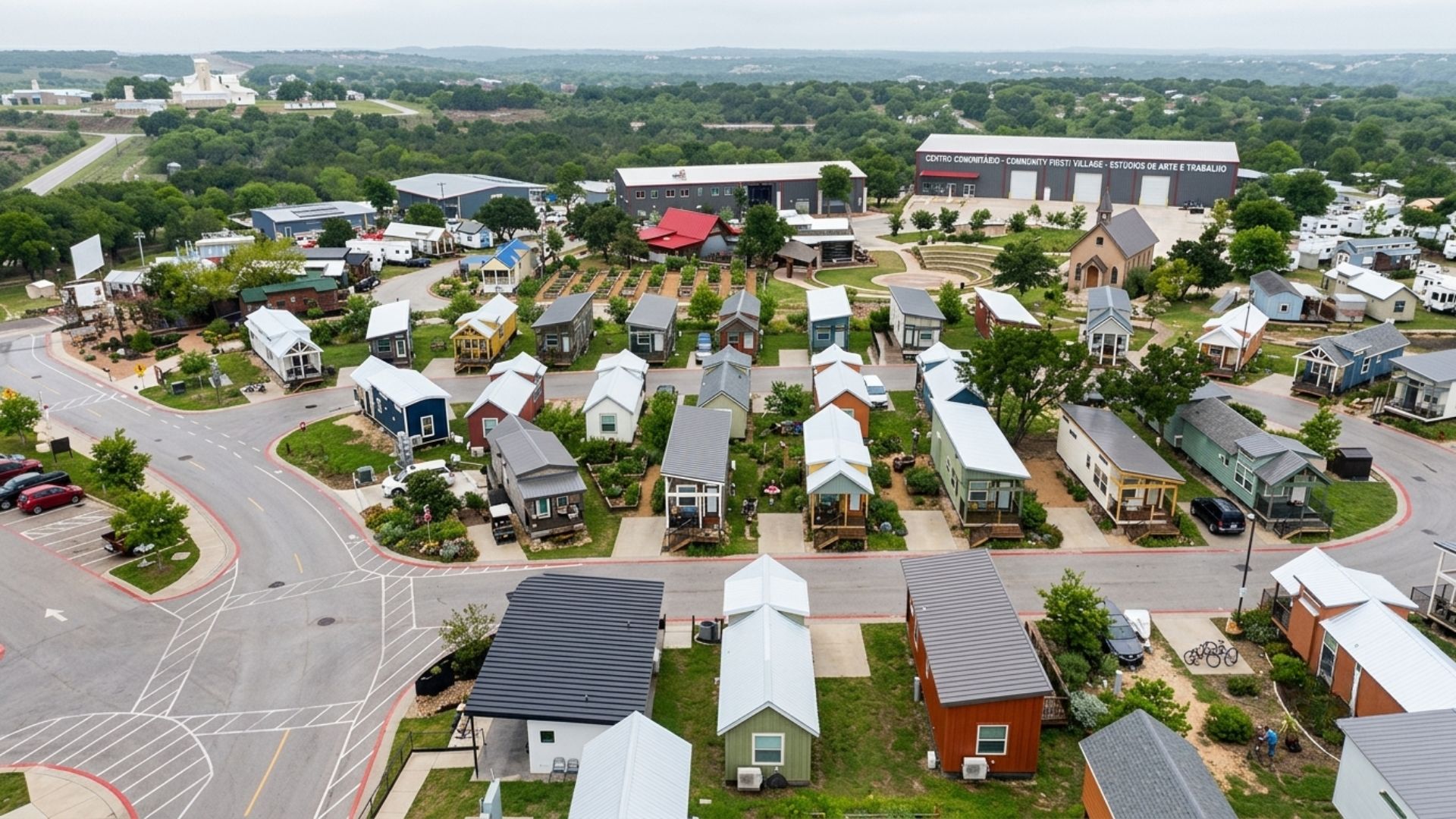

Community First! Village in Austin brings together micro-houses, work, and community life for former homeless people and plans to expand capacity to 1,900 people.
For decades, many cities in the United States have relied on temporary shelters as the main response to the homeless population. In Austin, Texas, a project decided to take a different path and create an entire neighborhood with permanent housing, community spaces, job opportunities, and support networks for people who have spent years living on the streets.
According to Mobile Loaves & Fishes and reports from CalMatters, the result was the Community First! Village, a planned community that has become one of the most well-known cases in the country when it comes to housing for former homeless people. The project has attracted attention because it not only provides a roof but also attempts to rebuild routine, belonging, and social interaction.
Community First! Village was created to serve chronically homeless people in Austin
The Community First! Village was born to serve men and women who have lived for long periods in chronic homelessness. The proposal was never just to build small houses but to develop a permanent community where residents could regain stability and restore social connections.
-
Rio de Janeiro Traffic Relief: Long-Awaited Change Promises to Cut 15-30 Minutes from BR-040 Commute, Easing Access to Avenida Brasil.

-
China Installs Massive Domes Over Urban Construction Sites, Blocking Up to 99% of Dust

-
Brazil’s Minas Gerais Government Signs Agreement for Ring Road to Divert Heavy Trucks Away from Urban Center

-
The Great Wall of China was built with a surprising kitchen secret: sticky rice mixed with lime created a mortar so durable it has withstood centuries, earthquakes, and human destruction.




According to the responsible organization, homelessness is often linked to a combination of factors such as isolation, economic difficulties, health problems, and family breakdowns. Therefore, the project was designed to function as something more than just a housing complex.
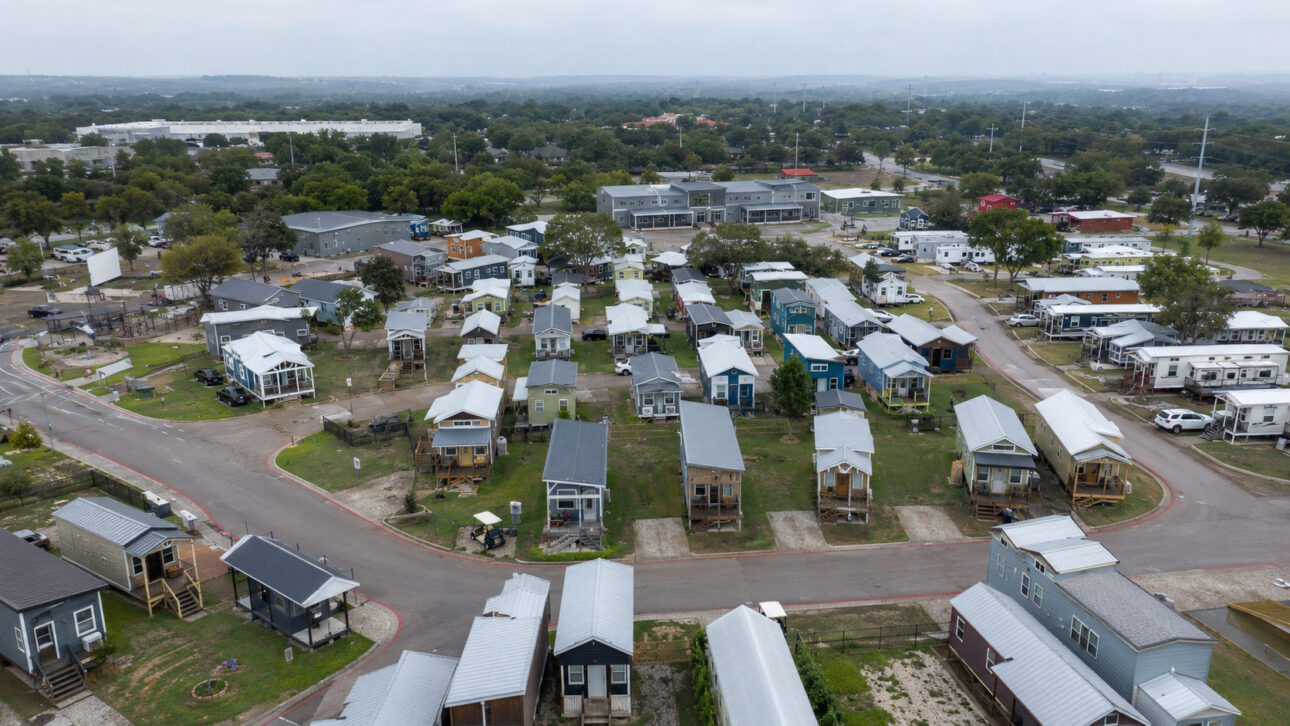
This vision helped transform the neighborhood into one of the most observed models in the United States. The central point is not just to provide shelter but to create conditions for people to restart in a more stable and less impersonal environment than the traditional emergency shelter system.
Neighborhood occupies 51 acres and gathers micro houses, trailers, and even 3D printed houses
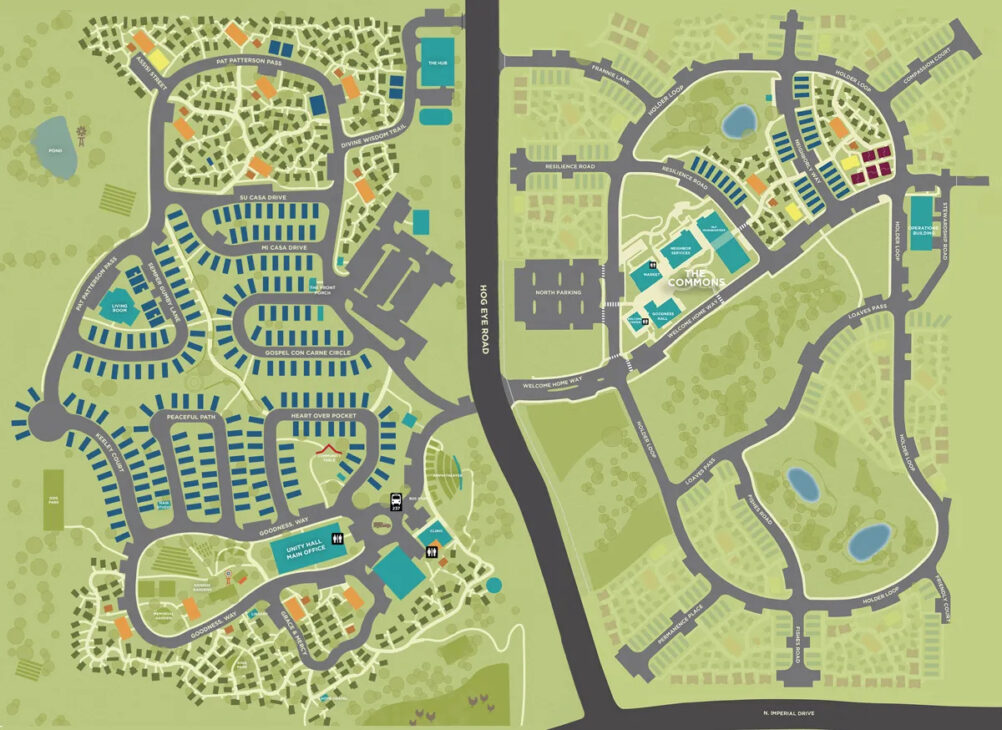
Those who see aerial images of the place can hardly imagine that it is an initiative aimed at the population that lived on the streets. The Community First! Village occupies about 51 acres in Travis County, on the outskirts of Austin, with internal streets, green areas, community spaces, and hundreds of housing units.


The project brings together different types of housing. There are micro houses, adapted trailers, prefabricated units, and even 3D printed houses, developed in partnership with the company ICON. This diversity allows for catering to different resident profiles and increases the flexibility of the model.
According to the organization, the place already houses more than 420 former homeless people. The ongoing expansion aims to increase the capacity to about 1,900 residents, which could transform the development into one of the largest initiatives of its kind in the United States.
The differential of Community First! Village lies in community life and work opportunities
What most differentiates the Community First! Village from many housing programs is the structure created within the community itself. The place gathers community areas, workshops, gardens, event spaces, and income-generating initiatives.
This design seeks to offer more than shelter. The proposal is that residents can rebuild their routine, strengthen bonds, and regain autonomy in an environment where coexistence is part of the process. Instead of a transient space, the neighborhood was designed as a place of permanence and reconstruction.
Reports on the project also highlight the presence of outdoor cinema, art studios, community market, lake, and productive areas. This combination helps explain why the model has gained so much visibility. The neighborhood functions simultaneously as housing, a support network, and a space for social reintegration.
Austin project treats belonging as a central part of leaving the streets
The founder of Mobile Loaves & Fishes, Alan Graham, often argues that the street situation cannot be explained solely by the lack of housing. For him, many people living on the streets also face the loss of family ties, community reference, and a sense of belonging.
This logic even appears in the way the initiative communicates. The residents are often called neighbors, not just residents, reinforcing the idea of community and coexistence instead of simple assistance.
The difference is important for the strength of the project. Instead of treating the residents merely as beneficiaries of social aid, the model tries to integrate them into an environment where they can re-engage in collective life, develop activities, and build new stability.
Community First! Village became a reference in the United States for permanent housing policies
The impact of the project has led public managers, social organizations, and researchers from various regions of the United States to pay more attention to Austin. The neighborhood entered the national debate by presenting an alternative different from the exclusive reliance on temporary shelters.

According to reports from CalMatters, Austin’s experience has started to inspire discussions about permanent housing policies in other states, especially in places where homelessness has become one of the biggest urban challenges. What caught attention was not just the construction of houses, but the attempt to unite housing, work, and community life in the same model.
The planned expansion reinforces this symbolic weight. By growing so significantly, the Community First! Village ceases to be just a localized experience and begins to consolidate as a relevant case for the debate on how large cities can structurally address the chronic homelessness situation.
Austin created a neighborhood designed to help people restart with housing, work, and community
Homelessness continues to be a central challenge in cities of various countries. Instead of responding to this problem only with emergency shelters, Austin decided to test a path based on permanent housing, community integration, and personal reconstruction.
The Community First! Village gained momentum precisely because it brings together, in one place, micro-houses, productive areas, cultural spaces, work, and community services. This created something unusual: an entire neighborhood planned to help people who have lived on the streets for years reorganize their own lives.
It is this combination of housing and belonging that made the project move from local news to the national radar. More than offering a bed for the night, the neighborhood tries to return something that