





 Portuguese
  English
  Spanish
  6 min of reading
  8 comments


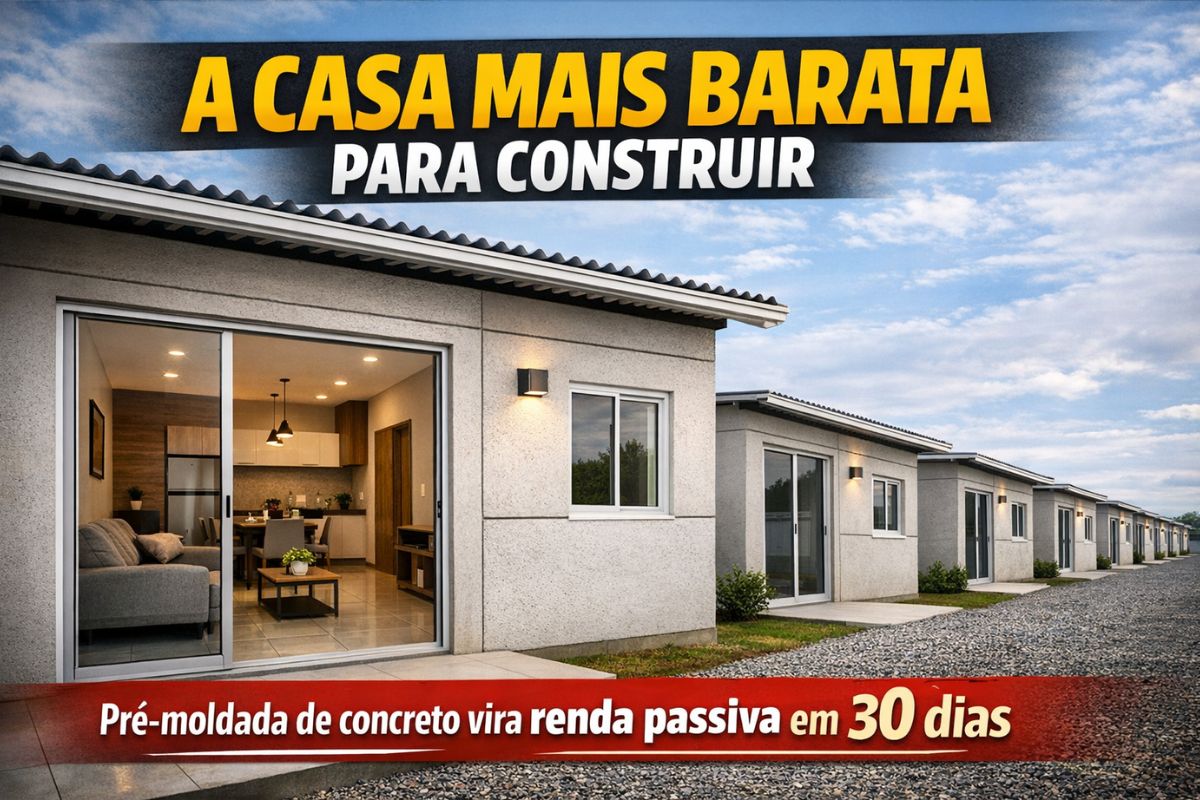


The Precast Block House Uses Concrete Plates Fitted Into Pillars, Promising Complete Walls For Around R$ 7,900 In A House Of Approximately 50 M², Can Be Assembled By Any Mason In 30 Days And Was Designed To Generate Rental Income And Passive Income As An Alternative To Containers And Studio Apartments, According To The Builder.
In Practice, This Precast Block House Was Used To Erect A Small Mixed Structure With A Commercial Space And Residences, Generating Rental Income And Serving As A Real Test For The System. The Project Owner Reports That With The Units Ready, He Should Receive About R$ 3,300 Per Month From The Three Houses, With A Visual Standard Very Close To A Conventional Construction And Cost Per Wall Well Below Containers And Studio Apartments.
While Many In The Region Found The Plates Strange And Distrustful Of The Novelty, He Focused On Cost Effectiveness. In His Calculation, The Precast Block House Delivers The Set Of Ready Walls, Quick Assembly, And Final Appearance Of A “Normal House” For A Price That Is Likely The Cheapest Compared To Containers And Studio Apartments, Keeping The Construction Within A Budget Still Affordable For Rental Or Resale.
What Is A Precast Block House

The Precast Block House Shown In The Project Is Made With Concrete Plates That Imitate Rows Of Bricks. Each Plate Has The Height Equivalent To Six Courses And Is Fitted Into Concrete Pillars That Are Levelled On A Beam. The Plates Are Placed From Top To Bottom Until The Wall Is Complete.
-
US spends $1.6 billion to renovate a 90-year-old dam in Pennsylvania that controls the shipping of 23 million tons per year on the Ohio River.

-
Germany turns on a “giant underground radiator” with up to 90 km of boreholes at a depth of 5 km, betting on a closed-loop system without fracking and transforming hot rocks into electricity and heating to open a new phase of clean geothermal energy in Europe.

-
A city is building low-cost houses for people experiencing homelessness, with community support, assembled in a few hours, costing $2,500, and with a simple structure to protect from the cold and rain.

-
Brazil is the 8th largest energy producer in the world and has an 83% renewable matrix — but its electricity bill is among the most expensive on the planet and 35 million people live in energy poverty.




Inside, The Builder Applied Plaster And Standard Finishing. After Being Plastered, The Precast Block House Looks Almost Like A Conventional Masonry House, To The Point That No One Would Say It Is Made Of Plates If Only The Interior Is Seen.
On The Outside, It Is Still Possible To Identify The Precast System, But The Feeling For Those Living In It Is Of A Normal House, With Defined Rooms, Electrical Installations Built Into Various Points, And A Finish That Easily Passes A Rigorous Tenant Inspection.
How Much Do The Walls Cost And What Is Included In The R$ 7,900
The Most Attention-Grabbing Point Is The Cost Of The Walls. According To The Report, All The Plates And Pillars Necessary For A Precast Block House Of Approximately 50 M² Cost About R$ 7,900 Per Unit, Purchased From A Supplier In Paraná Recommended By An Acquaintance Who Had Already Built A Condominium With This System.
This Amount Includes Only The Structural Kit Of Walls And Pillars. There Are Still Foundation, Roof, Floor, Installations, And Finishes Remaining.
Even So, The Price Of The Walls Of The Precast Block House Is At A Level That Is Very Difficult To Achieve In Traditional Masonry, Especially When Considering The Quick Assembly And Reduction Of Material Waste.
The Builder Himself Comments That With The Level Of Finishing He Chose—Porcelain Tile, Sandwich Roof, Plaster, And Details—The Total Cost Of The House Was Around 50 Thousand Reais Per Unit. He Reinforces That If The Goal Were Just Cheap Rental, It Would Be Possible To Reduce This Amount Significantly By Using Simpler Roof Tiles, More Affordable Flooring, And Foregoing Complete Plastering.
How The Mason Assembles A Precast Block House In About 30 Days


One Of The Major Advantages Of The Precast Block House Is That It Does Not Require A Specialized Factory Team. Any Mason Willing To Learn The Method Can Assemble It. At First, No One In The Region Wanted To Take On The Project Because They Thought It Was Complicated, Until One Mason Accepted The Challenge.
He Built The First Commercial Space With The Complete System, Including Electrical Work, Roof, And Flooring, And Charged About 15 Thousand Reais For The Labor.
After Understanding How The Plates Work And Seeing The Speed, The Mason Himself Said He Would Charge Less For The Next Ones Because The Work Is Much Faster Than Traditional Masonry.
The Method Promises To Deliver The Precast Block House Ready In About 30 Days Of Focused Work. In The Case Shown, The Work Took Longer Because The Same Mason Divided His Time With Renovations Of Other Houses Owned By The Owner.
Even So, It Became Clear To Both That With A Dedicated Team, The Deadline Is Perfectly Viable. For Those Who Want To Turn Capital Quickly, This Agility Is One Of The Reasons Why The Precast Block House Gains An Advantage Over Conventional Constructions.
Layout, Rooms, And The Feeling Of A “Normal” House

The Real Project Combines Different Uses On The Same Land. At The Front, The Builder Left An Open Commercial Space, Without Dividers, With A Tiled Bathroom And Porcelain Flooring. The Idea Is That The Future Tenant Will Personalize The Space According To The Type Of Business.
Right Next To It And At The Back, He Built Complete Residences With The Same Structure Of Precast Block House. The Typical Layout Includes An Integrated Living Room And Kitchen, Laundry Room, Two Bedrooms, And A Bathroom Already Equipped With A Shower Box And Electrical Shower Connection.
Part Of The Electrical Installation Comes Embedded In The Pillars Themselves, Which Speeds Up The Assembly Of The House And Reduces Breakage.
On The Roof, He Opted For Sandwich Panels, Made Of Metal With A Thick Layer Of Styrofoam And Aluzinc On Top. This Combination Already Works As A Ceiling And Greatly Improves Thermal And Acoustic Comfort, Which Makes A Difference In Hot Areas Or Those With A Lot Of Noise. For Those Looking To Reduce Costs, He Himself States That He Could Have Used Simpler Tiles Without Losing The Essence Of The Precast Block House.
Precast Block House, Container, Or Studio Apartment

Before Arriving At The Precast Block House, The Builder Researched Other Cheap Alternatives To Generate Rental Income, Mainly Containers And Small Studio Apartments. He Has Stayed In Containers And Did Not Like The Sensation Of Space And Comfort. In His Comparison, The Plate House Is Much Closer To A Conventional Construction, Both Visually And In The Experience Of Use.
On The Same Land, He Comments That He Could Have Built Four Very Cramped Studio Apartments, But That Is Not The Type Of Property He Would Want To Live In. Since The City Is In The Countryside And The Public Is More Demanding, He Preferred Fewer Units, But More Spacious And With The Appearance Of A Normal House.
In His View, The Precast Block House Is Currently The Format With The Best Cost-Benefit Ratio, Probably The Cheapest Compared To Containers And Studio Apartments, And Still Delivers A Housing Standard That Is More Accepted.
How Much It Generates And For Whom This Model Makes Sense
With The Units Ready, The Expectation Is That The Three Residences Will Generate A Passive Income Of Around R$ 3,300 Per Month, In Addition To The Possibility Of Using The Commercial Space In Front.
In A City With Many Factories And High Demand For Rentals, This Precast Block House Is An Interesting Asset For Recurring Income Compared To The Investment Made.
He Remembers That He Took Care In The Finishing Because He Also Considers The Option Of Selling The Entire Construction In The Future To Capture A Greater Gain.
Even So, He Reinforces That If The Focus Were Just On Rentals, He Could Have Simplified The Roof, Flooring, And Plastering To Make The Precast Block House Even Cheaper. In Practice, The System Is Flexible Enough To Serve Both Those Who Want Passive Income And Those Who Think Of Buying, Assembling, Appreciating, And Reselling.
For Those Starting Out, The Builder Recommends Researching Materials On Marketplaces Using Terms Like Precast Plate And Concrete Block, And Always Doing The Math Considering Land, Foundation, Roof, Installations, And Finishes, Not Just The Price Of The Walls.
The Secret, In His Experience, Is To Align Total Cost With What The Rental Or Resale Market In The Region Can Support.
And You, Would You Consider Erecting A Precast Block House Like These To Generate Your Own Rental Income, Or Do You Still Think It’s Safer To Stick With Traditional Studio Apartments And Containers?






Tá de brincadeira. Só se for uma casa minúscula, com acabamento de 5a. categoria, ainda assim acho muito difícil. R$15k de mão de obra também é irreal, considerando fundações, lage, contrapiso, preparação para elétrica, hidráulica, madeiramento de telhado, etc… Para ficar minimamente confiável, não acredito nesse valor não. Ah, não foi mencionado movimento de terra prévio e finalização de corredores externos, quintal, etc….
Sem conforto acústico, térmico e cobrimento ineficiente da ferragem dando as paredes vida útil curta
Hola buen día
Me interesaría adquirir 4 unidades
Para Bs As Argentina
Si me pueden pasar más Info
Gcias
José María
01157139133