





 Portuguese
  English
  Spanish
  3 min of reading
  0 comments



Storage “In Front of the Meter” Gains Legal Status with Law 15.269/2025, But Experts Criticize the Proposed Sharing Model.
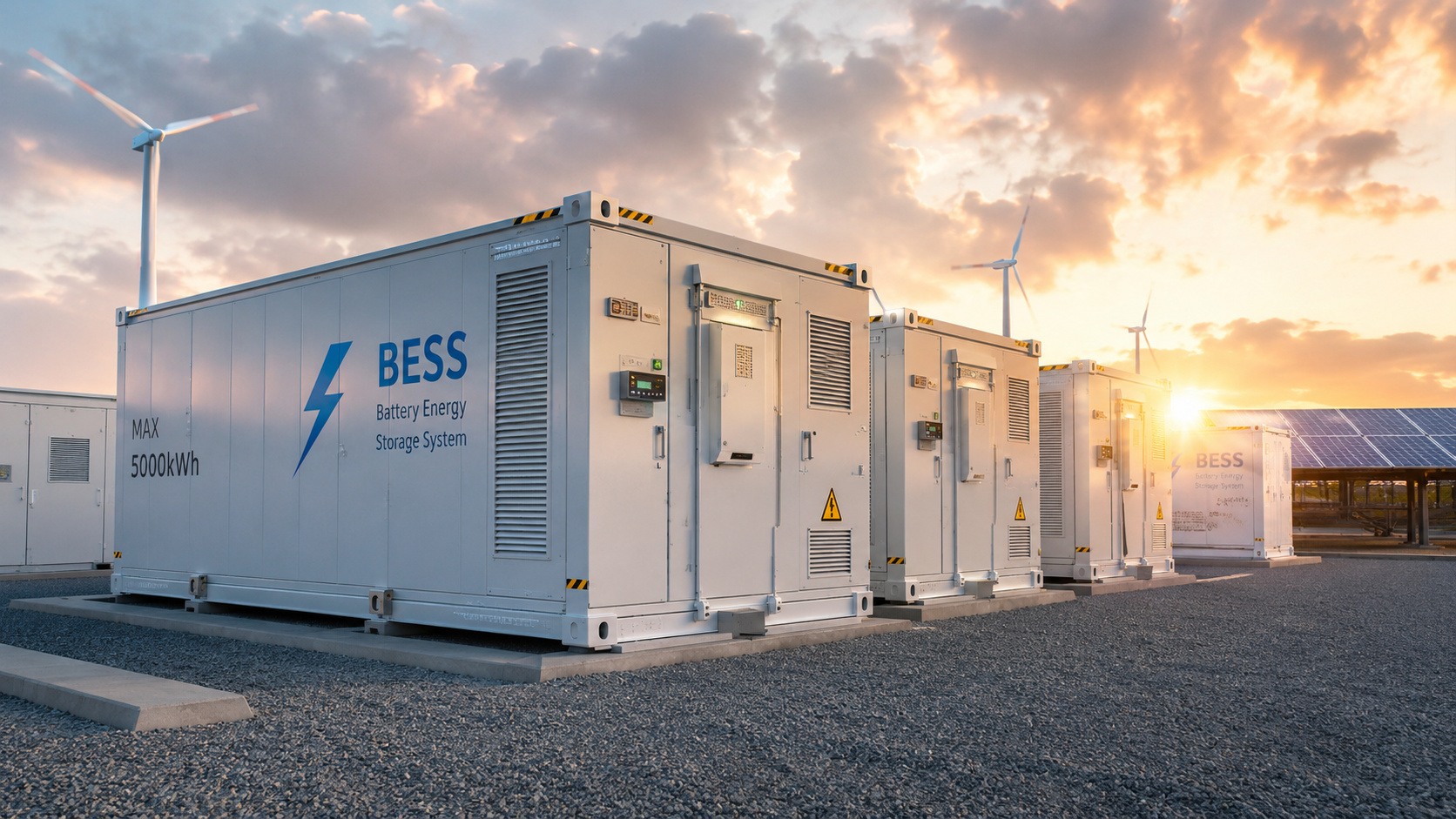
Brazil has just inaugurated a new chapter in the electricity sector with the sanctioning of Law 15.269/2025, which establishes an unprecedented regulatory framework for energy storage.
The regulation, derived from MP 1304/2025, redefines what changes for the segment by creating its own legal concept; clarifies who will regulate the topic—ANEEL; and explains how agents will be able to connect to the grid.
The law was sanctioned this month, a movement expected by the market, and will be valid across the country, reorganizing the relationship between consumers, generators, and battery systems.
-
In a historic decision, Aneel regulates the use of batteries in the Brazilian electrical system and lays the groundwork for large-scale energy storage, reducing waste, enhancing energy security, and attracting new billion-dollar projects.

-
Europe tests solar barriers on roads and the project could generate 25 MWh per km per year.

-
Government expands the Luz para Todos program to bring electricity to isolated communities in the Legal Amazon.
-
While Belo Monte progressed slowly in Brazil, China is building in Tibet 5 cascade hydropower plants on the Yarlung Tsangpo that will generate 3 times the energy of the Three Gorges.



The advance occurred because the sector had been living with years of regulatory uncertainty that hampered investments and prevented the expansion of modern storage solutions “in front of the meter.”
Legal Framework Changes the Classification of Batteries and Creates New Responsibility for ANEEL
The main change of the new legislation is the recognition of batteries as an independent category in the electricity sector.
Until now, storage was treated as if it were simultaneously generation and consumption, an interpretation that resulted in the so-called “double incidence” of tariffs.
“Storage now has its own legal concept and regulatory clarity. It is provided for in the law as an activity parallel to generation, transmission, distribution, and commercialization,” stated Fábio Lima, executive director of ABSAE.
The law stipulates that any agent may install batteries and connect to the grid, with ANEEL responsible for detailing the requirements.
Tariffs Are Expected to Change, But the Sector Fears Indirect Maintenance of “Double Incidence”
Although the legislation lays the groundwork to overcome the previous model, it does not explicitly prohibit double charging. Lima argues that:
“Storage is a distinct configuration and must have an appropriate tariff, not simply the sum of the tariffs of a generator and a consumer.”
This debate is central to the market, as the regulatory advance allows the regulator to require criteria such as flexibility and quick response in accessing the grid. This could impact both generation projects and distribution networks.
Capacity Reserve Gains Strength and Can Finance New Projects
Another highlight of the law is the creation of a competitive mechanism to contract capacity reserves essential for ensuring power and stability for the electrical system. For Lima, this opens new opportunities.
The Sharing Controversy: Generators Bearing Costs Alone
The most controversial part of the new framework lies in the allocation of capacity reserves. The law establishes that only generators will have to pay for BESS systems, in contrast to other sources that make up the electrical matrix.
According to Lima, the design is “anti-equitable”:
“Consumers pay for gas, coal, small hydro, and biomass thermal plants because they benefit from the security and resilience of the system.
Why would they not participate in the allocation of storage systems, which also provide them with flexibility, reduction of waste, and charges?”
He warns that the cost, even being charged to the generator, will ultimately return to the end consumer.
Undefined Criteria Increase Regulatory Uncertainty
Another point pressing the sector is the lack of criteria to define which generators will participate in the allocation. Lima questions:
“What is the criterion? Load profile, physical guarantee, capacity factor, dispatchability? It is very broad and generates uncertainty.”
Nevertheless, he assesses that the mechanism should not delay the capacity reserve auction.


Be the first to react!