





 Portuguese
  English
  Spanish
  4 min of reading
  0 comments


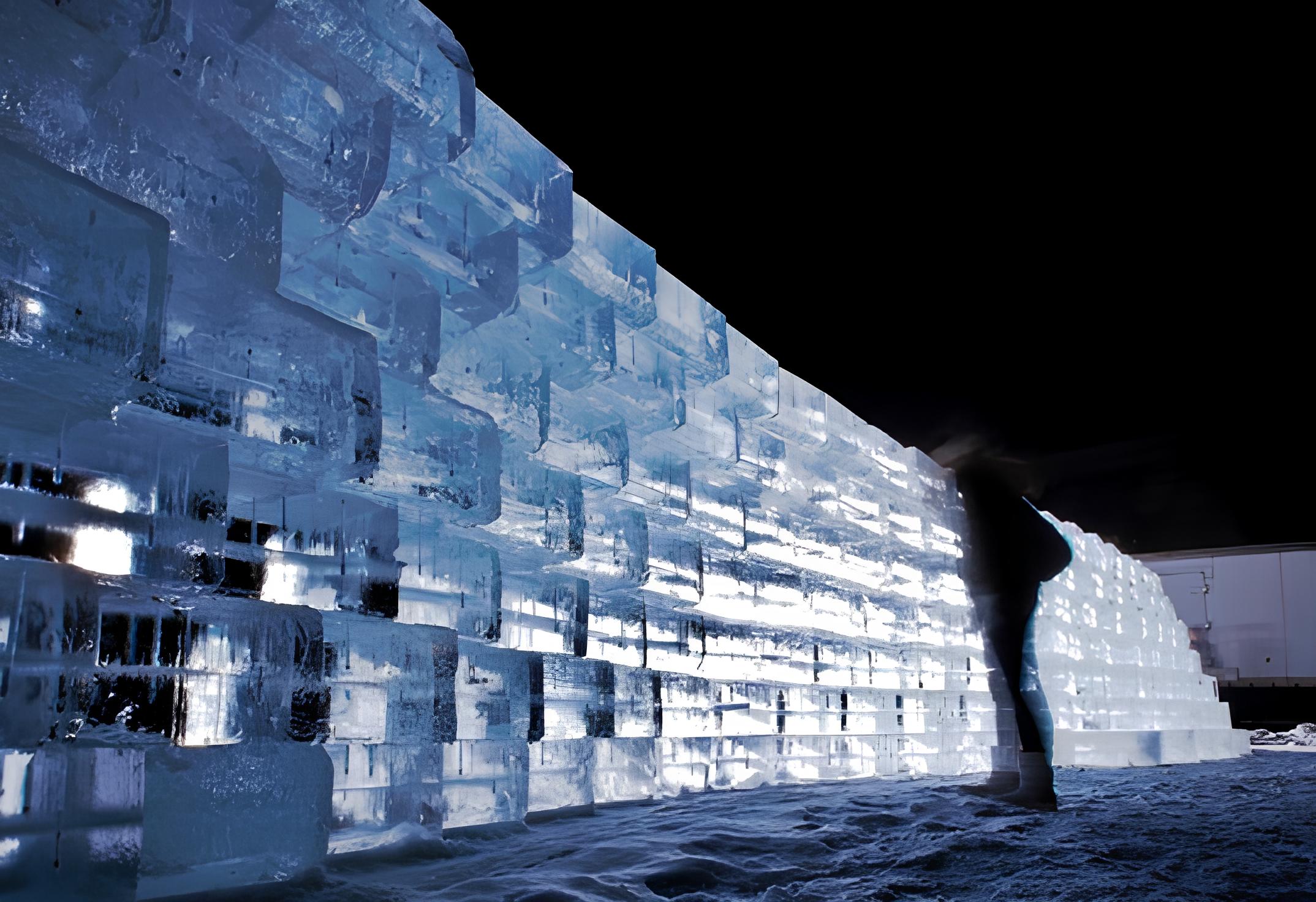
With More Than 1,500 Pipes and 1.5 km of Length, Japan Froze the Soil Around the Fukushima Plant to Contain Contaminated Water and Create an Unprecedented Subterranean Barrier in Modern Engineering.
When the March 2011 tsunami hit the Fukushima Daiichi Nuclear Power Plant, the collapse was not only in the reactors. An even more complex problem began to manifest in the following years: the continuous infiltration of groundwater into the damaged areas of the plant, mixing with radioactive waste and creating a daily flow of contaminated water that threatened to reach the Pacific Ocean.
Unlike a visible leak or a crumbling building, this was an invisible disaster, occurring below the surface, within the soil. The groundwater in the region, which naturally flows from the mountain slopes toward the sea, was seeping through the plant’s foundations, coming into contact with contaminated areas and exiting carrying radioactive material. It was in this context that Japan decided to implement one of the most unusual and bold geotechnical works ever performed: the Frozen Soil Barrier, also known as the Ice Wall of Fukushima.
The project did not involve visible concrete, traditional dikes, or visible walls. The solution was to freeze the soil.
-
US spends $1.6 billion to renovate a 90-year-old dam in Pennsylvania that controls the shipping of 23 million tons per year on the Ohio River.

-
Germany turns on a “giant underground radiator” with up to 90 km of boreholes at a depth of 5 km, betting on a closed-loop system without fracking and transforming hot rocks into electricity and heating to open a new phase of clean geothermal energy in Europe.

-
A city is building low-cost houses for people experiencing homelessness, with community support, assembled in a few hours, costing $2,500, and with a simple structure to protect from the cold and rain.

-
Brazil is the 8th largest energy producer in the world and has an 83% renewable matrix — but its electricity bill is among the most expensive on the planet and 35 million people live in energy poverty.



What Is the Frozen Soil Barrier of Fukushima
The Frozen Soil Barrier is a continuous underground ring of artificially frozen soil, constructed around the buildings of the Fukushima Daiichi Reactor Plant.
Unlike a physical wall, this barrier functions as a solid wall of frozen earth, impermeable to the passage of water.


To achieve this, more than 1,500 vertical steel pipes were installed underground, forming a closed perimeter of approximately 1.5 kilometers in length. These pipes were driven to depths ranging from 20 to 30 meters, crossing layers of water-saturated soil.
Inside these pipes circulates a refrigerant fluid at extremely low temperatures, capable of reducing the surrounding soil to about –30 °C. When the system operates continuously, the water present in the soil freezes, transforming sand, clay, and sediments into a rigid mass, practically impermeable.
The result is an invisible wall, buried, that does not rely on reinforced concrete or open excavations.
Why Freezing the Soil Was the Only Viable Option
Building a conventional concrete wall around the plant would require deep excavations in a highly contaminated area, putting workers at extreme risk and mobilizing massive volumes of radioactive soil. In addition, the elevated water table would make the project technically unstable.
Freezing the soil solved several problems at once:
– It did not require open excavation
– It drastically reduced the movement of contaminated soil
– It created a continuous barrier, without joints or weak points
– It could be implemented gradually and monitored
This technique, called ground freezing, had been used in tunnels and special foundations, but never before on such a large, continuous, and permanent scale.
The True Scale of the Work
Although invisible on the surface, the Frozen Soil Barrier is a project of monumental scale when analyzed in physical numbers.

The system involves:
– More than 1,500 freezing pipes
– A closed perimeter of approximately 1.5 km
– Dozens of kilometers of auxiliary piping
– Industrial refrigeration units operating 24 hours a day
– Continuous energy consumption to keep the soil frozen
It is estimated that the volume of soil directly affected by the freezing reaches hundreds of thousands of cubic meters, transforming an unstable area into a solid geotechnical structure.
The total cost of the project exceeded US$ 300 million, a value considered acceptable given the environmental and economic risk of allowing the continuous migration of contaminated water to the ocean.
The Real Impact on Containment of Contaminated Water
Before the complete implementation of the barrier, about 400 tons of groundwater per day crossed the plant area, mixing with radioactive waste. After the gradual activation of the Frozen Soil Barrier, this volume was significantly reduced.

Although the barrier did not completely eliminate the problem, the Japanese government itself never promised that — it drastically reduced the flow of water, allowing pumping and treatment systems to finally operate within controllable limits.
In practice, the freezing of the soil transformed an out-of-control situation into a manageable scenario, something essential for the long decommissioning process of the plant, which is expected to take decades.
Monitoring, Failures, and Constant Adjustments
Unlike a concrete wall, a frozen soil barrier is not static. The system requires constant monitoring of temperature, pressure, and water flow. Sensors distributed along the perimeter check whether the soil remains completely frozen and identify potential thawing points.
In some early phases, specific sections experienced partial failures, requiring reinforcement with additional pipes or adjustments in cooling power. These problems, far from being concealed, helped refine the project and establish protocols that today serve as a global reference.
A Precedent for Future Extreme Containment Works
The Frozen Soil Barrier of Fukushima has become an international case study in geotechnical engineering, environmental risk management, and subterranean containment. Never before had an entire industrial facility been surrounded by such an invisible barrier, maintained artificially for years.
More than just an emergency solution, the project proved that soil can be transformed into structure, that engineering does not always have to be visible to be monumental, and that, in extreme situations, little-known techniques can become the only viable response.
Today, when discussing the containment of contaminated aquifers, isolation of critical industrial areas, or projects in environments where excavation is unfeasible, the name Fukushima arises not only as a symbol of disaster but also as one of the largest underground engineering experiments ever undertaken.






-

-

-

-

-

6 people reacted to this.