Portuguese
  Spanish


Port of Los Angeles Prepares to Welcome First Electric Towboat in Pioneering Decarbonization Initiative.
The Port of Los Angeles is about to make history in sustainable shipping with the arrival of its first electric towboat, an initiative that marks a new chapter in the modernization of port logistics in the United States.
The vessel will be presented this summer by the American startup Arc Boats, specialized in electric nautical solutions, and is part of a strategic investment aimed at reducing emissions and operational efficiency in one of the busiest ports in the world.
Zero-Emission Vessel Will Be Prototype for Revolution in the Sector
Arc Boats announced that the project involves transforming a traditional tugboat into a 100% electric propulsion machine, equipped with two 600-horsepower engines, advanced battery systems, and real-time control software.
-
This Massive 12-Meter, 21-Ton Underwater Drone Can Operate Autonomously for Up to Five Days

-
Global Shipping Faces Shortage of Certified Maritime Officers, Salaries in the U.S. Can Exceed $100,000 Annually

-
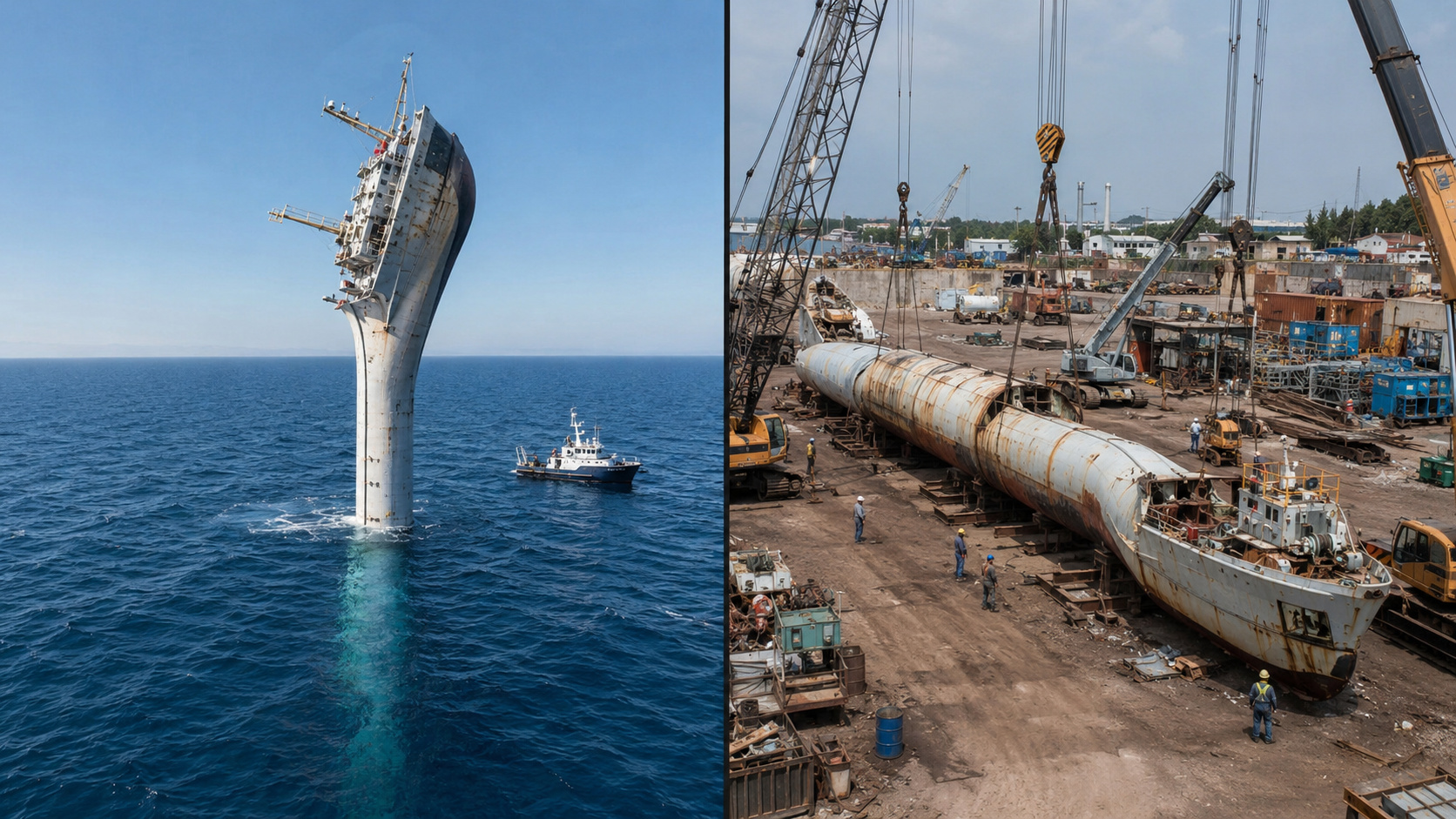
The FLIP: A 108-Meter Ocean Laboratory That Stood Vertically for 60 Years, Dismantled in 2023
-
North Korean Fiasco: Launch of the Largest Warship Ends in Sinking




In addition to eliminating greenhouse gas emissions, the electric tugboat will be transportable, easy to maintain, and designed to handle intense operations at the Port of Los Angeles.
“At Arc, our mission has always been to electrify the entire maritime industry. Workboats represent a significant step in that direction,” said Mitch Lee, CEO and co-founder of the company.
The project will also serve as a prototype for future fleets of green tugs in the U.S., potentially inspiring a broader transition in other ports across the country.
Sustainable Investment Has National Impact Potential
According to estimates from Arc Boats, there are about 2,000 tugboats currently in operation in the United States.
Replacing these fossil fuel-powered models with electric versions could be equivalent to removing more than 1.6 million cars from the roads in terms of emissions.
This data underscores the importance of investing in clean technologies and their contribution to combating the climate crisis.
The Port of Los Angeles, along with its neighbor, the Port of Long Beach, has already declared the goal of using only zero-emission equipment by 2030.

Eco-friendly trucks are also part of the transition plan and are expected to be fully implemented by 2035.
Electric Tugboats Are Gaining Ground in Ports Around the World
The movement at the Port of Los Angeles is not isolated. Various ports around the world, such as those in Europe, Japan, and New Zealand, have already adopted electric, hybrid, or hydrogen-powered tugboats.
The benefits range from reduced fuel and maintenance costs to a significant decrease in polluting emissions in urban and industrial areas.
In the United States, the Port of San Diego partnered with Crowley Maritime in 2023 to launch the e-Wolf, the country’s first electric tugboat.
The vessel is expected to reduce hundreds of tons of toxic emissions over a decade compared to traditional models.
The initiative at the Port of Los Angeles represents not just a technological update but a symbol of commitment to more responsible environmental practices.
As ports around the world move toward electrification, the trend is that electric tugboats will cease to be an exception and begin to comprise, on a large scale, the maritime fleets for logistical support.