






 Portuguese
  Spanish


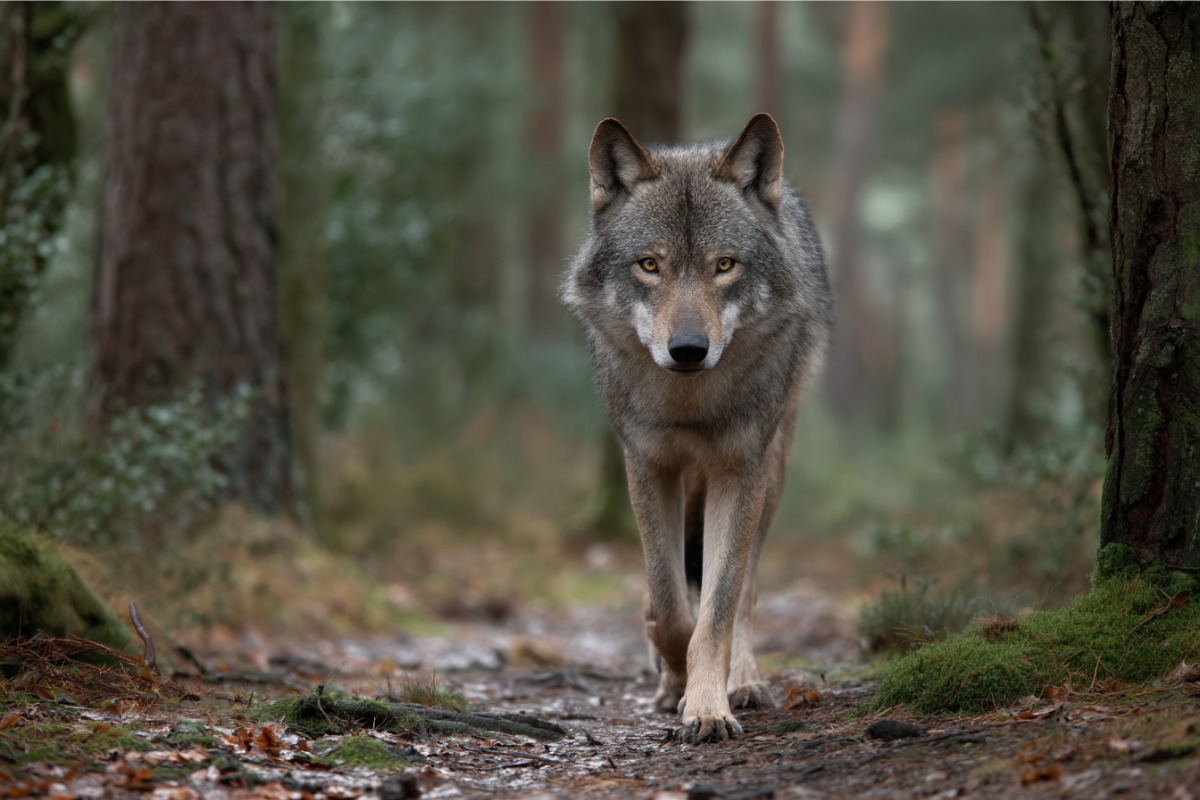


Return of Wolves to the Netherlands Exposes Conflicts with Livestock Farming and Forces the Country to Redesign Rules for Coexistence with Large Predators in Densely Populated Areas
The return of wolves to the Netherlands after over a century of absence has transformed a country known for dikes and tulips into a real-life laboratory for coexistence between large predators and human activities in a tight territory. Within a few years, stable packs began to occupy natural areas surrounded by cities, roads, and farms, creating tension with livestock breeders and pressuring authorities to review wildlife protection and management regulations.
The Netherlands has one of the highest population densities in Europe and a large amount of livestock per square kilometer, which makes the advance of wolves especially sensitive for small producers. Attacks on sheep and goats are coupled with legal debates about species protection, calls for population control, and proposals for reinforcement of fences, guard dogs, and financial compensations, in a dispute that involves rural economy, nature conservation, and safety in the countryside.
In recent years, the animal has started to reproduce again in Dutch territory and formed family groups in areas such as Veluwe, one of the largest forest and heath regions in the country. The constant presence of the predator forces the agricultural sector, wildlife agencies, and residents to discuss not only how to prevent attacks but also what space wolves should occupy in a highly urbanized society.
-
Peruvian Mountain’s 5,200 Aligned Holes May Unveil Ancient Indigenous Market for Corn and Cotton

-
The Little-Known Story of a Home-Built Airplane That Promised Freedom but Faced Safety Issues After Numerous Accidents

-
He Didn’t Build a Plane, But Spent Decades Trying to Make Bicycles Fly with Wings and Pedals; Remaining Models Tell This Unusual Story in Germany
-
Roraima Security Secretary Poses as Doctor to Expose Technician Charging $600 for Free Public Health MRI in Brazil; Technician Confessed




What Happened to Wolves in the Netherlands and What This Changes in the Scenario
After more than 140 years without reproduction records, the first wolves returned across the border from Germany around 2015, using corridors of vegetation between roads, fields, and cities. In 2019, the first litter was confirmed in Veluwe, an area of high concentration of forests and heaths in the center of the country, marking the beginning of the regular recolonization of Dutch territory.
The animals that now roam the Netherlands primarily originate from central European populations and travel long distances in search of food and quiet areas. Studies on the first nine years of recolonization indicate that the number of identified individuals already reaches the dozens, with a trend for growth and expansion into new regions if prey is available and social tolerance exists.
Even with a landscape marked by dikes, canals, highways, and intensive agricultural areas, ecological capacity assessments indicate that there is still space for several packs distributed across major blocks of nature. This possibility depends, however, on how society deals with conflicts with livestock farming, land use, and legislation that protects the wolf within the European Union.
Why the Return of the Wolf Generated Immediate Impact on Dutch Livestock Farming

The Netherlands has about 520 inhabitants per square kilometer and concentrates high-intensity livestock production in relatively small areas, with a large number of sheep, goats, and cattle in open pastures. This scenario offers easy food for an opportunistic predator, especially when livestock are left unprotected at night or enclosed with low structures and no electric power.
Reports of attacks show that most incidents involve sheep in regions where protection has yet to be adapted to the presence of wolves. In many cases, recommended electric fences were not installed or were inadequately set up, increasing the chances of predation and the sense of vulnerability among rural owners.
For small breeders, the loss of some animals represents direct economic loss and emotional distress, as many herds are maintained on a family scale. Discontent fuels calls for stricter control of the predator, while conservation organizations emphasize the importance of preventive measures and respect for species protection rules.
Rules, Deadlines, and Conditions That Come into Play in Wolf Protection
The wolf is protected by European environmental regulations that prohibit hunting and lethal management under common conditions, with exceptions possible only in very specific situations. This legal protection creates a point of friction with parts of society advocating for broader openings for population control in rural areas with a higher concentration of attacks.
Environmental law studies analyze how national legislation in the Netherlands fits into this European framework and what leeway the country has to authorize interventions when clear threats to herds and public order exist. At the same time, recommendations reinforce that non-lethal measures, such as quality fencing, proper carcass management, and guard dogs, should be prioritized before any discussion of culling.
The legal debate surrounding the wolf connects to broader themes, such as the role of large predators in fragmented ecosystems and the duty of the state to protect both biodiversity and rural livelihoods. This balance is still under construction, with discussions in councils, courts, and political instances about how to apply the law without ignoring direct impacts on small producers.
Who Can Be Most Affected and What Criteria Matter for Coexistence

Breeders of sheep and goats who use open areas or traditional fencing are among those most exposed to losses caused by wolves. Studies with affected owners show a significant increase in concern about attacks between 2020 and 2023, accompanied by reports of changes in management routines, such as nighttime collection of herds and the use of electric systems.
The profile of properties, the type of terrain, and proximity to natural areas influence the risk of predation. In regions where packs have already settled, such as parts of Veluwe and neighboring provinces, the issue becomes part of daily planning, investment in infrastructure, and even the selection of breeds more adapted to environments with predator presence.
On the other hand, urban residents and visitors to natural areas experience the return of wolves differently, often with curiosity and a sense of the restoration of natural processes. Research on human-wildlife interactions indicates that perceived risk on trails and in parks tends to be higher than the actual risk, which reinforces the importance of clear information about the animal’s behavior and safety rules.
How the Process of Prevention with Fences, Dogs, and Financial Support Works

To address the conflicts, the provinces and the central government have structured an Interprovincial Wolf Plan, which encompasses prevention guidelines, compensation for damages, and technical guidance for producers. The plan provides financial support for installing electric fences with adequate height and voltage, as well as additional materials for reinforcement in vulnerable points.
Field experiences show that when fences are set up according to recommendations, the number of attacks drops significantly. Monitoring records indicate that cases of predation in properly protected installations are much lower than in properties where the structure still follows outdated standards that do not consider the wolf’s jumping and digging abilities.
Some breeders have started testing the use of guard dogs alongside fences, focusing on deterring the predator and protecting herds at night. This combination of physical barriers and animal vigilance is gaining traction as a practical alternative to continue raising livestock in areas with a constant presence of wolves, without relying solely on subsequent compensations.
What May Happen from Now On with the Wolf Population in the Netherlands
Territorial distribution models indicate that the wolf population in the Netherlands is likely to gradually expand over the coming decades, occupying new areas with the capacity to offer prey and shelter. The formation of more packs is considered probable if the number of individuals continues to grow and if connectivity with populations in neighboring countries is maintained.
This scenario increases the need for consistent long-term policies, both for preventing damage to livestock and for managing the landscape and educating the population. How the Netherlands balances legal protection, compensations, rural infrastructure, and safety may influence other European countries with high population density and similar challenges of coexistence with large predators.
The discussion about the wolf’s place in the country of dikes and tulips reveals a question that transcends borders. In a continent almost entirely occupied by agriculture, cities, and infrastructure, every new territory that the animal occupies forces a review of expectations about what nature is and how far human responsibility extends in adapting to resuming ecological processes.
For rural producers, the predator’s advance represents extra costs and a need for planning, but it also opens up space for technical and financial support in protective measures. For society in general, the return of the wolf symbolizes the return of an important component of European ecosystems and reinforces the debate on how to reconcile conservation, safety, and food production in an increasingly contested space.





Que coisa né? os europeus gostam de pregar o ecologicamente correto, o sustentável e o salvem as florestas e a vida selvagem para o resto do mundo mas não querem grandes predadores em seus parquinhos que eles chamam de florestas.😎😎