Portuguese
  Spanish


The IAT promoted the aerial dispersion of 700 thousand juçara palm seeds over the coast of Paraná to restore the Atlantic Forest. The action targeted four Conservation Units where illegal extraction of the plant, threatened with extinction, occurred and will be monitored to measure effectiveness.
A true green rain fell over the coast of Paraná. The Water and Land Institute (IAT) promoted, this Wednesday (3), the aerial dispersion of 700 thousand seeds of juçara palm in different points of the region, in an action to restore the Atlantic Forest.
The launch, done with aerial support, was not random: the 700 thousand seeds fell precisely over areas where environmental crimes were recorded, including the illegal extraction of juçara palm. The idea is to repopulate the Atlantic Forest with a species threatened with extinction and then monitor if the seeds thrived.
How the IAT spread the 700 thousand seeds over the coast of Paraná
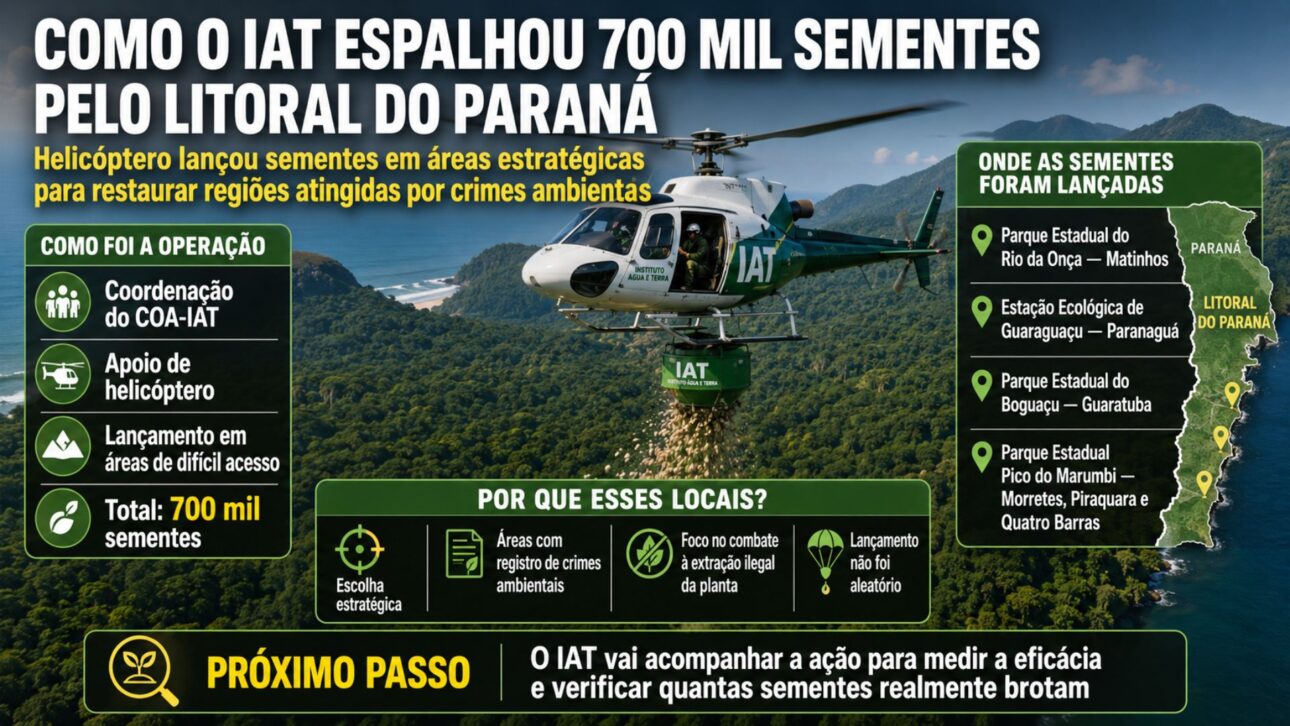
The operation was coordinated by the Air Operations Center of the IAT (COA-IAT) and had helicopter support to reach regions of difficult access.
-
The Trap of Modern Technology: How Screen Overload and Digital Connections Can Impact Your Mental Health and Well-being

-
Wyoming Couple Grows Tropical Fruits Year-Round in -40°C Using Geothermal Greenhouse, Demonstrating Earth’s Heat Can Produce Oranges and Lemons in Snow Without Traditional Heating

-
Ship Returns from Brazilian Coast with Thirty Newly Discovered Life Forms
-
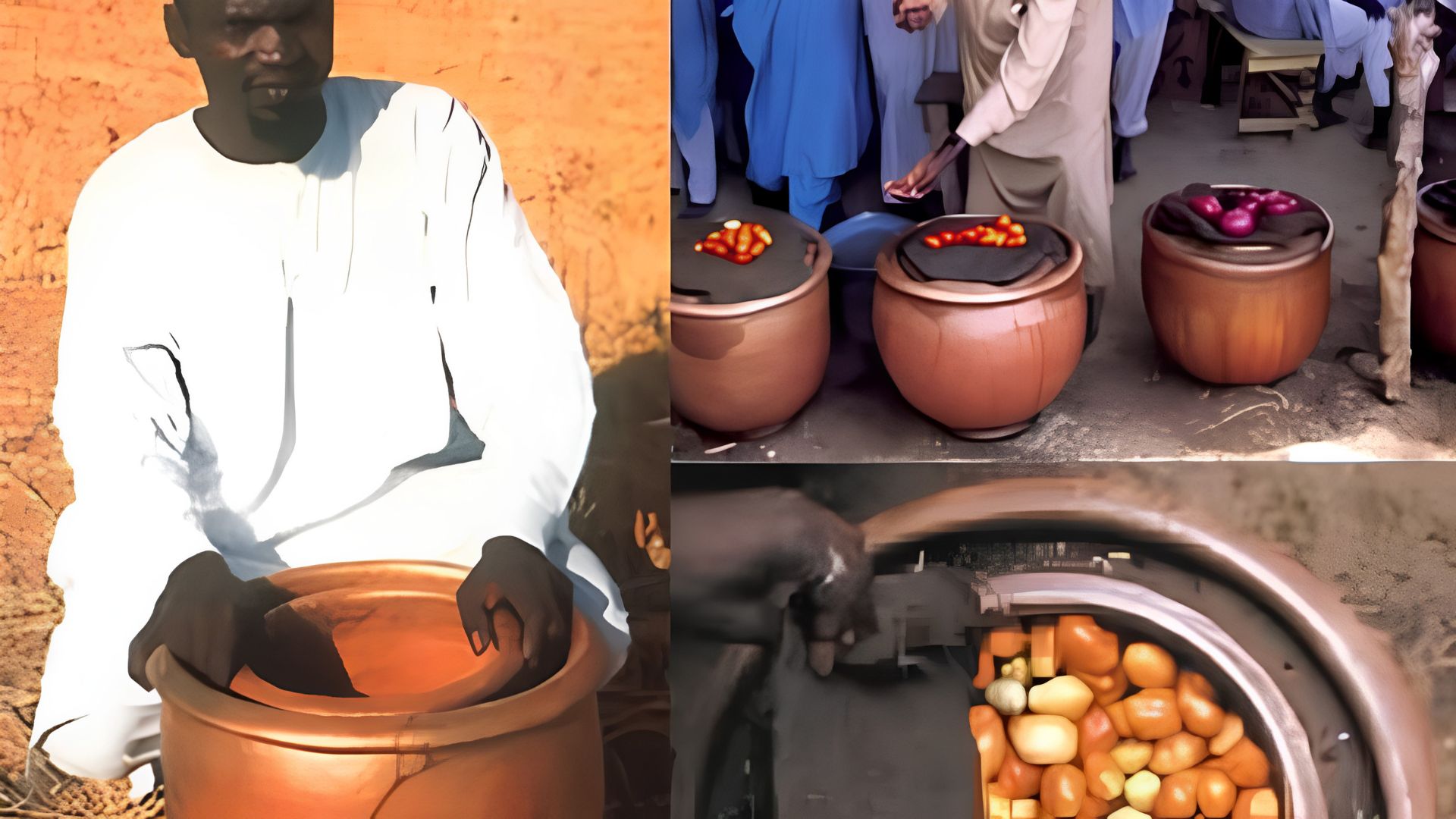
Nigerian Professor Invents Electricity-Free Refrigerator Using Clay Pots and Wet Sand, Extending Shelf Life of Vegetables to 27 Days; 7,000 Units Distributed in Energy-Deprived Villages


In total, the 700 thousand seeds were launched over four Integral Protection Conservation Units: the Rio da Onça State Park, in Matinhos; the Guaraguaçu Ecological Station, in Paranaguá; the Boguaçu State Park, in Guaratuba; and the Pico do Marumbi State Park, which covers Morretes, Piraquara, and Quatro Barras.
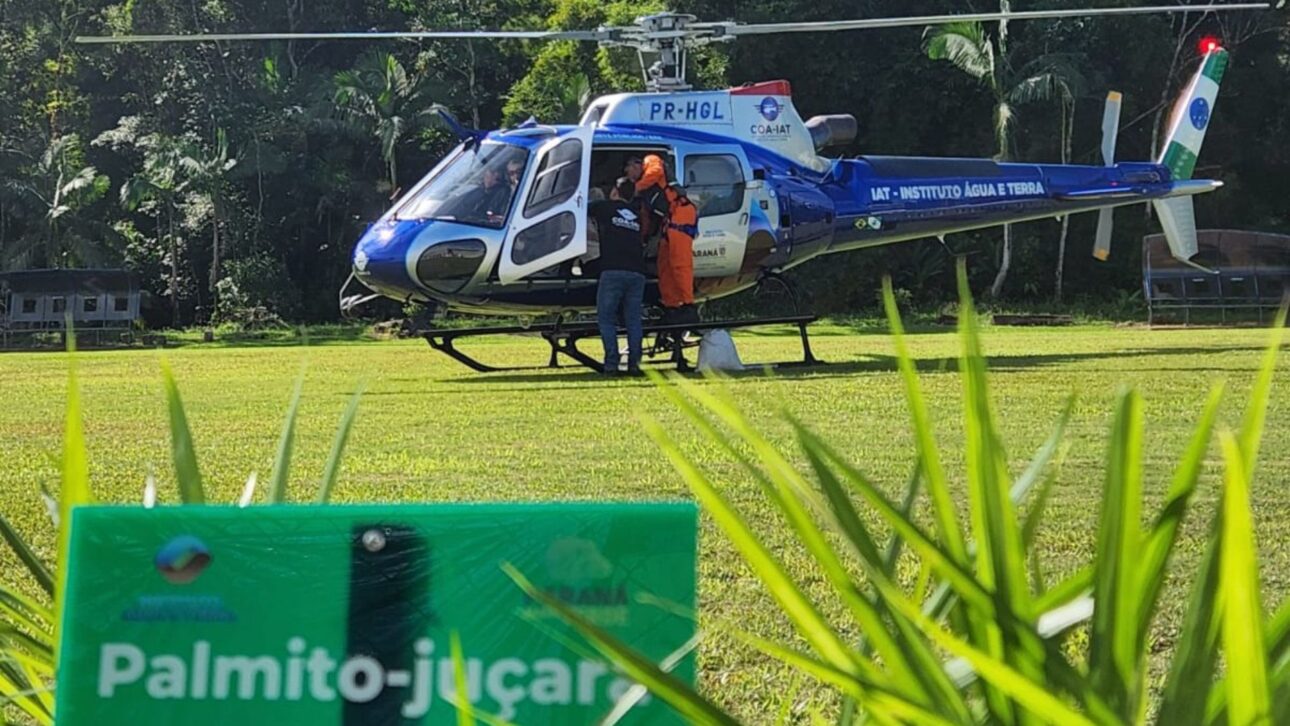
Photo: COA-IAT
According to the president-director of IAT, José Volnei Bisognin, the choice of locations was strategic. The areas correspond to coordinates where there have been records of environmental crimes, especially the illegal extraction of the plant, on the coast of Paraná.
He emphasizes that the launch is not random and that the action will be monitored afterward to verify its effectiveness, that is, how many of the seeds actually sprout.
Where the seeds came from and who helped
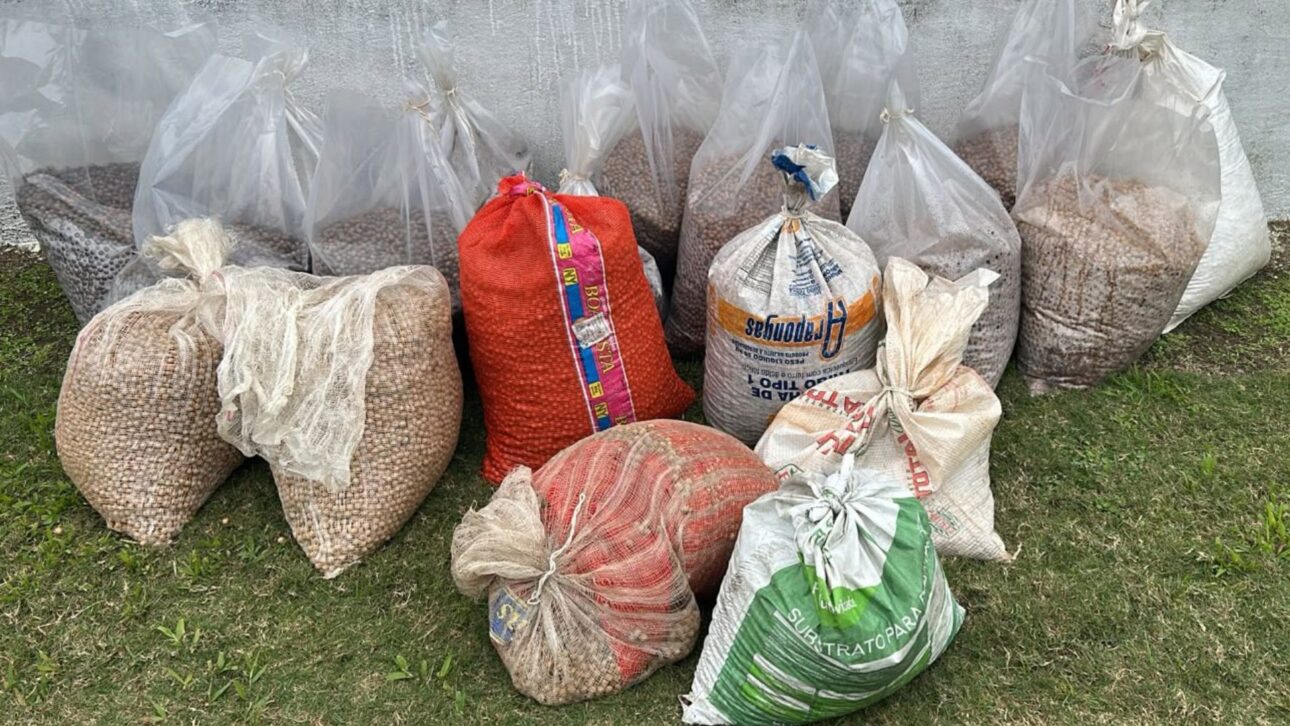
Photo: COA-IAT
The 700 thousand seeds originate from the IAT‘s own collections and donations from partners, such as the Instituto de Estudos Ambientais Mater Natura, the Instituto Juçara de Agroecologia, and the Associação de Produtores Orgânicos de Quedas do Iguaçu (APOQI).
The initiative also had the support of District 4730 of the Rotary Club and took place alongside the 4th Nature Journey, an environmental mobilization occurring in the State this week.
The organization took the opportunity to reinforce the invitation to the population. Bisognin reminded that the IAT maintains 19 nurseries spread across Paraná, which can provide seedlings for those who want to plant at home and help in environmental recovery.
For Marcelo Passos, governor of District 4730 of the Rotary, the goal is the resurgence of the juçara palm in the region, while the head of the IAT regional office on the coast, Altamir Hacke, stated that the action should be repeated in the future.
Why the juçara palm is threatened
The juçara palm (Euterpe edulis Martius) is typical of the Atlantic Forest and occurs from Rio Grande do Norte to Rio Grande do Sul.
Both the fruits, from which a tasty pulp similar to açaí is extracted, and the famous juçara heart of palm are used.
The problem is that the removal of the heart of palm kills the plant, as it comes from the only stem of the palm.
It was exactly this use that put the species at risk. The predatory extraction of heart of palm, often illegal, led the juçara palm to be officially considered an endangered species.
Therefore, returning 700,000 seeds to the forests of the Coast of Paraná is also a way to combat the damage left by clandestine exploitation.
The ecological role and why aerial dispersion makes sense
The juçara palm is a key element for the fauna of the Atlantic Forest. Its fruits feed dozens of species of birds and mammals: toucans, jacutingas, guans, thrushes, and bellbirds are among the main seed dispersers, while agoutis, tapirs, peccaries, and squirrels also benefit.
Recovering the plant, therefore, means strengthening an entire food web.
The choice for aerial dispersion has a technical explanation. The germination of the juçara is slow and irregular, and the plant, adapted to the understory, usually forms a dense seed bank that waits for the ideal conditions of light and humidity.
Since it can reach 20 meters in height and takes about six years to reproduce, spreading 700,000 seeds from above is a viable way to accelerate its return to the remnants of the Atlantic Forest on the Coast of Paraná.
It is worth remembering that the result is a long-term bet, which only monitoring in the coming years can confirm.
Seeing a helicopter turn 700,000 seeds into a green rain over the Atlantic Forest is the kind of news that shows nature reacting to the actions of those who destroy it.
Tell us in the comments if you support this type of environmental restoration and if you would plant a juçara palm seedling at home to help.