






 Portuguese
  Spanish
  4 min of reading
  0 comments


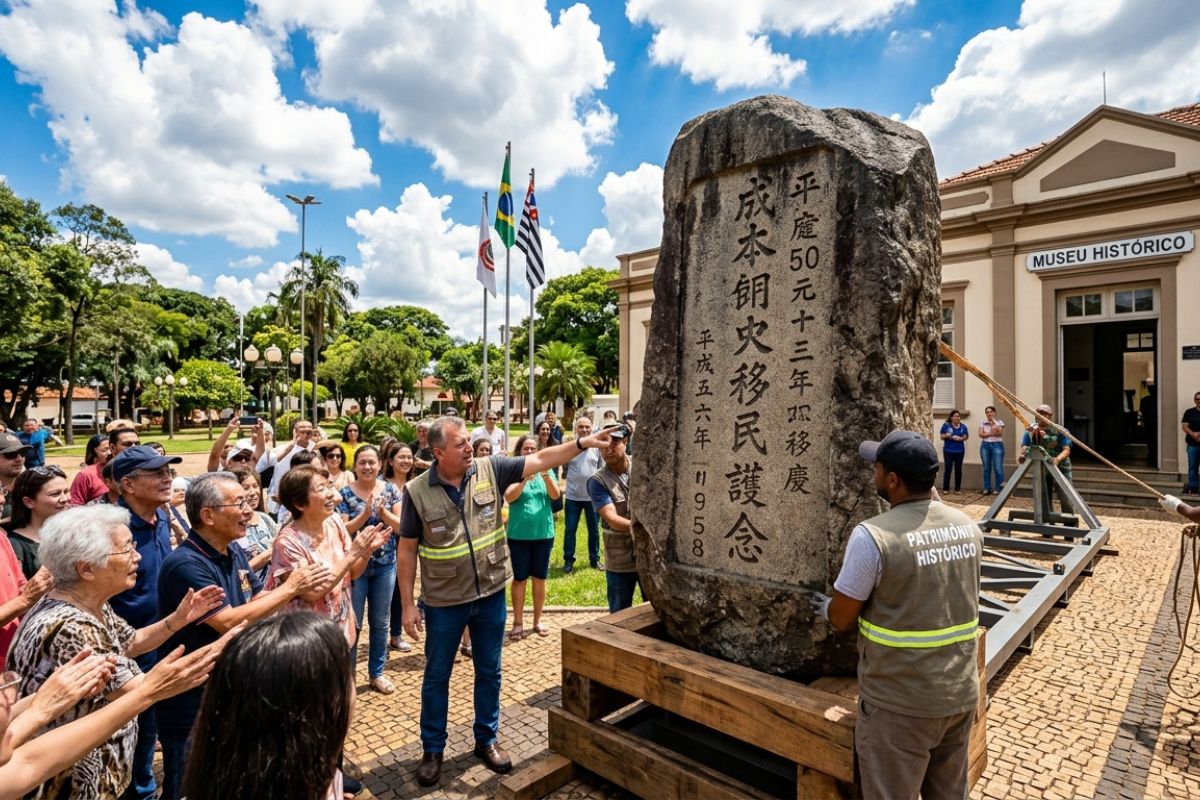
The Stone with Japanese inscription weighing 400 kg, made in 1958 to celebrate Japanese immigration, was found in the Tucuruvi neighborhood and will go to the Adamantina Museum as a historical collection.
A stone with inscriptions in Japanese and an approximate weight of 400 kg has reappeared in Adamantina after more than 45 years missing. The reunion brought to light a symbol linked to the memory of the Japanese community in the region and reopened questions about how the monument disappeared and why it remained out of sight for so long.
The stone is a record from 1958, created as a tribute to the 50th anniversary of Japanese immigration in Brazil. Now, under the responsibility of the public authorities, the piece has been transported to the municipal museum and is expected to be part of the historical collection, focusing on preservation and access for visitors.
Where the stone was found and why the location caught attention
The stone was located in the Tucuruvi neighborhood, in Adamantina, amidst vegetation and near a fence, on a rural property. The spot caught attention precisely because it seemed like an “out-of-place” remnant, but loaded with meaning.
-
Brazilian creates ingenious hack with bus air conditioner water and transforms invisible dripping into savings of millions of liters; Capixaba system reuses condensation on the windshield, supplies the toilet on long trips, and has become a practice in Águia Branca’s fleet.

-
An 11-year-old boy left home with two cousins to sell popcorn for R$ 5, became an entrepreneur at 15, sells 100 buckets a day, and uses the profit to pay the entire family working in the business.
-
To escape traditional rent, a couple bought a 21 m² floating house without seeing it, renovated everything in 3 months, and started living isolated on a lake in the USA, without electricity, without cell phone signal, and accessible only by boat.

-
Tired of expensive housing, couple buys a boat for US$ 1, refurbishes the sailboat at low cost, and sails over 1,600 kilometers to the Florida Keys.


The discovery raised questions about the journey of the piece over the decades and what led to its disappearance. The find also rekindled the connection with the presence of Japanese immigrants who helped shape local history.
What the inscription registers and what was the intention of the monument

The monument was produced in 1958 by members of the Niponic Association of the Tucuruvi neighborhood. The inscription was made by the wife of Setsu Oniche, a name that today names the Adamantina Museum, recording the symbolic moment for the Japanese community.
The stone was conceived as a tribute to the 50 years of Japanese immigration in Brazil, and this detail gives the object a historical value that goes beyond the material: it serves as a public mark of community memory.
The strength of the Japanese colony in Tucuruvi at that time
According to the account present in the database, the Japanese colony already had an organized structure and, at the time, there were seven neighborhoods in the rural area. Tucuruvi was one of them, with 61 families and 366 people.
The neighborhood appears as a united core, with relevant agricultural production and a strong community life, including a predominantly Buddhist population linked to the church that, over time, became a museum. This context helps to understand why a stone commemorative would have been built there.
The connection of the stone with the trajectory of families in the city
The history of the monument also intertwines with the journey of Mrs. Norico, who came from Japan and established roots in Adamantina, preserving traditions and contributing to the cultural development of the city.
There is also the account that the monument was made by the family of one of the interviewees’ fathers, who brought knowledge from Japan applied to stone work. The family is said to have worked in this craft in Brazil, making tombs and refining the profession until the end of their lives, which reinforces the artisanal and identity character of the piece.
Transport to the museum and preservation plan
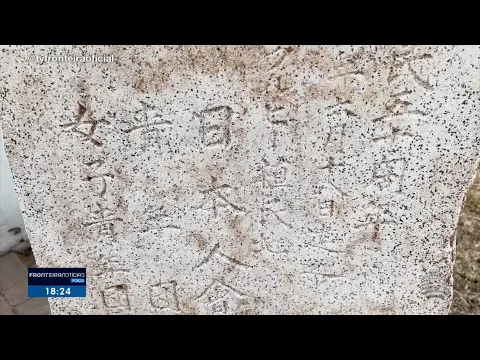

After the location was determined, the city hall, through the Department of Culture and Tourism, carried out the transport of the stone to the museum. The idea, according to the account, is that it remains there, in the outdoor area, so it can be seen even when the museum is closed.
The plan does not foresee complete structural restoration. The stone is damaged at the top, but the intention is to clean it to remove the appearance of dirt and to work on the letters to make them more visible.
Why the stone becomes a historical collection and what it represents
By integrating into the historical collection of the municipality, the stone takes on a public role: to preserve and tell an important part of local history for future generations. The initiative is presented as a gesture of valuing memory and identity.
In the testimony, the discovery is described as exciting, even with the piece worn by wind, sun, and rain. The feeling reinforces that, beyond the object, the stone carries the mark of ancestors and a community that helped shape the city.
In your opinion, should the stone always remain in the museum or should it return to the Tucuruvi neighborhood as a historical landmark in the place where it was found?




-

1 person reacted to this.