Portuguese
  Spanish


Photovoltaic coverage tested in Germany uses the space above highways to generate energy, reduce pavement exposure to rain and heat, and evaluate an alternative to solar roads installed directly on asphalt, without requiring new land occupation.
Instead of placing solar cells on the pavement itself, Germany tested a solution that takes photovoltaic generation to the space above highways, using an elevated cover to produce electricity without replacing common asphalt.
Named PV-SÜD, the project developed a concept of photovoltaic coverage for roads, built a demonstrator, and monitored its performance with technical measurements focused on electrical generation and effects on road infrastructure.
The initiative was coordinated by the AIT Austrian Institute of Technology and included participation from the Fraunhofer Institute for Solar Energy Systems ISE and Forster Industrietechnik, in a cooperation funded by public bodies from Germany, Austria, and Switzerland.
-
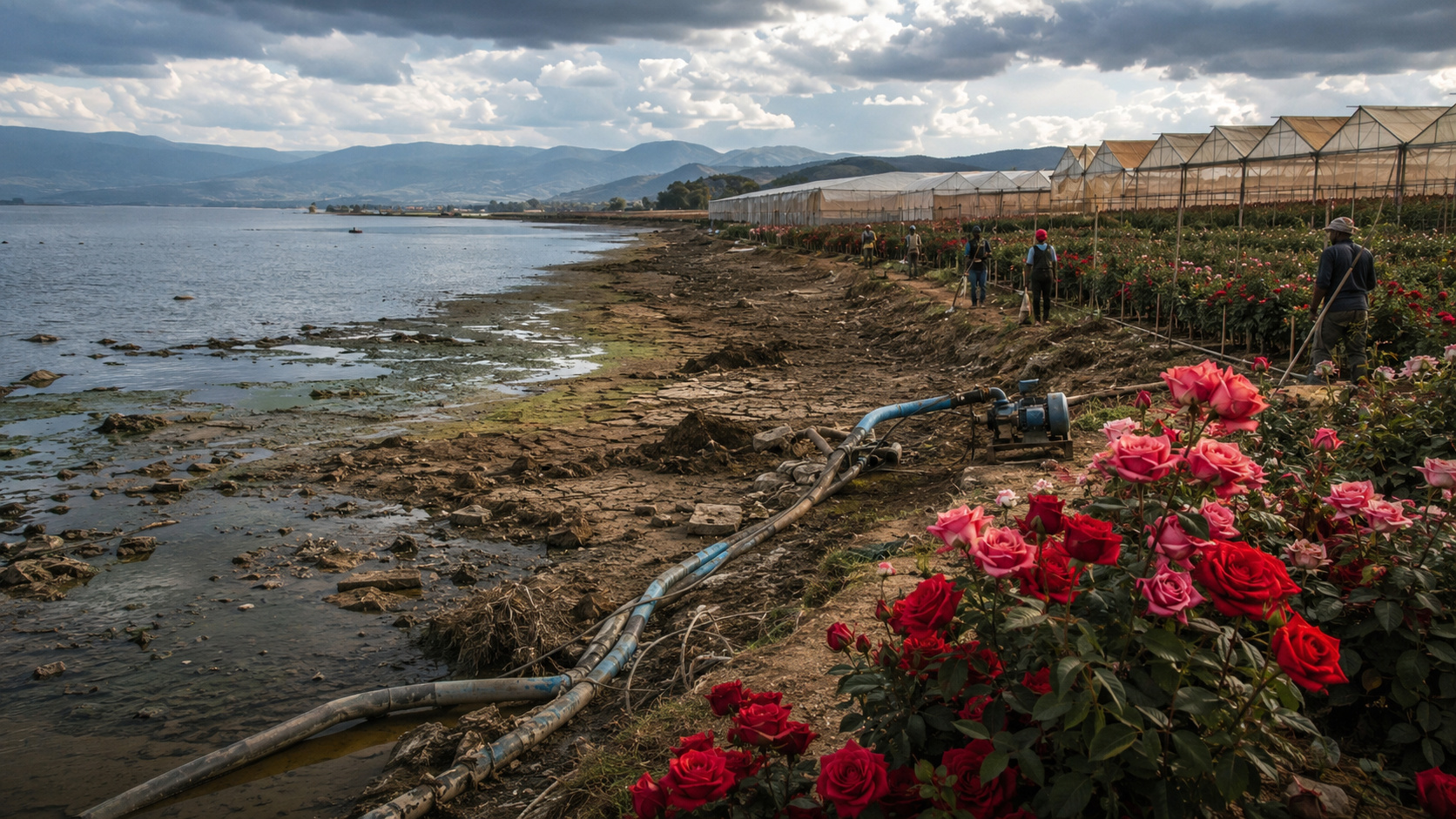
Flower Farms Supplying London and Amsterdam Face Backlash for Environmental Impact on African Lake, Threatening Jobs for 50,000 Workers

-
World’s Largest Container Ship Departs Shanghai with 24,000 Containers, Set to Debut in Europe in July

-
NASA Explores How Microgravity and Sensors Alter Soccer Ball Spin in Space
-
Qatar Commissions World’s Largest Gas Ship, a 344-Meter Giant Now Under Construction



Solar coverage over highways changes the logic of photovoltaic roads
Unlike the so-called solar roads, which incorporate photovoltaic cells into the pavement, the model evaluated in PV-SÜD preserves the track for traffic and transforms the free area above the road into an energy capture surface.
With this configuration, the modules no longer face direct contact with tires, braking, accumulated dirt, constant vibrations, and impacts from heavy traffic, factors that make the installation of panels on the road surface more complex.
By migrating to a suspended cover, the system faces another set of challenges, such as structural stability, wind and snow loads, impact resistance, access for maintenance, drainage, and integration with highway operations.
Part of the structural logic is similar to equipment already present on roads, such as signage gantries, but with an additional requirement: to safely support photovoltaic modules over areas used by circulating vehicles.

Solar energy without occupying new areas
The interest in the technology comes from utilizing spaces already occupied by transportation infrastructure, as highways, rest areas, toll booths, bridges, and tunnel entrances can offer useful surfaces for solar generation.
According to Fraunhofer ISE, the demand for electricity in road operations grows with increased traffic, tunnel expansion, new safety regulations, lighting systems, and traffic control equipment.
In this scenario, photovoltaic coverage attempts to combine two functions in the same structure: generate renewable energy and support the operation of road sections that already rely on electricity in different support systems.
According to AIT, solar generation in high-level road networks is still limited, although these areas have the potential to host installations associated with nearby consumers, such as service areas and tunnel lighting.
Pavement protection also included in the evaluation
Besides energy production, PV-SÜD analyzed possible secondary benefits of the coverage, including pavement protection against precipitation and overheating, increased surface lifespan, and contribution to noise reduction.
Reduced exposure to rain and heat is an important aspect of the proposal, as continuous climate variations can affect road conditions and increase the need for maintenance interventions over time.
However, these effects need to be proven through measurements and operational evaluations, as the coverage also creates new requirements for inspection, maintenance, public safety, and response to potential damage caused by accidents.
During the demonstration, monitoring tracked performance, use of generated energy, drainage, wind and snow loads, structural integrity, impact forces, maintenance procedures, and traffic safety in operation.
Modular structure facilitates adaptation in different sections

With a modular design, the coverage was conceived to allow expansion in the direction of traffic and adaptation to different sections of the road network, as long as technical and economic conditions are compatible.
To reduce risks, the concept considers localized damage caused by accidents without compromising the entire structure, an essential point in installations built over roads with permanent circulation of cars and trucks.
Access for maintenance is also integrated into the technical design, with stairs and walkways planned for inspections and repairs, in a logic similar to that of metal structures already used on highways.
In the choice of photovoltaic modules, the limitation of available area over the track, the static requirements of the installation, and the need to obtain high efficiency in a restricted surface weighed in.
For this reason, Fraunhofer ISE reports that the project prioritized high-efficiency crystalline technology, considered more suitable for maximizing electricity generation under the conditions of a suspended cover.
Panels above avoid direct wear of solar asphalt
Installing solar modules on the pavement requires the material to withstand weight, abrasion, drainage, adhesion, visibility, temperature variations, and safety for vehicles of different sizes.
On a regular highway, these conditions become more severe than on rooftops or ground solar plants, as the track needs to continue fulfilling its main function: ensuring safe and predictable traffic.

When the panels are taken above the highway, the PV-SÜD avoids some of these obstacles but becomes dependent on a more expensive and complex structure than a conventional photovoltaic installation.
The economic comparison remains decisive, because profitability depends on solar yield, initial costs, financing, operating and maintenance expenses, and the possibility of using or selling the electricity produced.
Strategic points can concentrate the application
The most likely application does not involve covering long stretches of autobahn continuously, but using the solution at specific points where electricity generation can meet nearby demands and justify the elevated installation.
Among the locations mentioned for flexible implementation in high-level road networks are rest areas, traffic control stations, tolls, bridges, tunnel entrances, and sections with additional noise protection.
In these settings, the electricity produced could power the infrastructure’s own systems, provided there is compatibility with grid connections, local consumption profile, and road operation safety rules.
The visual impact of the coverage was also analyzed, as an elevated structure over public roads alters the landscape and must meet functional requirements, design criteria, and architectural integration.
Test points to a different path for solar highways
The PV-SÜD does not represent the immediate replacement of conventional asphalt, nor does it confirm that entire autobahns will be transformed into suspended solar power plants in the coming years.
Even so, the demonstrator indicates a technical alternative to solar roads integrated into the pavement, by exploring an already impermeable area without requiring new territorial occupation for the installation of panels.
Costs, safety, maintenance, energy performance, visual acceptance, and adaptability to the requirements of each road section remain as determining factors for assessing large-scale viability.
In practice, the German experience shows that solar generation can approach transportation infrastructure without placing photovoltaic cells under the tires, transferring electricity production to a coverage designed to operate above the traffic.