






 Portuguese
  Spanish
  7 min of reading
  0 comments


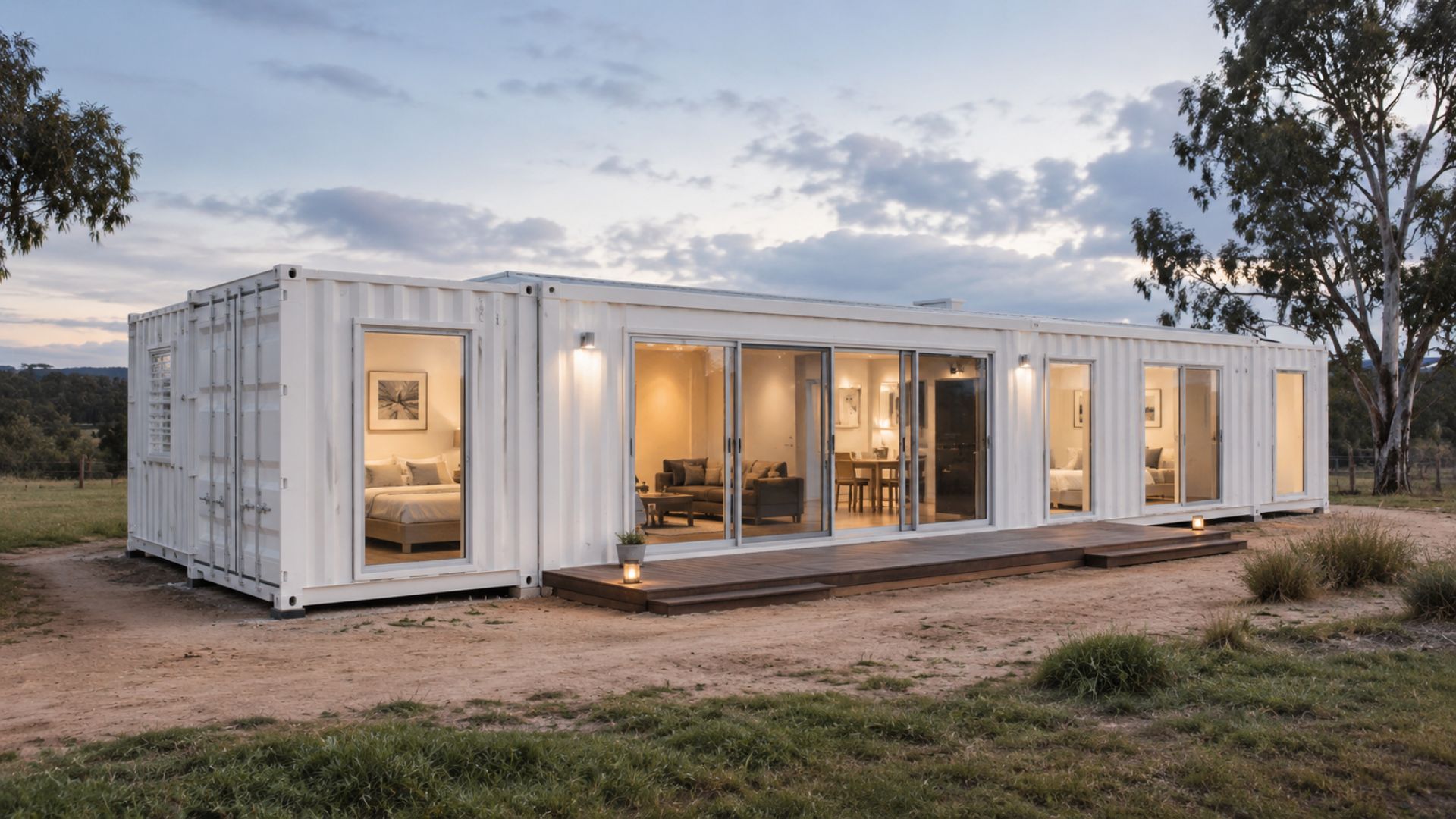
Adriel Azul Containers delivered a 60-square-meter container house with three bedrooms in Matão, in the interior of São Paulo, one of which is a suite for the couple and two rooms for children. The structure came pre-finished from the factory and was assembled on the farm’s land in just five business days by the team.
The discussion about rapid construction gained a new practical example in the interior of São Paulo. Adriel Azul Containers delivered its first container house in Matão, with 60 square meters and three bedrooms, in an operation that lasted exactly five business days on the client’s land.
The residence came with a pre-finished structure from the factory and was installed on a farm in the initial phase of transformation. The property is ready for use, but the surrounding area will still receive a garage, gourmet area, and external cover, part of the complete plan of the couple who acquired the project.
How the operation happened in just five days

Logistics began on the Saturday prior to the official delivery. The company’s team transported the structure from Itu to Matão and started assembly on Monday morning, taking advantage of daylight to distribute the pieces at the location defined by the client.
-
Researchers create reusable brick walls that can be dismantled and rebuilt elsewhere, like Lego pieces, to reduce construction waste and cut emissions by up to 60%.

-
During the construction of the world’s highest bridge, the Huajiang Bridge in China, engineers discovered a giant aquifer and turned what would have been a serious problem into a 625-meter artificial waterfall, an engineering feat that no one had planned.

-
The river rose 15 meters overnight and devastated a village in Vietnam in 2025, and Japan responded with dams that hold back mud and stones, training 15,000 people for evacuation, and a sewage station for 1 million residents.
-
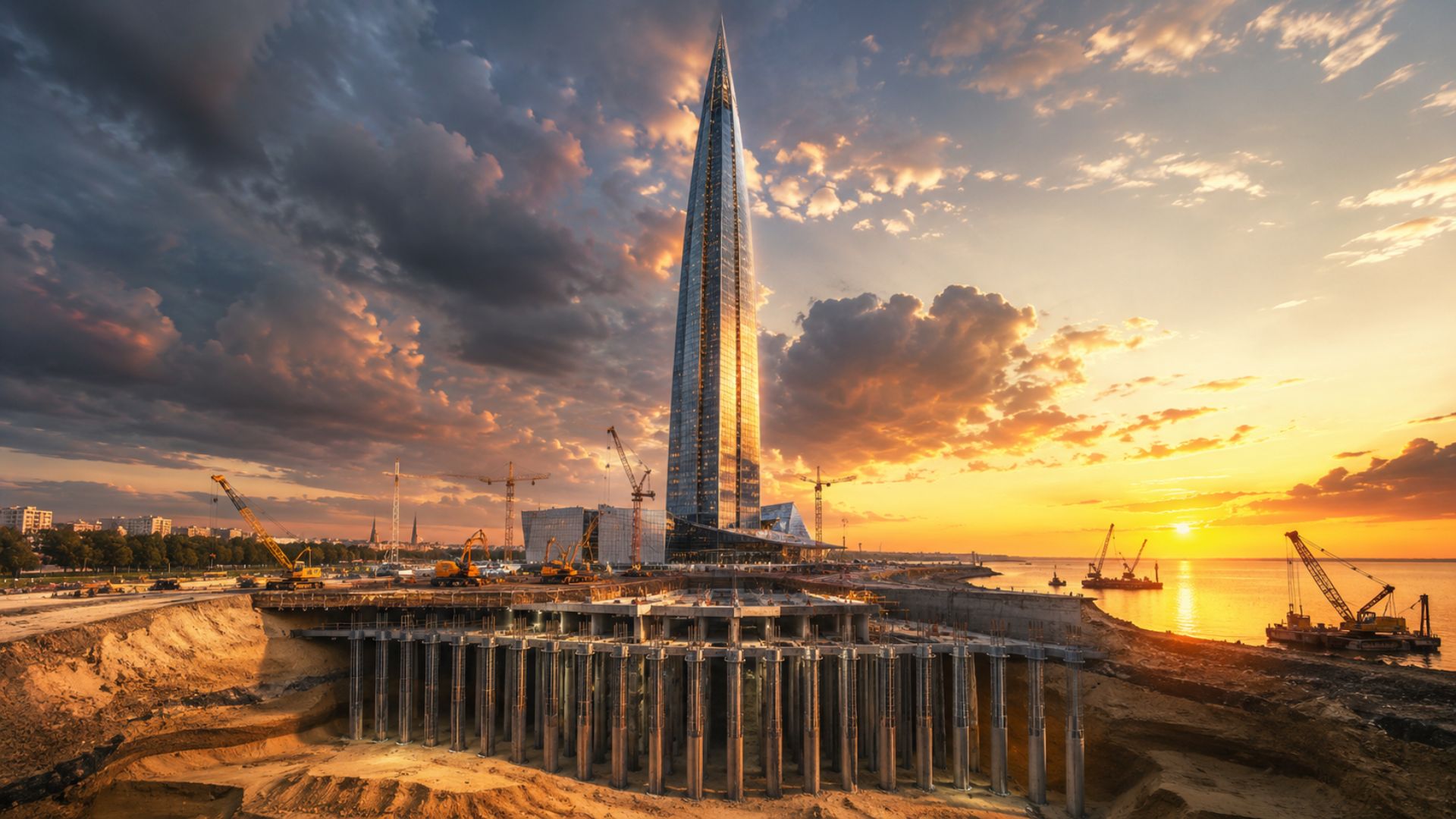
Russia erected the tallest building in Europe on ground as soft as quicksand, on the edge of the Gulf of Finland, with 264 piles of 25 meters, 30 thousand tons of steel, and 16,500 glass panels curved one by one in Saint Petersburg.



From then on, it was five days of continuous work to finalize all the details. The assembly took place from Monday to Friday, with the team finishing the service at sunset on the last business day of the week, a pace that was only possible because most of the house had already arrived ready from the factory.
This pre-finishing model is the great differential of the segment. Electrical, hydraulic installations, painting, frames, and coatings were resolved within the company’s warehouse, with pressure and energy tests checked before transport to the final land.
At the farm in Matão, the team focused on integrating the structure, connecting electrical points, adjusting final finishes, and reviewing each room. This format drastically reduces construction time on the property, a decisive factor for clients who want to avoid traditional construction sites that drag on for months.
The 60-square-meter floor plan designed for the family

Inside, the container house was designed to accommodate a family with children. The back entrance passes through the laundry area, a strategic point for those arriving from their daily routine who want to drop off dirty clothes even before stepping into the social space.
Just ahead, a large integrated social area accommodates the living room, kitchen, and dining room in the same environment. The kitchen was designed with an oven tower, sink, central stove, and space for a future island, a layout that signals the use of the environment as the main gathering point of the residence.
Two large doors facing the back ensure cross-ventilation and visually expand the space. This feature is especially useful in compact houses, creating a sense of continuity between the interior and exterior area, a connection that tends to become a highlight after the client completes the planned gourmet area.
The laundry room was placed in a specific corner, with direct access to the back door. This arrangement allows the resident to hang clothes on the outdoor clothesline without crossing the entire house, a practical detail that helps in daily life on rural properties without a dryer machine cover.
The children’s bedrooms and the couple’s suite


The division of rooms followed a clear logic of family zoning. On the left side of the main entrance are the two bedrooms intended for children, both with the same standard of finish and equivalent dimensions to avoid internal disputes between siblings.
Each of these rooms came with a Venetian window and a mosquito screen, an important item in a rural area. The spaces are compact but designed with defined areas for a wardrobe, bed, and a study or play station, depending on the use each family chooses to give the room.
Between the children’s bedrooms and the rest of the house is the social bathroom, which serves this wing of the residence. It is complete, with a toilet, shower, and standard tiling, relieving parents of any extra concern about shared infrastructure for their children.
In the opposite wing, the couple gained a more spacious suite than the children’s rooms. The environment follows the same finishing standard as the house, with a sliding door, a window protected by a mosquito screen, and a private bathroom already completed by the company before transport to the property.
What the client will still customize on their own
Despite the complete delivery of the property, the residence will still receive layers of personalization. The couple hired a separate carpentry job, which begins the week after the house’s installation by Adriel Azul Containers.
The internal renovation includes custom-made furniture in all main rooms. Custom granite countertops, built-in kitchen cabinets, built-in wardrobes in the bedrooms, and suite cabinets are part of the next phase of the project, managed directly by the client with providers chosen by them.
This separation between structure and furniture is common in container house projects. The company delivers everything related to the construction itself but leaves the internal customization to the resident to choose style, materials, and brands according to personal taste and available budget.
Outside, the property will also change significantly in the coming months. The client has already planned the construction of a complementary roof, a gourmet area, and a garage, stages that should be executed after the completion of the internal furniture and the family’s definitive move to the new rural address.
The external infrastructure and final adjustments
Although the house is ready, some technical services were left to the resident for total completion. The electricity is already connected and working, water has also passed through the pipes, but the sewage connection to the property’s network still needs to be completed by the client.
The plumbing was strategically positioned at the back, where the water tank shelter is located. External outlets, wall lights, and the bathroom window were also prepared for immediate use, with all wiring already tested before official delivery by the assembly team.
This model of responsibility division is typical in container house projects. The company ensures that everything in the internal structure is functional, but external connections depend on the specificities of the land, the local utility company, and the property’s hydraulic project in its transformation phase.
The forecast is that, in a short time, the couple will be able to take photos of the furnished and decorated property for later dissemination. This record becomes important material for future clients interested in knowing how this type of housing evolves after receiving the personal touch of those who will actually inhabit the space.
Why this format is gaining ground in Brazil
The delivery in Matão adds to a growing movement in the modular housing retail sector in the country. More and more families are looking for alternatives to traditional masonry, especially when the land is in a rural area or when the construction schedule needs to be met in a few weeks.
The arguments of those who opt for this technology are usually the same. Budget predictability, short delivery time, quality standardization, and future mobility appear as clear advantages compared to the conventional construction model, especially in properties distant from urban centers.
For companies like Adriel Azul Containers, this scenario means constant territorial expansion. Each new delivery also serves as a regional showcase, attracting curious people from the surroundings who begin to consider the modular model for future constructions on their own land or in rural subdivisions.
It remains to be seen in the coming years whether this format will consolidate a large-scale market or continue as a niche alternative. For now, cases like Matão show that the proposal perfectly meets the needs of those who need to live quickly, with controlled quality and without the hassle of a construction project that drags on for months in their backyard.
And you, would you face a 60-square-meter container house as a definitive solution for the family, with three bedrooms divided between the master suite and the children’s rooms, even knowing that you would still need to hire external carpentry to customize the interior?
Tell us in the comments if you believe this format will really replace part of traditional constructions in the coming decades, if you would trust a pre-finished structure assembled in just five days, and what adaptation you would make to the floor plan delivered in Matão to make it your own. The discussion helps to understand how Brazilians are rethinking the way of living on farms and rural properties with the arrival of modular technology to the popular market.






-

1 person reacted to this.