






 Portuguese
  Spanish


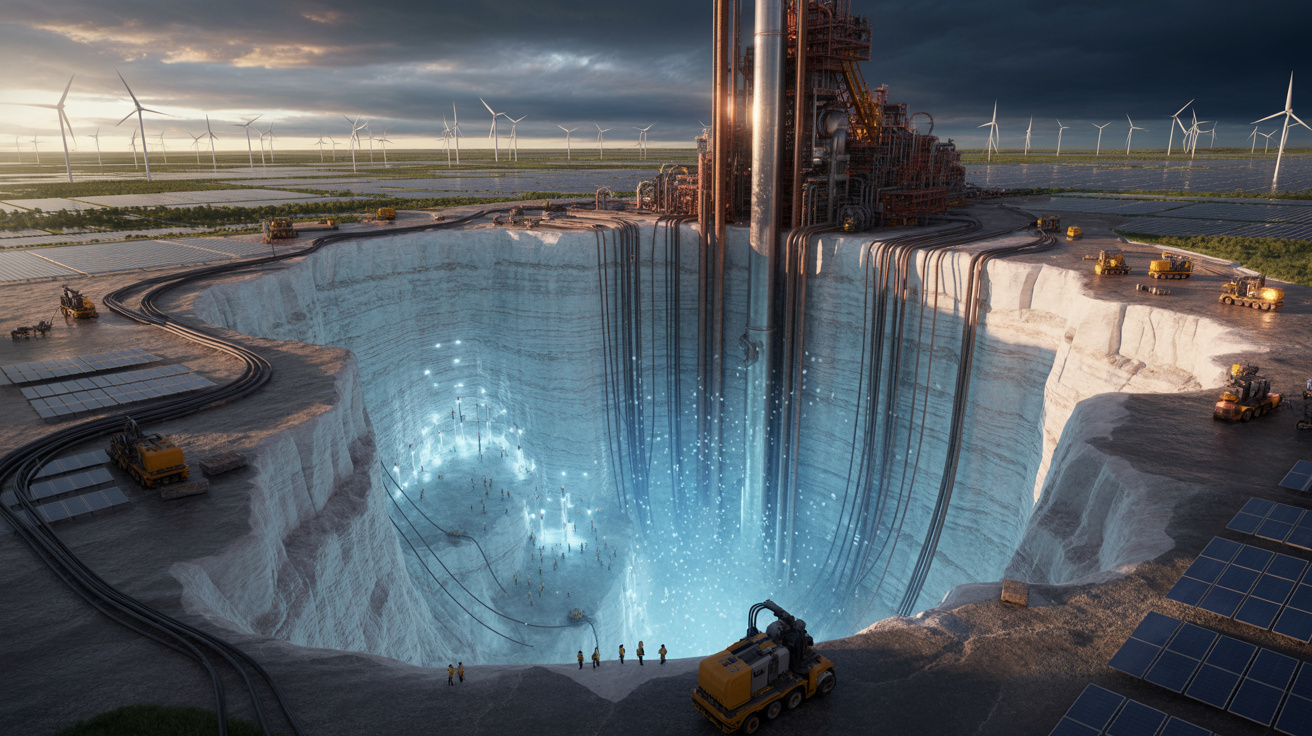


Germany Drills Salt Caverns Over 1,000 M To Store Green Hydrogen; Projects May Reach Hundreds Of GWh And Support The European Energy Transition.
Germany is accelerating the creation of an underground infrastructure dedicated to large-scale green hydrogen storage, using salt caverns located more than 1,000 meters deep. The goal is to transform natural geological formations into energy reservoirs capable of storing volumes equivalent to hundreds of gigawatt-hours (GWh), creating a strategic base to stabilize the national electrical system and support industrial decarbonization.
The country, considered the largest economy in Europe, has set ambitious goals to reduce emissions and expand the use of renewable energies. However, sources such as wind and solar are intermittent. On days with excessive wind or sunshine, production exceeds demand; during periods of calm or low solar incidence, the reverse occurs. Hydrogen storage emerges as one of the main tools to offset these variations.
Why Salt Caverns Are Chosen For Green Hydrogen Storage
Germany has extensive salt formations underground, especially in the northern part of the country. These geological structures, known as domes or salt layers, have ideal properties for storing gases under high pressure.
-
Nigerian Housing Crisis Addressed with Innovative Solution: Architect Builds Solar-Powered Modular Homes from Recycled Waste in Just 4 Hours for Low-Income Families

-
Mushrooms, orange peels, and agricultural waste are being turned into insulation panels for construction, replacing conventional materials with grown rather than manufactured walls.

-
House Built with 1.5 Tons of Recycled Plastic Completed in 10 Days in India, Transforming a Waste Picker’s Life and Tackling Urban Waste

-
Brightline to Connect Los Angeles and Las Vegas in Two Hours with the First U.S. Electric High-Speed Train, a $12 Billion Project Aiming to Reduce Road Traffic



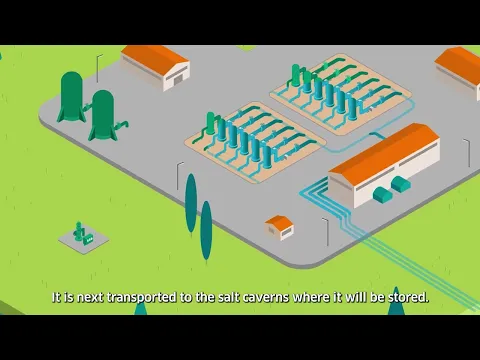

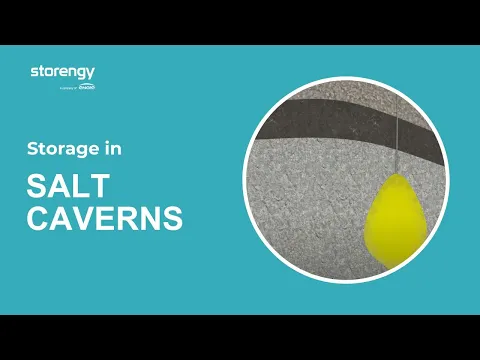
Salt is practically impermeable and has a natural capacity for structural self-regeneration, which reduces leakage risks. Over decades, these caverns have been used to store natural gas and oil. The adaptation for hydrogen takes advantage of this accumulated experience.
The caverns are created through a process called leaching, in which water is injected into the salt deposit to dissolve the salt and form large underground cavities. After that, the space is prepared to receive the compressed gas.
Each cavern can reach volumes exceeding 500,000 cubic meters, depending on the geological formation and engineering applied.
Depth And Operational Pressure
Storage typically occurs between 1,000 and 1,500 meters deep, where the natural pressure of the underground helps to keep the hydrogen compressed. Under these conditions, the gas can be stored stably for long periods.
The operational pressure can exceed 200 bar, requiring highly sophisticated control and monitoring systems.
This depth also contributes to thermal stability and structural safety.
Projects Under Development Focused On Storing Hydrogen
One of the main development hubs is in the Etzel region, in Lower Saxony. The project known as H2CAST Etzel has begun real tests of hydrogen injection into adapted caverns.
In the initial phase, about 90 tons of hydrogen were injected, allowing for the evaluation of physical-chemical behavior, stability, and integrity of the structures.
The future expansion target foresees that individual installations may achieve capacity close to 1 terawatt-hour (TWh), equivalent to the annual consumption of tens of thousands of households.
Another relevant center is in the Epe region, in North Rhine-Westphalia, where energy companies are planning the conversion of existing caverns for exclusive use of hydrogen.
Projected National Capacity
Studies by the German Ministry of Economy indicate that storage needs may reach between 70 and 80 TWh by 2045, if hydrogen consolidates as a central energy vector for heavy industry.
By comparison, 1 TWh corresponds to 1 billion kWh. This means that the projected storage involves energy volumes equivalent to the annual production of large power plants.
The expansion of salt caverns may allow for capacities on the order of hundreds of GWh per unit, creating a scalable modular system.
Strategic Role Of Green Hydrogen
Green hydrogen is produced through the electrolysis of water using renewable energy. When there is an excess of wind generation in northern Germany, for example, electricity can be used to produce hydrogen, which is then stored.
Subsequently, this hydrogen can be:
- Used in the steel industry to replace coal
- Employed in the production of ammonia and fertilizers
- Converted back into electricity through turbines or fuel cells
- Injected into specific industrial networks
This flexibility turns hydrogen into an integration element between the electric, industrial, and heavy transport sectors.
Integration With European Network
Germany is also participating in the creation of a hydrogen pipeline mesh connecting the Netherlands, Belgium, and Denmark.
The underground infrastructure acts as a strategic regional reserve. During periods of high renewable production, stocks can be filled. In times of high demand, hydrogen can be released to sustain the economy.
This model reduces dependence on fossil fuel imports and strengthens energy security.
Comparison With Other Storage Forms
Lithium batteries are widely used for short-term storage but have limitations for seasonal volumes.
Salt caverns offer much higher capacity per unit cost, making them suitable for storage over weeks or months.

Additionally, hydrogen allows for transportation via pipelines, something unfeasible for electrical energy stored in batteries.
Technical Challenges
Despite the advantages, hydrogen storage presents specific challenges:
- Hydrogen has a very small molecule, requiring rigorous sealing.
- It may cause embrittlement in some metals.
- Requires constant monitoring of pressure and structural integrity.
German companies are developing coatings and digital control systems to mitigate these risks. The development of this infrastructure involves billions of euros in investments.
The conversion of caverns, construction of compression stations, and integration with pipelines directly impact the energy industry.
Furthermore, it creates a structural foundation to attract industries that depend on green hydrogen.
Projection Until 2045
The German energy plan aims for climate neutrality by mid-century.
To achieve this goal, storage capacity needs to keep pace with the growth of renewable production. Salt caverns represent a large-scale solution to support this structural transformation.
Consolidated Technical Data
- Typical Depth: 1,000 To 1,500 Meters
- Operational Pressure: Up To 200 Bar
- Capacity Per Cavern: Hundreds Of GWh
- National Target By 2045: Up To 80 TWh
- Base Technology: Salt Leaching + Hydrogen Compression
The Germany Is Converting Natural Geological Formations Into Strategic Energy Reservoirs, drilling deep salt caverns to store green hydrogen in industrial volumes.
With targets reaching tens of terawatt-hours by 2045, these underground megaprojects position the country as one of the world’s leading hubs for large-scale energy storage.
By integrating renewable production, seasonal storage, and regional distribution, the German model creates an infrastructure capable of sustaining the energy transition of the largest economy in Europe.


