






 Portuguese
  Spanish
  2 min of reading
  0 comments


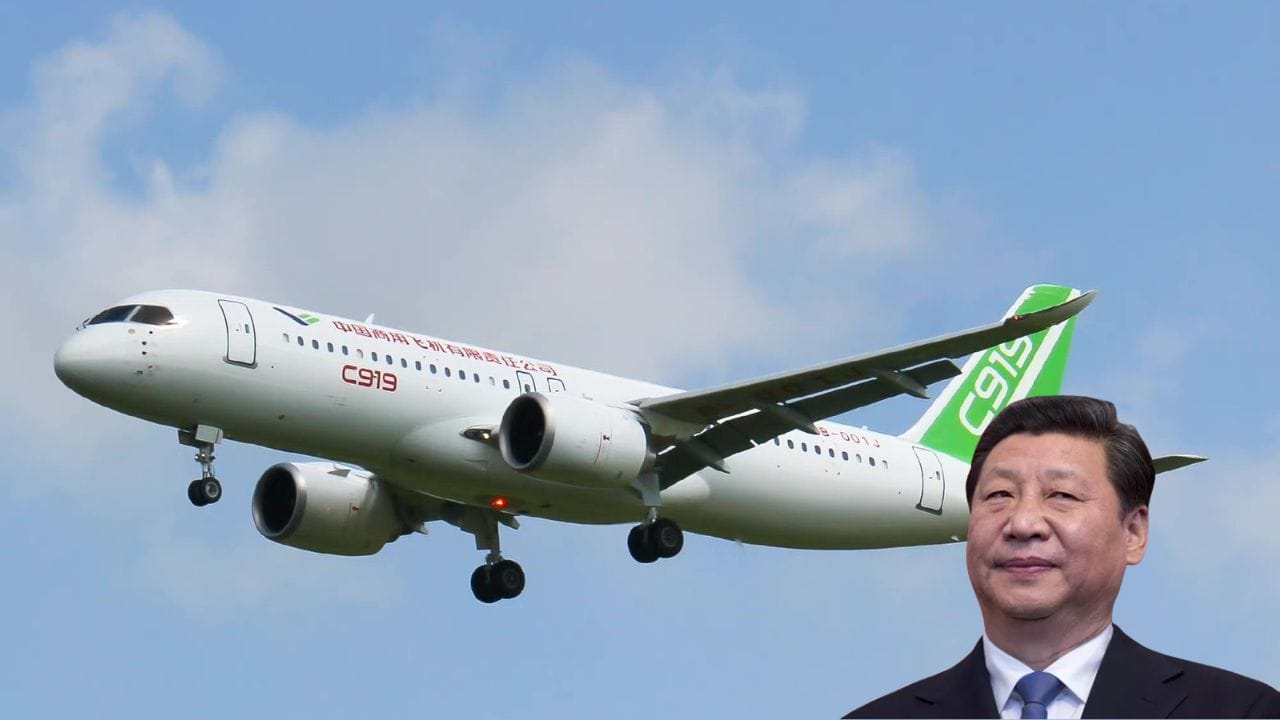
China, Known for Its Ability to Replicate and Improve Foreign Technologies, Is About to Redefine the Global Aviation Market with the Launch of the C919, a Commercial Aircraft Developed by the State-Owned Commercial Aircraft Corporation of China (Comac).
This move by China with the C919 threatens the long-standing dominance of Boeing and Airbus, as analyzed by CNN and Estadão. The C919, which made its first commercial flight in May 2023, is a milestone in the Chinese aerospace industry.
It symbolizes China’s transformation from an exporter of cheap products to a leader in high technology. This advancement is the result of decades of investment in research and development, with the Chinese government significantly increasing funding in education and creating technology parks and tax incentive programs.
China’s Strategy to Dominate Commercial Aviation Is Based on Its Own Domestic Market.
The International Air Transport Association forecasts that by 2040, one in every five civil aircraft will be Chinese. The Chinese government encourages local airlines to prioritize domestic aircraft, such as the C919, which will boost its adoption and expansion.
-
Bolivian Female Construction Workers Form Association to Combat Discrimination and 38% Pay Gap in the Industry

-
Near Amsterdam, residents buy land and discover they must also build streets, manage drainage, handle waste, and grow food on half their plot.
-
Without a mansion, without high investment, and without a traditional classroom, a teacher living in a 22 m² house taught students to build a 9 m² studio apartment with the equivalent of R$10,000.
-
Without her own home and pressured by rent, a 25-year-old bought a small 15-meter boat, gradually renovated the interior by herself, transformed the interior with paint, new flooring, a larger bathroom, and started living on the canals, paying much less per month.




Comac has benefited from Western technology transfer, acquiring technical and practical knowledge through partnerships with major European and American suppliers. The C919, with its advanced design, operational efficiency, and low costs, represents a direct threat to Boeing’s 737 Max and Airbus’s A320 lines.
The Aviation Market Is in Constant Evolution
Embraer and Bombardier, which previously dominated the regional jet segment according to UOL Notícias, have expanded their catalogs to meet demand for aircraft with 100 to 150 seats. The partnership between Airbus and Bombardier, as well as negotiations between Boeing and Embraer, reflect the dynamic changes in the market. However, Comac, with the C919, aims to fill a crucial gap in the market by offering an efficient and cost-effective alternative to Boeing and Airbus models.
China, with its growing demand for air travel and a government policy focused on regional aviation, is well-positioned to lead the commercial aviation market. Comac, with the support of the Chinese government, has ambitious plans to capture a significant share of the global commercial aircraft market.
Comac’s entry into the international market, however, will depend on meeting regulations and safety standards set by civil aviation authorities around the world. Still, Comac’s rise and the potential of the C919 represent a turning point in the aviation industry, challenging the long-standing duopoly of Boeing and Airbus and signaling a new era in commercial aviation, where “Made in China” may soon be synonymous with innovation and high technology.








Be the first to react!