Portuguese
  Spanish


Kameron Swinney spent about a year building a tank inspired by the WWI FT-17, using a Jeep engine, tractor tracks from the 1930s, and steel parts. The project cost $50,000, became an attraction in California, and only runs on private property in the backyard.
A tank built in the backyard turned Kameron Swinney, a 34-year-old bathroom remodeler, into an attraction among neighbors and curious onlookers in California. The project, reported by the New York Post on October 8, 2024, took about a year to complete.
The replica was inspired by the FT-17, a WWI combat vehicle considered a milestone in the history of modern armored vehicles. According to the publication, Swinney spent about $50,000, used a Jeep engine, repurposed old tractor tracks, and assembled the machine to operate only on private property.
A backyard project that became a topic among neighbors
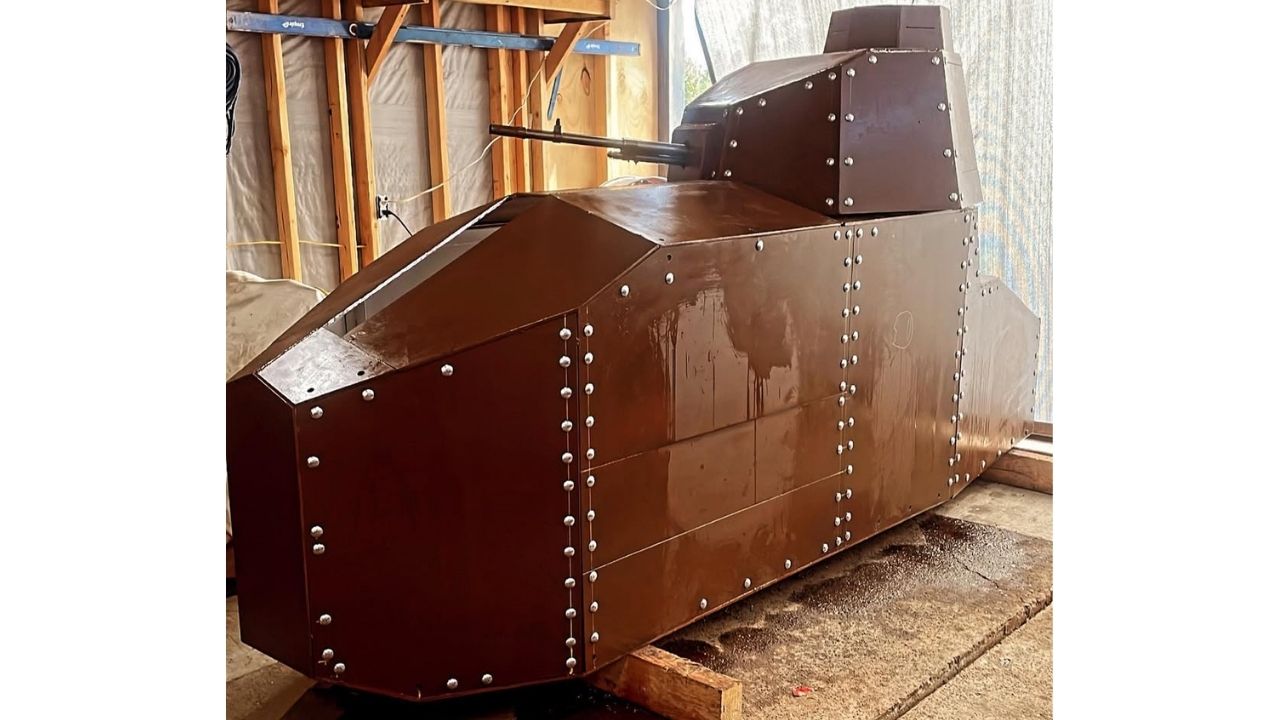
The tank draws attention not only for its unusual appearance but for the scale of the project. According to the account, the replica has dimensions similar to a sedan and weighs about 5,443 kg, equivalent to 12,000 pounds. Even so, it was created by an enthusiast without formal university training in engineering.
-
Thailand Converts 8 Tons of PET Bottles into 3,500 School Backpacks, Showcasing Circular Economy with Over 40 Factories Involved

-
Mysterious Bats Spotted in Paris’s Père Lachaise Cemetery, Drawing Tourists to the “Vampire Cemetery”

-
From Selling Street Food to Leading a $300 Million Construction Firm: The Journey of a Brazilian Entrepreneur

-
Abandoned Penthouse in Houston Reveals Million-Dollar Suite with 24-Karat Gold, Tiffany Crystals, and Opulence Even Elvis Might Have Snubbed




Swinney works in bathroom remodeling but has cultivated an interest in welding, vintage cars, and military history from an early age. The combination of these passions led to a handcrafted project that blends historical curiosity, mechanical improvisation, and a lot of persistence.
Inspiration came from a WWI armored vehicle
The visual base of the project was the FT-17, a French tank from World War I. The model became known for influencing the design of modern armored vehicles, with a configuration that helped consolidate the idea of a rotating turret and a more compact organization in the vehicle.
In the case of the Californian replica, the proposal was not to create a real military equipment, but a functional and decorative historical vehicle. The turrets, according to the publication, are for display only. The creation serves as a mechanical tribute to the past, not as a war instrument.
Jeep Engine and Old Tracks Brought the Machine to Life
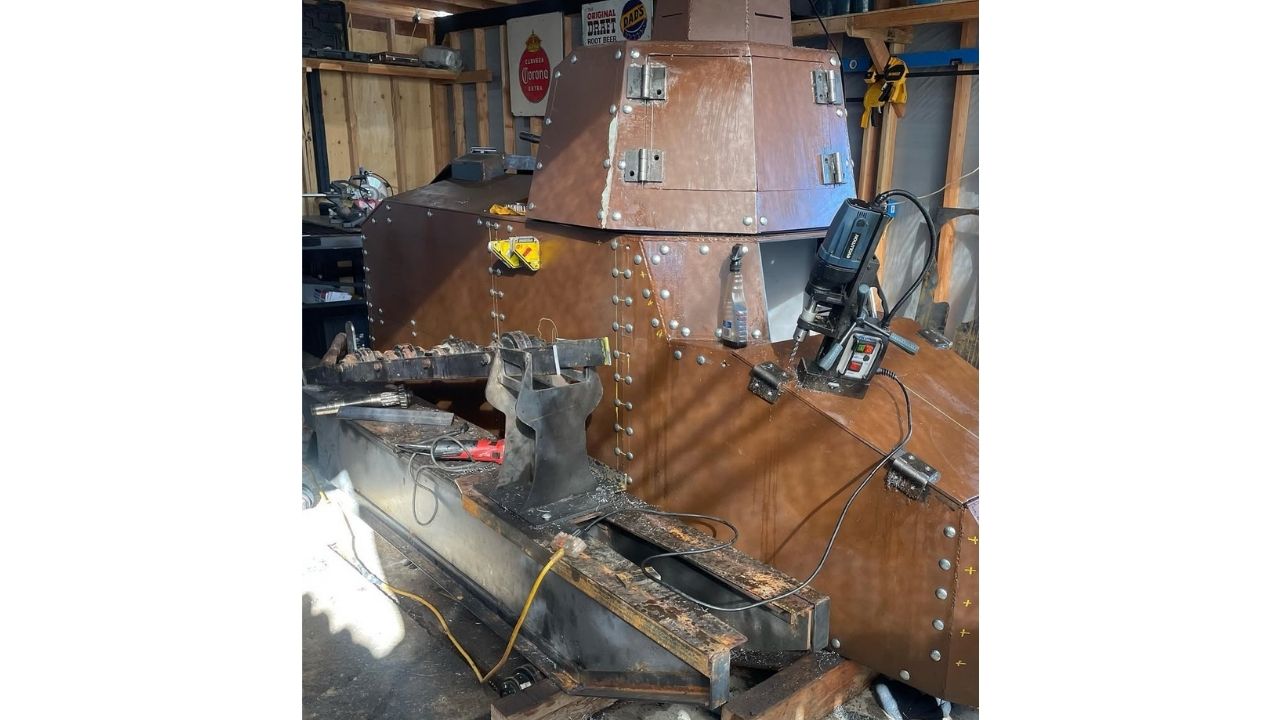
To get the tank moving, Swinney used a Jeep F134 engine associated with a hydraulic system. The structure also received steel, plywood, metal sheets, and other materials used during the artisanal assembly.
The tracks came from two tractors from the 1930s. This detail reinforces the project’s recycling nature. Old parts, which might seem unlikely for a vehicle of this type, gained a new function in a replica that moves, shakes, and draws attention in the backyard.
Replica Cost US$ 50,000 and Required a Year of Work
The estimated cost of the tank was US$ 50,000, a value that includes materials, parts, tools, and components necessary to transform the idea into a functional machine. The construction also required about a year of dedication, including assembly, adjustments, and improvements.
Even after completion, Swinney stated that he was still working on the project. This type of creation rarely ends on the first test, because mechanical adjustments, finishing, and safety usually require constant revisions, especially when everything is born in an artisanal way.
Use is Restricted to Private Property in California
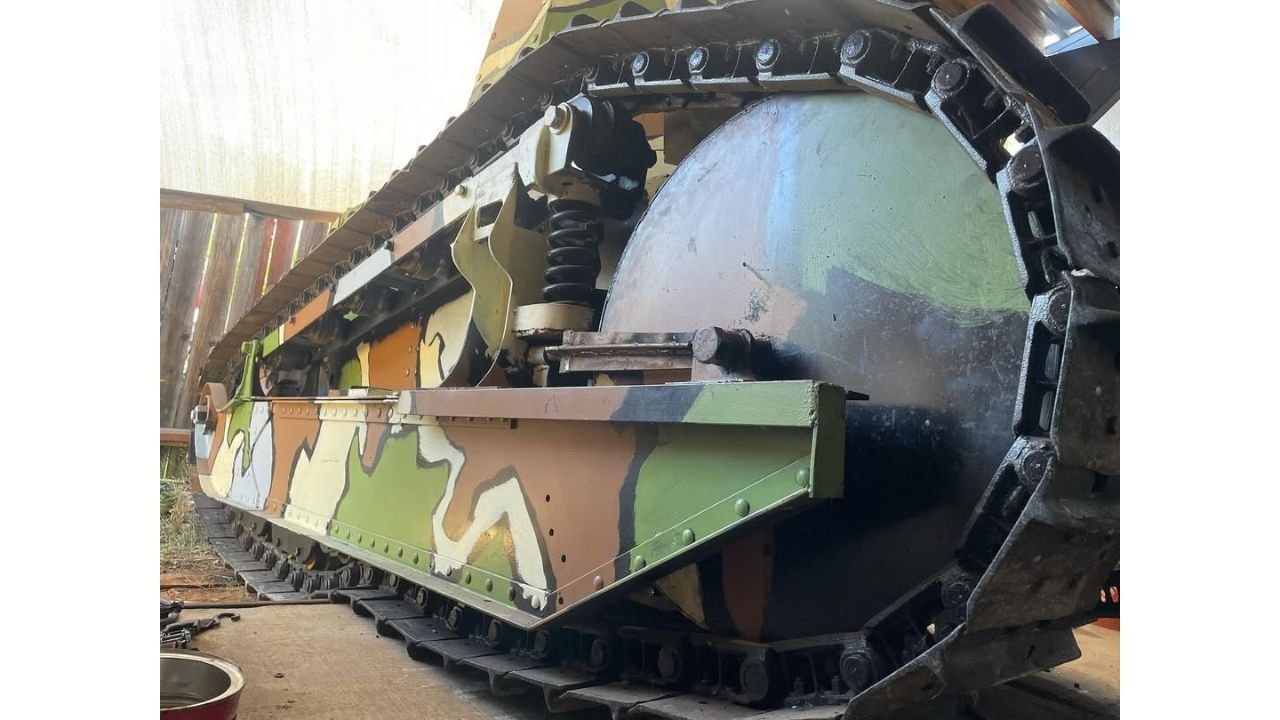
Despite functioning, the tank cannot freely circulate on the streets. According to Swinney, the steel tracks prevent legal use on public roads in California, leaving the vehicle limited to private properties.
He even compared the machine to a tractor, precisely because of the tracks and the type of movement. In practice, the replica is a backyard vehicle with historical and mechanical appeal, but without authorization to become an attraction driving around the city.
Neighbors reacted with curiosity and good humor
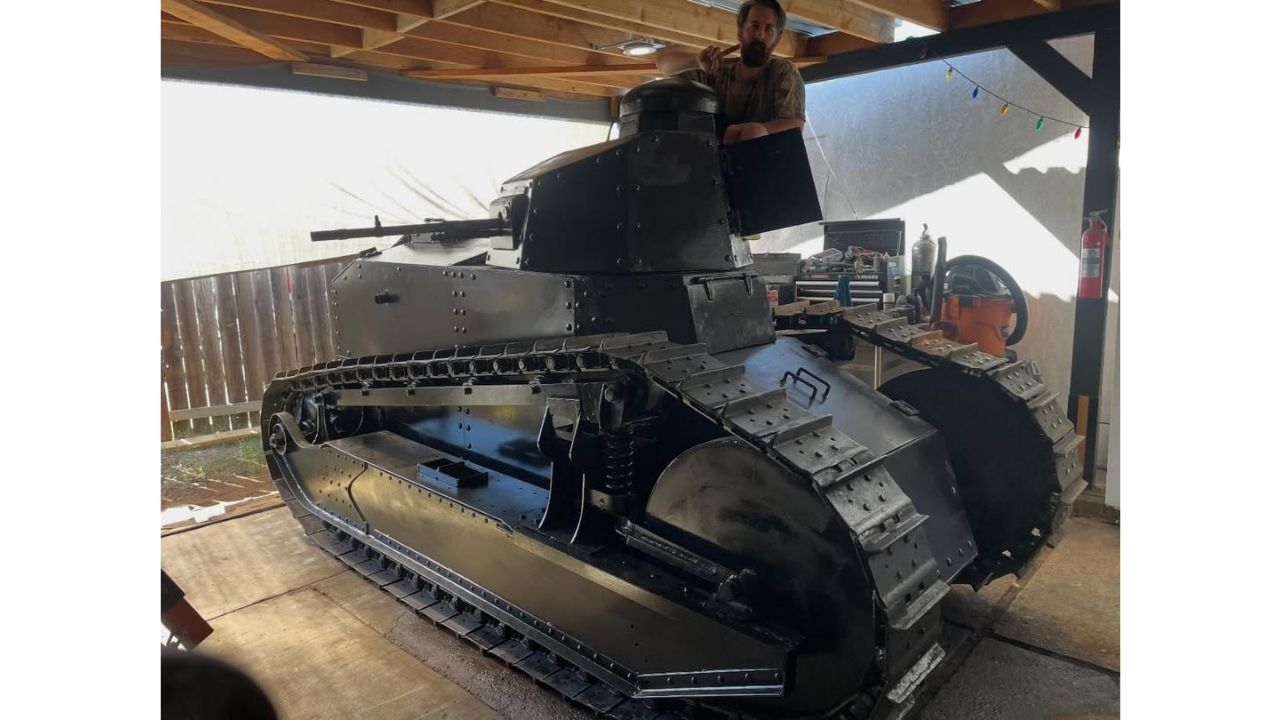
The project ended up attracting the community’s attention. According to Swinney, neighbors liked the creation and understood it was a historical replica. The vehicle also gained humorous nicknames, including comments about it looking like a curious “little tank.”
The positive reaction helped transform the construction into a small local sensation. Instead of being seen just as a strange machine in the yard, the replica became treated as an unusual piece of hobby, history, and craftsmanship.
Project was also taken to a car exhibition
Besides running in the backyard, the tank was taken to a car exhibition, where it received the award for best of the show, according to the publication. The presence at an automotive event reinforces the interest that out-of-the-box projects spark among enthusiasts.
The replica deviates from the logic of restored classic cars but connects with the same audience: people interested in mechanics, welding, history, and applied creativity. It is precisely this mix that made the project visually strong and easy to go viral.
Reformer learned on his own to build his creations
Swinney did not attend college, as reported by the source, and developed his skills on his own. He started working with classic cars in his teens and learned to improvise mechanical solutions over time.
This point explains part of the fascination around the tank. The story does not involve a large factory, a team of engineers, or an advanced laboratory. What draws attention is the contrast between an ordinary profession, a residential backyard, and a machine that seems to come from another century.
Conclusion: extreme hobby, living history, and a machine impossible to ignore
The replica created by Kameron Swinney shows how a hobby can surpass the scale of the ordinary. The bathroom renovator spent $50,000, worked for about a year, and transformed old parts into a tank inspired by World War I.
The story captures attention because it mixes creativity, historical memory, improvisation, and visual surprise. Do you think this type of project is a craft genius or an extravagance too expensive to stay in the backyard? Share your opinion.