Portuguese
  Spanish


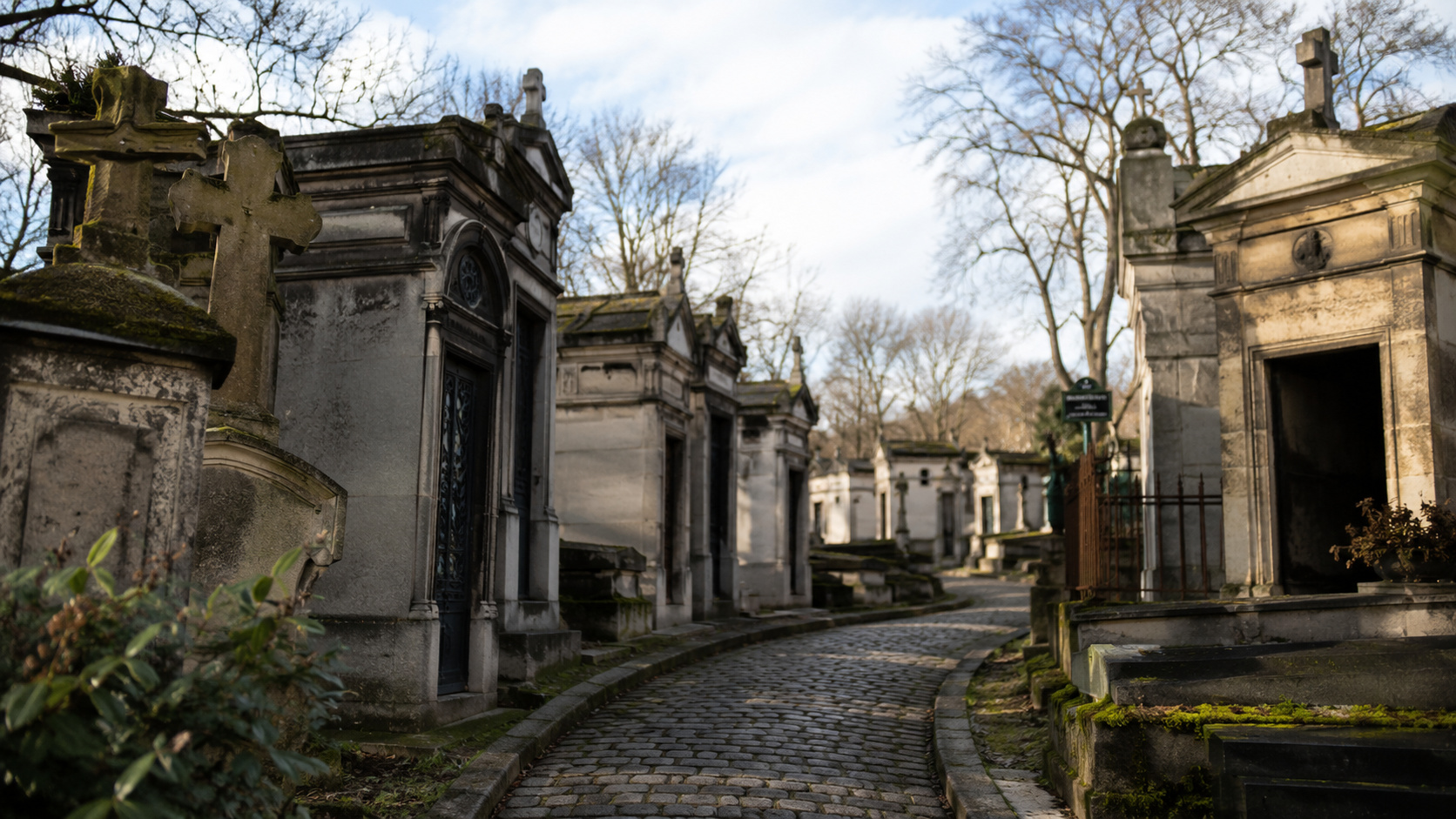

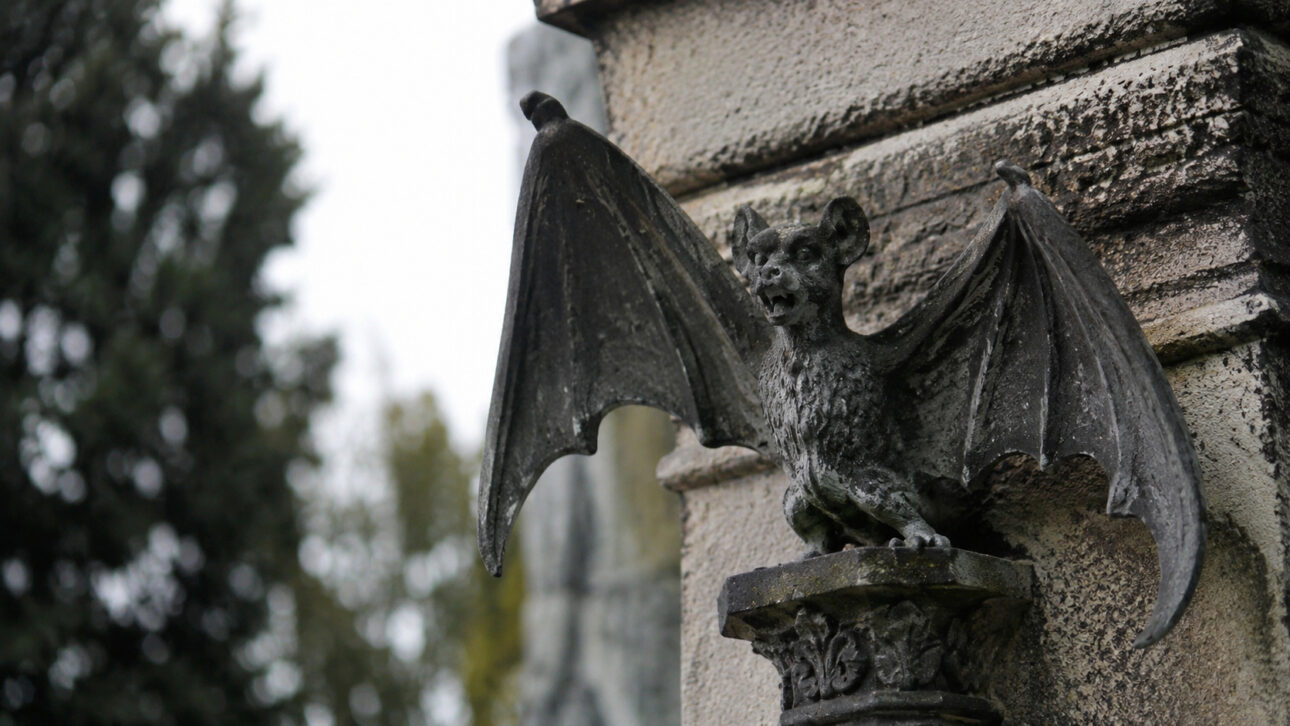
Small bat sculptures scattered throughout Paris’s most famous cemetery fuel legends, funeral symbolism, and stories linked to vampires.
The Père Lachaise Cemetery, inaugurated in 1804, in Paris, holds much more than the graves of historical personalities.
Among angels, crosses, mausoleums, and ancient monuments, small bats carved in stone discreetly appear on some tombs.
These almost hidden symbols spark curiosity among attentive visitors and reinforce the mysterious fame of the place, often associated with the imagery of death and vampires.
-
From Selling Street Food to Leading a $300 Million Construction Firm: The Journey of a Brazilian Entrepreneur

-
Abandoned Penthouse in Houston Reveals Million-Dollar Suite with 24-Karat Gold, Tiffany Crystals, and Opulence Even Elvis Might Have Snubbed

-
Architecture Students Design 8×12-Foot Microhouse for Homeless in Newark, Proposing Compact Shelter as Urban Solution Amid Housing Crisis

-
From Humble Beginnings to Industry Leader: The 30-Year-Old Scrap Dealer Transforming Brazil’s $1.8 Billion Metal Recycling Sector




The repetition of the figure has turned the cemetery into a setting for interpretations, legends, and supernatural narratives, although there is no definitive explanation for the presence of these animals on the tombstones.
Funeral symbols have changed over the centuries
Western funerary art has undergone great transformations over time.
For centuries, cemeteries used darker images to remind of the brevity of life.
Skulls, winged souls, and inscriptions linked to the Latin term memento mori, meaning “remember that you will die,” were common elements.
In the 19th century, this visual language took on softer tones.
Victorian iconography began to value symbols of hope, eternal life, and silent mourning.
For this reason, inverted flames, downcast angels, and delicate sculptures gained space in funerary monuments.
Père Lachaise, nevertheless, preserved an unusual detail: the recurring presence of carved bats.
Hidden bats draw attention at Père Lachaise
Most tourists walk through the cemetery’s corridors without noticing these details.
Attentive observers can identify bats on mausoleum doors, tombstones, and funerary structures.
According to the account of writer Shannon Moore Shepherd, after a visit accompanied by Jacques Sirgent, founder of the museum dedicated to vampires in Paris, there are at least 14 representations of bats scattered throughout Père Lachaise.
According to a popular tradition among enthusiasts of the theme, following this sequence of symbols would lead the visitor to a special tomb.
Jacques Sirgent believes that this tomb could hold remains linked to the historical figure that inspired the character of Dracula.
This hypothesis, however, has never been proven.
The narrative helped strengthen the connection between Père Lachaise and vampire stories.
Gothic fiction helped to expand the mystery
The cemetery also inspired literary works related to horror and the supernatural.
In 1913, the writer Karl Hans Strobl published the short story Das Grabmal auf dem Père Lachaise.
In the narrative, a man agrees to receive a large fortune to stay for a year inside the tomb of a countess.
Over time, he realizes he cannot leave the mausoleum.
From this, he begins to believe that a vampire might be behind his imprisonment.
The story also explores the gradual loss of the character’s identity.
Another work associated with the cemetery is Les Étrennes d’un vampire, published in the 19th century.
The narrative had a humorous tone and claimed to have been copied from a manuscript supposedly found in Père Lachaise itself.
In this way, the cemetery came to occupy even more space in the popular imagination linked to vampires.

Real case reinforced the cemetery’s macabre fame
Real events also contributed to the dark atmosphere of the place.
In 1848, several graves were found violated in Paris, with bodies brutally mutilated.
The investigation led to the arrest of François Bertrand, a sergeant in the French Army.
At the time, he became known in the press as the “Vampire of Montparnasse”.
Bertrand confessed to suffering from an uncontrollable impulse that drove him to dig up corpses and mutilate them.
The case caused great public commotion.
Consequently, it further reinforced the associations between cemeteries, death, and supernatural creatures.
Valachie Mausoleum also fuels interpretations
Another curious point of Père Lachaise is the mausoleum of the Valachie family.
It is located on the so-called Allée du Dragon, a name that immediately refers to the region of Wallachia.
Wallachia is linked to the history of Vlad II Dracul, father of Vlad III, a historical figure associated with the novel Dracula.
The surname Dracul means “Dragon.”
At the top of the mausoleum, there is an eagle holding a cross and an object resembling a stake.
This detail has come to fuel interpretations related to the vampiric universe.
After all, why are there bats on the tombs?
No definitive explanation has been confirmed to this day.
A widely accepted interpretation associates the bat with the night.
Consequently, the animal has also come to be linked to death in some symbolic readings.
The bat is rare in cemeteries but appears in other burial sites around the world.
Ancient popular traditions also attributed a protective function to the animal.
In some superstitions, it was believed that nailing a dead bat to a house door would ward off evil spirits.
The sculptures at Père Lachaise, with open wings, precisely recall this ancient belief.
What makes this mystery so fascinating?
The mystery of the sculpted bats at Père Lachaise remains without a single answer.
The combination of funerary art, gothic literature, real crimes, and vampire legends keeps the curiosity around the cemetery alive.
The discreet sculptures do not prove any supernatural theory.
However, they help transform Père Lachaise into one of the most intriguing cemeteries in the world.
In the end, the bats remain as small stone enigmas.
Precisely for this reason, they continue to attract the attention of visitors looking for something beyond the famous graves of Paris.
Do you think the bats of Père Lachaise are just ancient symbols of death or could they hide a more mysterious story? Leave your opinion!