






 Portuguese
  Spanish


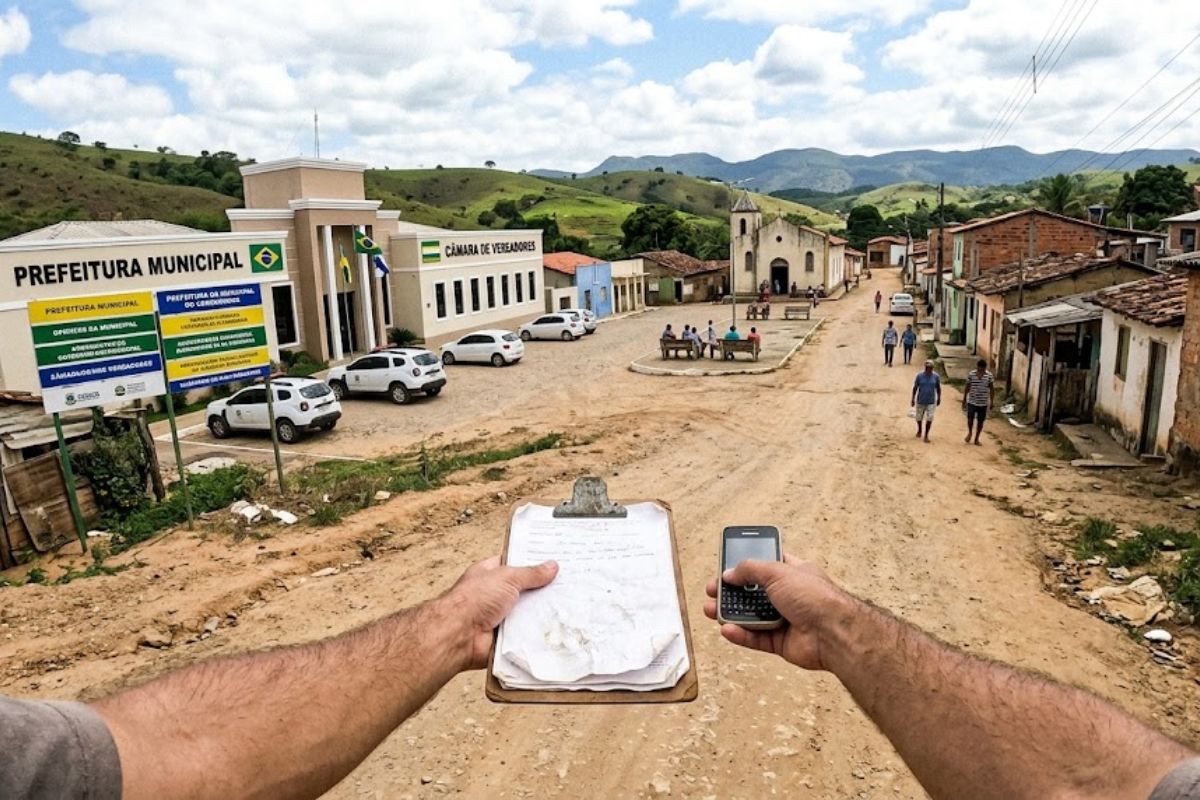

Turilândia is located in the northwest of Maranhão, has 33,219 inhabitants according to the IBGE, collects less than R$ 5 million per year with its own revenue, and still maintains a complete public structure with a mayor, vice, a council with 11 councilors, and 14 secretariats, all funded by federal transfers.
The city’s numbers depict an economy that practically does not exist on paper. There are 915 people with formal work ties, 220 registered as MEI, and 584 public servants. Another 5,572 people receive Bolsa Família. The remaining 25,000 inhabitants do not appear in any of these categories. The municipality’s HDI is 0.536, considered low on a scale of 0 to 1, and the per capita GDP places Turilândia in the 5,558th position among Brazilian municipalities, among the 15 worst in the country.
Even so, the Budget Law for 2025 anticipated that the city would receive R$ 131 million in current transfers. In 2024, public expenses exceeded R$ 167 million. More than 97% of everything that comes in is from outside: Municipal Participation Fund, constitutional transfers, and parliamentary amendments. Wealth generated in other parts of Brazil and redistributed to a city that hardly produces.
How a municipality spends R$ 131 million per year without generating its own wealth

The Brazilian federal model ensures that every municipality receives money from the Union, regardless of how much it collects locally.
-
At 14 years old, she worked in a factory in Hong Kong, studied economics abroad, and then entered the Chinese real estate market, which helped change the landscape of Beijing.

-
While NATO secured more than $10 billion in missiles and space surveillance at a single forum, Brazil still spends 1.1% of its GDP on defense and is stalling its own anti-aircraft system.

-
Corn ethanol attracts R$ 23 billion in 21 new plants and prepares for a nearly 50% jump in Brazilian production by 2027, even with high interest rates.
-
A newly opened terminal in the middle of the Amazon has begun transporting soy and corn through Amapá, eyeing the queue of ships that is congesting the ports in the South.


This is the so-called Municipal Participation Fund, created by the 1988 Constitution.
In practice, a city can maintain a mayor, council, and secretariats functioning entirely with this transfer, without needing to charge almost anything from the local population.
There is a phenomenon studied in public economics called the flypaper effect: when money comes from outside instead of coming from the pockets of those who live there, the government tends to spend more and no one controls it.
In Turilândia, the city council consumes R$ 2.8 million per year.
The budget allocated for public safety, in one of the most violent cities in Maranhão (11th in intentional lethal crimes in 2021), is R$ 72,000 per year.
The council costs 39 times more than all the security of the municipality.
Why 25 thousand people from Turilândia do not appear in any economic statistics

Adding all formal links (915), MEIs (220), public servants (584), and Bolsa Família beneficiaries (5,572), Turilândia has about 7,300 people with some identifiable source of income.
The city has 33 thousand inhabitants. The other 25 thousand are not in any of these categories.
They probably live from informal work, subsistence agriculture, or depend on someone who receives some benefit, but the fact is that they do not appear in the data.
This invisibility is not exclusive to Turilândia. In small municipalities with low own revenue, informality dominates and the real economy operates off the radar of any statistics.
The result is that no one knows for sure how much the city truly produces, how much it evades, and how much simply does not exist as formal economic activity.
But federal money continues to arrive every month, because the transfer does not depend on what the city produces.
Why Brazil maintains municipalities that cannot sustain themselves
Turilândia is not an isolated case. Next to it is Santa Helena, with its own city hall, council, and complete administrative structure.
The two city halls are 3.3 km apart and 40 km from the nearest city, Pinheiro.
Two public machines functioning side by side for populations that could be served by just one.
In Brazil, cities with less than 100 thousand inhabitants receive 85% of parliamentary amendments, even though they represent 42% of the population.
The more municipalities there are, the more political positions, budgets, and centers of power are created.
And when a municipality goes bankrupt, it cannot fail: the bill goes to the National Treasury, that is, to all taxpayers in the country.
The system was designed in a way that transfers money without requiring results, does not efficiently monitor, and distributes the loss to those who live far away and have never heard of Turilândia.
And in your city, do you know how much federal transfer arrives and how much is collected locally? Have you compared the council’s budget with that of public safety? Comment below.








