





 Portuguese
  English
  Spanish
  5 min of reading
  0 comments


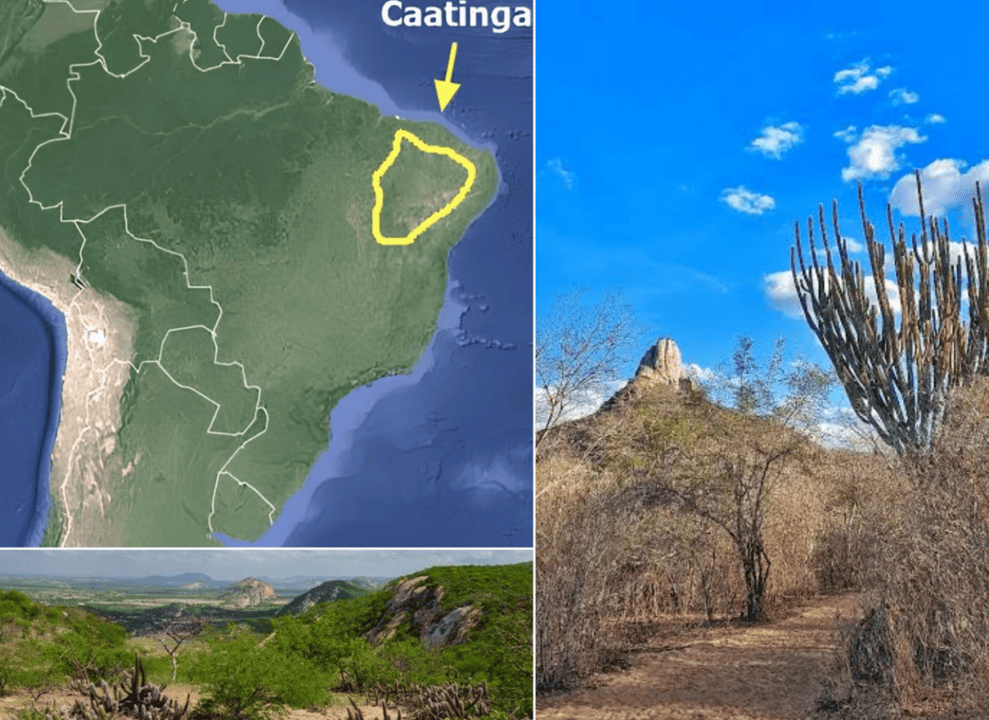
Among The Six Biomes Of Brazil, The Caatinga Stands Out For Being The Only One Fully Exclusive To The Country. Present Mainly In The Northeast, It Houses A Unique Biodiversity, With Species That Do Not Exist Anywhere Else On The Planet. Nevertheless, The Biome Is Still Little Valued And Faces Serious Environmental Threats.
Brazil Is The Most Biodiverse Country In The World. It Houses Different Ecosystems Such As The Amazon, The Cerrado, The Pantanal, And The Atlantic Forest. In The Midst Of This Diversity Is The Caatinga, A Biome Exclusive To Brazilian Territory.
It Occupies More Than Half Of The Northeast Region And Represents 11% Of The National Territory. Even With This Magnitude, It Remains One Of The Least Known And Least Protected Biomes In The Country.
What Is The Caatinga
The Caatinga Is A Biome Typical Of The Semi-Arid Climate. Its Name Comes From Tupi And Means “White Forest,” Due To The Whitish Appearance Of The Vegetation During The Drought.
-
The brute force of the waves turns into clean energy with almost no waste, as promised by a gyroscopic converter created in Japan that, in simulations, couples with the sea’s sway and reaches the maximum limit of 50% efficiency, leaving old marine generators behind.

-
NASA’s space telescope already has 73% of its images contaminated by satellite trails, and scientists warn that the problem could reach 100% if millions of objects are launched into low Earth orbit.

-
From discarded uniform to blanket for those sleeping on the streets: Brazilian initiative transforms tons of corporate fabric into shelter, reduces textile waste, and creates a chain of social impact that starts in companies and ends in the hands of those who need it most.

-
Engineers from Norway develop a submersible barge to lift structures of 2,500 tons without relying on the world’s largest crane ships, aiming to reduce the costs of offshore wind turbine installation.




It Is A Dry Forest, With Vegetation Adapted To Water Scarcity.
Small Trees, Shrubs, And Plants With Mechanisms For Surviving Heat And Drought Are Part Of The Landscape.
This Biome Spreads Across Nine Different Ecoregions, Including Areas In All States Of The Northeast And The North Of Minas Gerais.
It Covers An Area Of Over 900,000 Km². Despite The Dry Climate, It Houses Rich Biodiversity, With Unique Species Of Plants And Animals.
The Vegetation Of The Caatinga Is Part Of A Global System Called Seasonally Dry Tropical Forests And Shrublands, Or SDTF. Within This Group, The Caatinga Stands Out As The Largest Core In The New World In Species Diversity.
The Diversity Of The Caatinga
The Caatinga Has Plants And Animals That Are Not Found Anywhere Else. Among The Animals, We Can Mention The Jaguar, The Pumas, The Wildcat, And The Caatinga Marmoset — The Only Primate Exclusive To The Biome.
Among The Plants, Notable Species Include The Umbuzeiro, The Baraúna, The Jurema-Preta, The Quixabeira, And The Imburana.
These Plants Are Adapted To The Dry Climate. Some Shed Their Leaves To Avoid Water Loss. Others Store Moisture In Their Tissues Or Have Long Roots That Search For Water Underground. Most Have Flowering Cycles Adjusted To The Rainy Season.
These Adaptations Allow Life To Thrive In An Environment That, At First Glance, Seems Uninhabitable. Even So, The Caatinga Is At Risk.
Caatinga — A Threatened Biome
The Caatinga Is One Of The Most Degraded Biomes In Brazil. Less Than Half Of The Original Vegetation Is Preserved. Only 8% Of The Total Area Is In Conservation Units, And Less Than 2% Is Fully Protected.
Deforestation, Excessive Exploitation Of Natural Resources, And Unsustainable Agriculture Contribute To This Degradation.
In Addition, Climate Change Is Intensifying The Problem, Increasing Temperatures And Making The Drought Periods Even More Severe.
As A Result, Many Species Are Disappearing. Some Even Before They Are Known To Science. It Is A Silent Process, But With Serious Consequences For Environmental Balance.
Soils And Climate
The Caatinga Has A Wide Variety Of Soils, Generally Stony And Shallow.
These Soils Have Formed Over Millions Of Years Through Erosion And Physical Weathering Processes. They Sustain Vegetation That Can Survive Even Under Harsh Conditions.
The Climate Is Marked By Long Periods Of Drought And Irregular Rainfall. This Variation Demands A Lot From The Species, Which Must Adapt Or Disappear.
It Is In This Environment That Life Has Developed Unique Survival Strategies.
Ecological Relationships
The Interaction Between Plants And Animals In The Caatinga Is Another Important Point. Pollination, For Example, Is Done By A Variety Of Agents: Bees, Hummingbirds, Bats, Butterflies, And Even Lizards.
These Relationships Are Essential For The Maintenance Of The Ecosystem. However, With Habitat Fragmentation, Many Of These Interactions Are Being Lost.
This Harms Plant Reproduction And Animal Feeding, Creating A Domino Effect On Biodiversity.
Resistant Plants
Among The Species That Stand Out For Their Resistance To Drought Is The Selaginella Convoluta, Also Known As The “Resurrection Plant.”
It Can Dry Up Almost Completely And, With The Arrival Of Water, Return To Life.
This Plant Is The Subject Of The Virtual Exhibition “Caatinga In Focus: Biodiversity, Science, And Preservation” At The Câmara Cascudo Museum Of UFRN. The Exhibition Helps To Better Understand The Biome And The Importance Of Its Conservation.
Species At Risk
In Addition To The Selaginella, Other Important Plants Of The Caatinga Are Threatened. The Baraúna, The Quixabeira, The Aroeira-Do-Sertão, And The Imburana-De-Cheiro Are Examples Of Species At Risk Of Extinction.
They Play A Fundamental Role In The Diet Of Local Animals, Such As Birds, Mammals, And Insects.
The Loss Of These Species Can Lead To Serious Imbalances In The Ecosystem. Without Them, Many Animals Lose Their Main Food Source, Affecting The Entire Food Chain.
Conservation Initiatives
Despite The Challenges, There Are Projects Aimed At Recovering Degraded Areas Of The Caatinga. One Of Them Is The Caatinga Restoration Project, Coordinated By The Restoration Ecology Laboratory (LER) Of UFRN.
The Project Has Been Led By Professor Gislene Ganade Since 2016.
It Studies Native Species That Can Be Used In The Recovery Of The Biome, Such As The Umbuzeiro, The Jurema-Preta, And The Imburana. The Research Shows That These Species Have A High Survival And Adaptation Potential, Even In Degraded Areas.
Human Adaptation
The Caatinga Is Not Only The Home Of Plants And Animals. Millions Of People Live In This Biome. They Have Developed Their Own Ways To Deal With Drought And The Challenges Of The Semi-Arid Region.
The Relationship Between Humans And The Caatinga Is Ancient And Complex.
This Coexistence Requires Respect And Knowledge. Survival In The Semi-Arid Depends On The Conscious Use Of Natural Resources. When This Balance Is Broken, Everyone Loses.
Perspectives And Challenges
The Future Of The Caatinga Depends On Urgent Actions. It Is Necessary To Protect The Areas That Are Still Preserved And To Recover What Has Been Destroyed.
It Is Also Necessary To Promote The Sustainable Use Of Natural Resources, Aligning Science, Education, And Public Policies.
Climate Change Poses A Growing Threat. The Forecast Is For Increased Species Loss, Many Of Which Have Not Yet Been studiedbefore. Without Conservation, The Caatinga May Lose Its Unique Identity.
Societal Awareness Is Essential. Knowing The Biome Is The First Step To Defending It. The Preservation Of The Caatinga Is Not Just An Environmental Issue, But Also A Social, Economic, And Cultural One.
Only 8% Of The Caatinga Is Legally Protected. And Less Than 2% Has Integral Protection. Meanwhile, Species Disappear, Soils Deplete, And Local Life Becomes Increasingly Difficult. The Urgency Is Real. Protecting The Caatinga Is Protecting An Essential Part Of Brazil.
With Information From cienciaecultura.






-

3 people reacted to this.