Portuguese
  Spanish


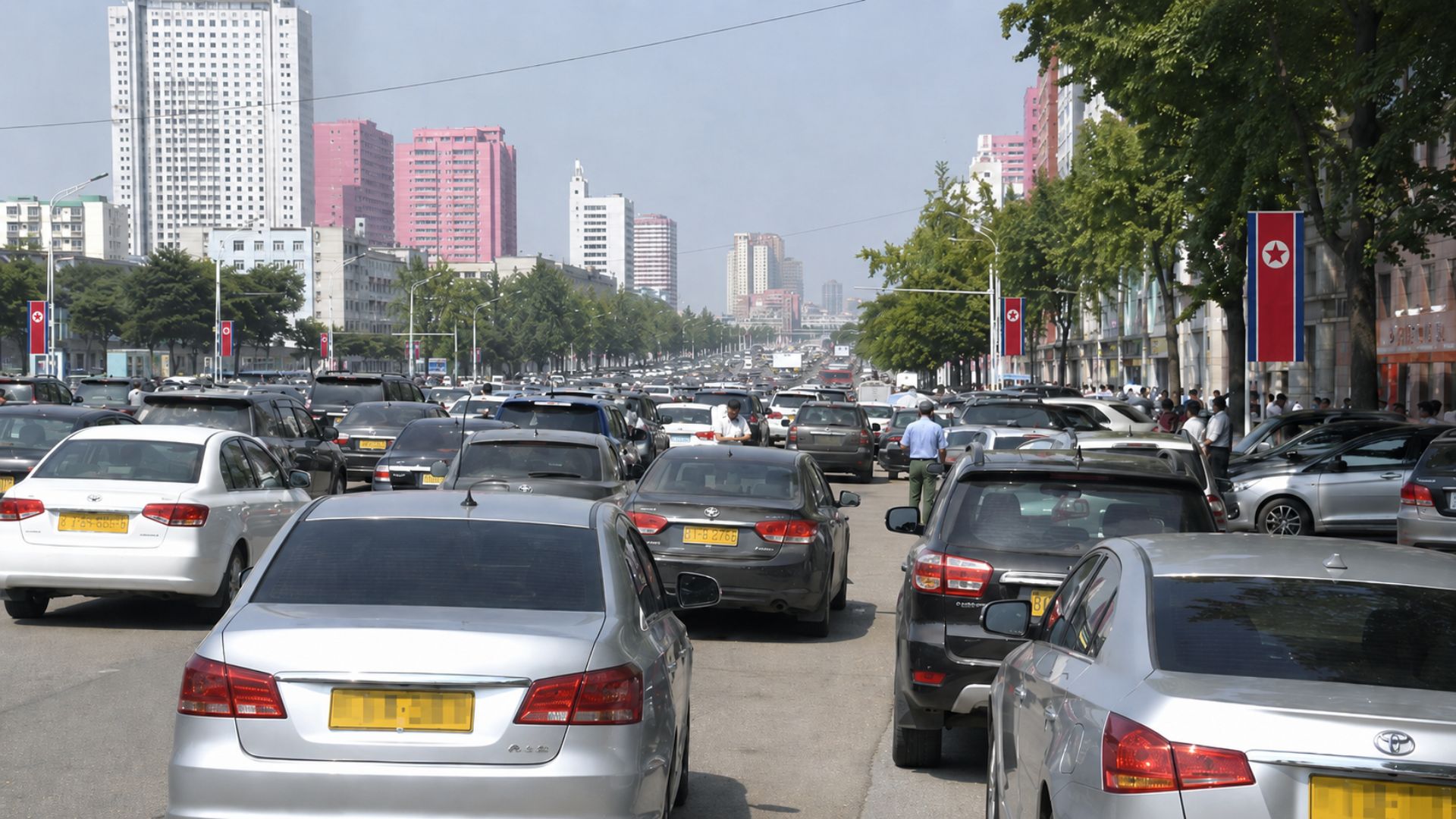


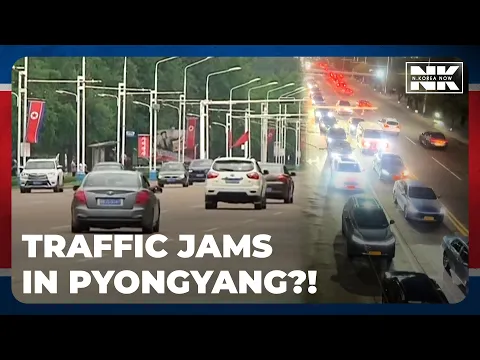
North Korea is facing traffic jams for the first time on the streets of Pyongyang, with private cars identified by yellow plates multiplying throughout the capital. Analysts estimate that the number of private vehicles could exceed 20,000 next year, and most of the cars come from China through informal channels along the 1,400 kilometers of border between the two countries, despite UN sanctions.
North Korea, one of the most isolated and sanctioned countries on the planet, is experiencing something that few analysts predicted: an automotive revolution. According to Reuters, the streets of Pyongyang, which until recently were internationally recognized for being practically deserted, now register traffic jams at major intersections, with cars parked in front of hotels, markets, and entertainment centers. Recent visitors report difficulty finding parking in the city center, and satellite images analyzed by Reuters confirm the visible increase in traffic and the number of vehicles around places like the Taedonggang Hotel and Rakrang Market.
Singaporean photographer Aram Pan, who runs an Instagram account focused on North Korea and has visited the country 20 times, said he was surprised to find himself stuck in a traffic jam in Pyongyang during his visit in October. “The main roads have become congestion points simply because there are now too many cars,” said Pan, who reported seeing more than a hundred vehicles with yellow plates, the identification intended for privately owned cars. Traditionally, plates in Pyongyang were blue or black, indicating state or military vehicles. The yellow ones, now ubiquitous, signal a change that goes beyond traffic.
Yellow plates everywhere: what has changed in North Korea

The growth in the number of private cars in North Korea is linked to legislative changes promoted over the past two years. The government formalized the ownership of private cars, allowing licensed drivers to purchase one vehicle per family through state-certified dealerships. The measure transformed what was once an underground trade into a regulated activity, with vehicles sold by state companies, maintenance performed by accredited providers, and refueling at official stations.
-
Scientists Convert Food Waste into Aviation Fuel, Successfully Test 50% Blend with Conventional Kerosene to Cut Emissions and Promote Sustainable Flights

-
OnePlus N6 Smartphone to Launch in India with 8,000mAh Battery and 45W SuperVOOC Charging, Lasting Up to Three Days
-
Scientists Plan to Release Air Bubbles Underwater to Protect Antarctica’s “Doomsday Glacier” from Melting

-
Chinese R6000 Drone Combines Airplane and Helicopter Features, Carries Up to 12 People for Multiple Missions


Peter Ward, a researcher at the Sejong Institute in Seoul, states that Kim Jong Un’s automotive policy is part of a broader effort to bring private economic activity under state control. “In this way, it stimulates consumption and also regularizes what was once an expanding illegal trade,” Ward explained to Reuters. Owning a car is still a privilege of the elite and the entrepreneurial class known as donju, but yellow plates with numbers in the tens of thousands indicate that access is expanding.
Where the cars congesting Pyongyang come from

UN sanctions have banned the export of vehicles to North Korea since December 2017. Officially, China exported only two vehicles to the country last year, according to customs data, compared to more than 3,200 in the year the ban took effect. But the streets of Pyongyang tell a different story: images verified by Reuters show vehicles from Chinese brands Changan, Chery, and Geely, as well as European models like BMW and Audi, parked in front of repair shops and circulating around the capital.
The explanation lies in the informal channels along the 1,400 kilometers of border between North Korea and China. According to sources heard by Reuters, cars pass through several hands before crossing the border, with experienced smugglers handling the final delivery. Lu Ming, a used car dealer in Jilin province, northeast China, confirmed that some vehicles he sold ended up in North Korea, although he does not deal directly with importers. Prices range from $5,000 to $30,000, depending on the model and condition of the vehicle.
The data that reveals the invisible demand

Although the export of cars is prohibited, Chinese customs data reveals a significant increase in shipments of automobile-related products to North Korea. Shipments of new tires for passenger cars rose to nearly 193,000 units in 2025, an 88% increase compared to pre-pandemic averages. Exports of rearview mirrors almost quadrupled and shipments of lubricating oil and grease increased by more than 150%.
These numbers serve as indirect indicators of a growing fleet. Tires wear out, mirrors break, and engines need lubrication. The volume of parts and supplies exported by China to North Korea is proportional to the number of vehicles in circulation, and the escalation in these numbers since 2024 confirms that the automotive boom in Pyongyang is not just a visitor’s impression but a measurable trend.
Kim Jong Un in the mechanic’s workshop
The North Korean leader himself has signaled his support for the emerging automotive culture. In April, Kim Jong Un visited a mechanic’s workshop in Pyongyang, where he inspected several vehicles whose brands and models were discreetly covered by a silver cloth. The visit, recorded by the state agency KCNA, serves as an official endorsement of a sector that until recently operated informally.
The gesture of covering the car brands during Kim’s inspection is revealing. It shows that the government is aware that the vehicles are imported irregularly and that displaying them openly would create diplomatic embarrassment with China and the UN Security Council. But Kim’s presence in the workshop, accompanied by his daughter Kim Ju Ae, also signals that the government does not intend to suppress the trend: on the contrary, it wants to institutionalize it.
Underground parking and charging stations
Pyongyang’s urban infrastructure is adapting to the increase in vehicles in North Korea. State media showed Kim visiting a new hospital that has underground parking, an unusual feature in the capital, according to a foreign businessman who visits the country regularly. Parking in downtown Pyongyang has already become difficult, with spaces being informally managed by people who charge fees.
Charging stations for electric vehicles have also begun to appear, initially to serve electric taxis. The presence of infrastructure for electric vehicles in one of the world’s most isolated countries indicates that some of the cars entering North Korea are Chinese electrified models, which dominate the global market for low-cost electric vehicles. For North Korea, which faces a chronic shortage of fossil fuels, electric vehicles may be a more viable alternative than gasoline cars.
The growing Chinese dependency with each new car
The automotive boom in North Korea deepens the country’s dependence on China. Most of the vehicles on the streets of Pyongyang are of Chinese brands, the spare parts come from China, and the 1,400-kilometer border is the corridor through which everything enters. Each additional car on the capital’s streets is another link with Beijing, a dynamic that analysts consider strategically significant at a time of intensifying military and political alliance between the two countries.
North Korea faces traffic jams, has difficulty parking, and sees yellow plates spreading across Pyongyang as a symbol of a class that can buy what was once exclusive to the State. Analysts estimate that the number of private vehicles could exceed 20,000 next year. For a country that until recently was synonymous with empty streets, Kim Jong Un’s automotive revolution is as surprising as it is revealing.
Did you imagine that North Korea would face traffic jams and parking problems? Tell us in the comments what you think of this transformation, how you assess China’s role in Pyongyang’s automotive boom, and whether you believe that UN sanctions are effective when the streets say otherwise. We want to hear your analysis.