Portuguese
  Spanish


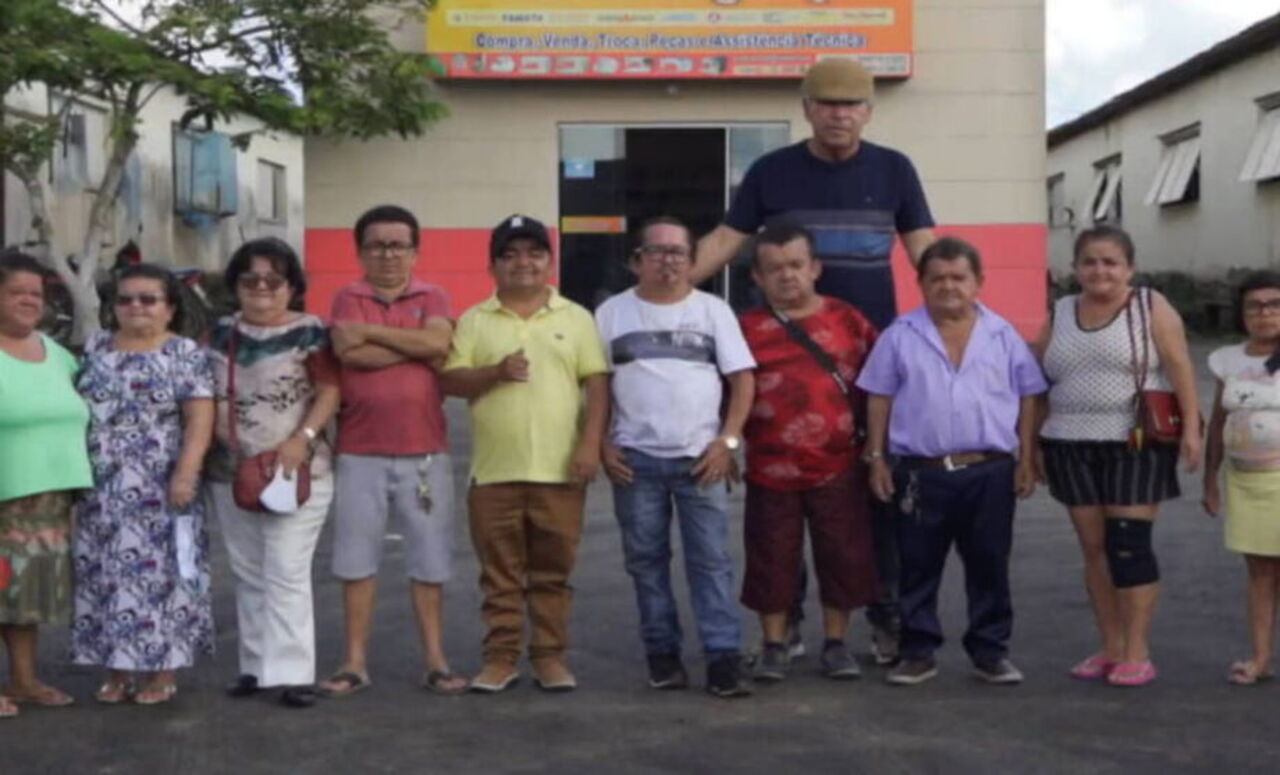


Rare Genetic Mutation Spread Over Generations Turned the Small Itabaianinha into a Symbol of Identity, Overcoming and Pride in the Interior of Sergipe
With a population marked by a rare genetic condition, Itabaianinha, in Sergipe, became known as the “City of Dwarfs.” The fame did not come by chance. For decades, the municipality attracted attention from Brazil and the world for concentrating an unusual number of people with dwarfism. The story begins in the village of Carretéis, a rural community where it all originated.
City of Dwarfs: A Rare Mutation Spread Over Generations
The central factor is the Isolated Growth Hormone Deficiency (DIGH), a rare hereditary condition caused by a genetic mutation.
The DIGH prevents the production of growth hormone, but, unlike other forms of dwarfism, it maintains normal body proportions. Height in these cases varies between 105 and 135 centimeters.
-
50,000 Satellites with Giant Mirrors: Solar Light Sold via App Sparks Controversy Among Startup, FCC, Astronomers, and Environmentalists in the US

-
Brazil’s Cost-Cutting Housing Design Leaves Southern Residents Vulnerable to Cold Winters

-
Entrepreneur Turns Sweaty Helmet Problem into Million-Dollar Business with National Cleaning Machine, Aiming for $12 Million and 300 Locations by 2026 Amid Growing Demand from Delivery Services and 35 Million Motorcycles in Brazil
-
Orphaned Youth Turns Dismissed Idea into Global Prestige with Innovative Wristwatch




In Carretéis, the combination of geographic isolation and marriages between relatives favored the spread of this mutation over generations.
At one point, the incidence reached 1 in every 32 inhabitants. Over eight generations, it is estimated that more than 130 people have been born with the condition, making the case unique in medicine and demographics.
Recognition in the Media and Popular Culture
The story of Itabaianinha gained prominence in national and international media in the 1980s and 1990s. In 1993, CNN aired a documentary about the city.
Before that, several Brazilian reports had already shown the daily life of the residents. The international fame helped break the silence and bring to the world the reality of a people marked by difference, but also by strength.
The Italian Marco Sanvoisin, who visited the city, described the residents with dwarfism as “sweet and different creatures, who seem to have come out of a fairy tale.”
The repercussion also reached music. The Sergipe band Siri Mania honored the city with the song “Sou de Itabaianinha,” proudly celebrating the local identity.
Active Lives and Stories of Overcoming
Despite the difficulties, the population with dwarfism has always demonstrated resilience. Many continued working as teachers, artisans, and market vendors.
There was also participation in international sports competitions. One of the most remembered examples is Dona Pureza, the first woman with dwarfism in the city to marry a man of average height. She stated: “I wanted to have a family, and thank God I succeeded.”
In recent years, the city has undergone changes. The number of new cases of dwarfism has decreased. The use of growth hormone, combined with advances in early diagnosis, public policies and cultural transformations, has changed the demographic landscape of the region.
Children who would have inherited the mutation now grow to an average height, which is also altering the traditional image of Itabaianinha.
Preserved Memory and Current Challenges of the City
With these changes, there has been growing concern about preserving the city’s memory. One of the initiatives was bill nº 02/2020, by councilor Lêda Maria Dantas, which seeks to officially recognize the cultural importance of the community with dwarfism.
Another effort was the monograph by Cleiton dos Santos, which analyzed the phenomenon in depth. The study cites the historian Jacques Le Goff: “The past needs to be saved to serve the present and the future.”
Despite the recognition, there are still obstacles. Limited accessibility and exclusion from the job market make life difficult for residents with dwarfism.
Clécio, who lives in the city, emphasized: “We should be remembered more by authorities, especially when it comes to employment.”
Even with the challenges, the legacy of Itabaianinha continues. The city has entered history not only for its genetic uniqueness but for showing how a community can transform a rare condition into a symbol of identity, courage, and overcoming. The story of its residents with dwarfism remains alive, as an example of dignity and pride.
With information from Diário do Litoral.