Portuguese
  Spanish


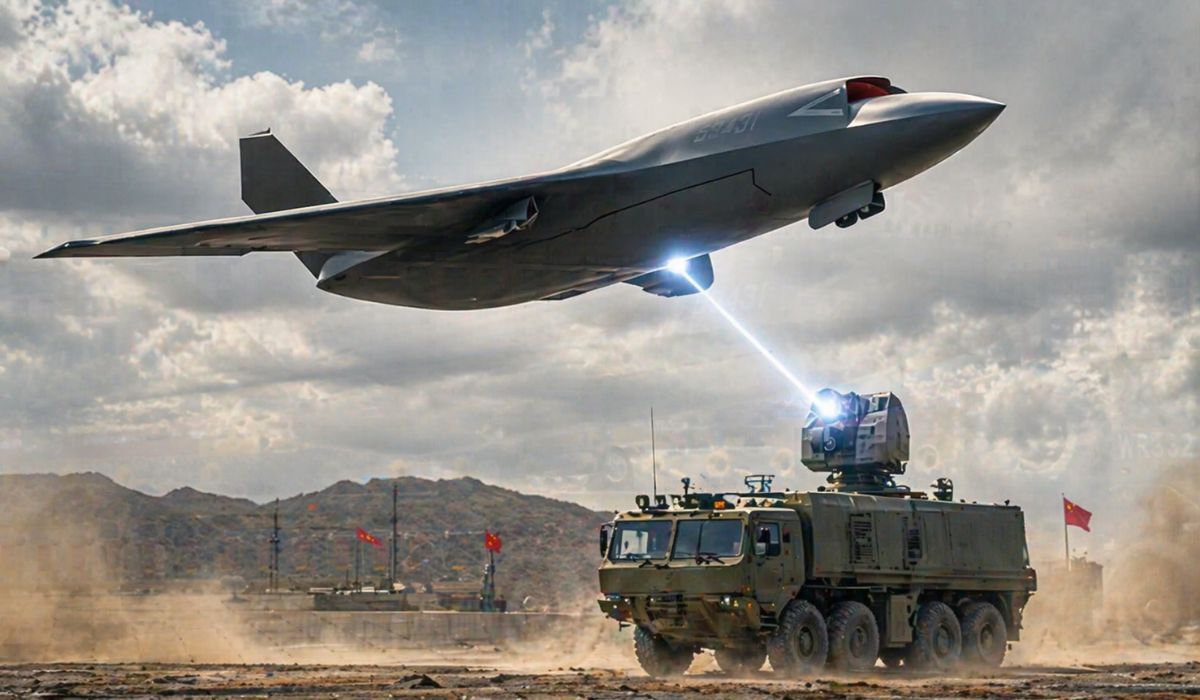


A Chinese research tested a system that combines microwave, tracking, and continuous flight, in an experiment that caught attention outside China and reignited the debate on new ways to power drones.
Researchers from Xidian University in China reported in a study published on March 25, 2026 a test of microwave energy transmission to keep a fixed-wing drone in flight without the need for conventional landing for recharging.
According to the South China Morning Post, which released the results on April 19, 2026, the system sustained the aircraft for up to 3.1 hours, at an altitude of 15 meters, with energy sent from a ground platform installed on a vehicle.
According to the description published by the newspaper, the arrangement uses a microwave emitter mounted on a vehicle to direct energy to an array of antennas installed on the underside of the aircraft.
-
Engineers Develop Fridge-Sized Machine to Produce 95-Octane Synthetic Fuel from Air and Water, Aiming to Sustain Combustion Engines Without Oil

-
Two-Armed Robot Uses AI to Reassemble Destroyed Pompeii Frescoes, Solving an “Impossible” Puzzle
-
New Law in Brazil Requires Breaks for Type 1 Diabetes Management at Work, School, and Public Exams

-
Scientists Confirm “Greening” of Antarctica: Ice on the World’s Coldest Continent Turns Green as Mosses Multiply Over Tenfold in Four Decades


The test also included the simultaneous movement of the drone and the ground platform, a point treated by the report as one of the main differentiators of the experiment presented by the Chinese team.
How the microwave recharging system works
The study attributed to researcher Song Liwei indicates that the biggest technical challenge was to maintain alignment between the emitter and the receiver throughout the trajectory.
To achieve this, the researchers integrated GPS positioning, dynamic tracking, and onboard flight controls, aiming to preserve the stability of energy transfer throughout the flight.
In the information made public so far, the equipment appears as a vehicle platform capable of wirelessly transmitting energy to a fixed-wing aircraft.
The term “land aircraft carrier” was used in the coverage of the South China Morning Post to describe the concept associated with the project, but the open documentation consulted does not detail a complete operational configuration nor confirm use in a real military environment.

What the fixed-wing drone test showed
The central data released is the drone’s flight duration of just over three hours at low altitude, receiving energy from the ground during the flight.
However, the open sources consulted do not provide public confirmation of operation at higher altitudes, long distances, adverse conditions, or scenarios outside of a controlled test environment.
There are also no complete technical details available to the public located in this check regarding the beam power, the net energy efficiency of the system, the exact model of the aircraft used in the trial, or the safety parameters adopted during the demonstration.
For this reason, the scope of the demonstration can be safely described as an experimental test of continuous energy transmission between a ground platform and a moving drone.
Strategic reading on potential drone use
In the report from the South China Morning Post, analysts consulted by the newspaper associate the proposal with the creation of mobile platforms for launching, commanding, and sustaining drones.
According to this reading, such systems could extend the duration of missions for surveillance, air strikes, and electronic warfare, although these applications appear, in the consulted material, as possibilities pointed out by experts and not as capabilities already publicly demonstrated by the described test.
The news gained traction partly because wireless energy transmission is still under development in various research programs.
In the United States, for example, DARPA reported on May 16, 2025 that the POWER program recorded the delivery of over 800 watts over 8.6 kilometers in a laser test, in a different architecture from that used by the Chinese, as the American experiment was based on optical transmission, not microwaves.
Xidian University and the context of Chinese research
Xidian University itself presents, on its official English website, as an institution with a strong presence in areas such as electronics, telecommunications, and applied research.
The university also states that it maintains nine national laboratories, which helps to contextualize its involvement in projects that combine antennas, microwaves, tracking, and embedded systems.
This institutional profile, however, does not replace technical data from the experiment.
So far, the university does not appear, in the open sources located in this verification, with a public note detailing a schedule of new tests, performance goals, or any potential transition of the technology to civilian applications.


What is still open in the experiment
The available information supports the news that there was a successful in-flight recharge test using microwaves with a mobile ground platform and fixed-wing drone.
At the same time, important aspects remain without public confirmation to measure the actual maturity stage of the system, such as efficiency, scalability, operational cost, behavior over longer distances, and performance in less controlled conditions.
Therefore, the most accurate description of what has been confirmed so far is that of an experiment that demonstrated continuous energy transmission in flight under specific test conditions.
New public data on range, stability, power, and safety will be necessary to more precisely define the significance of this result in the development of drones with extended energy autonomy.